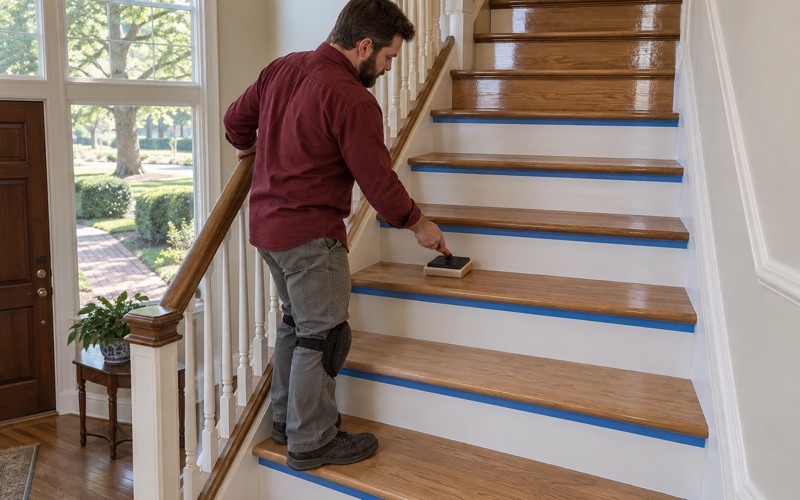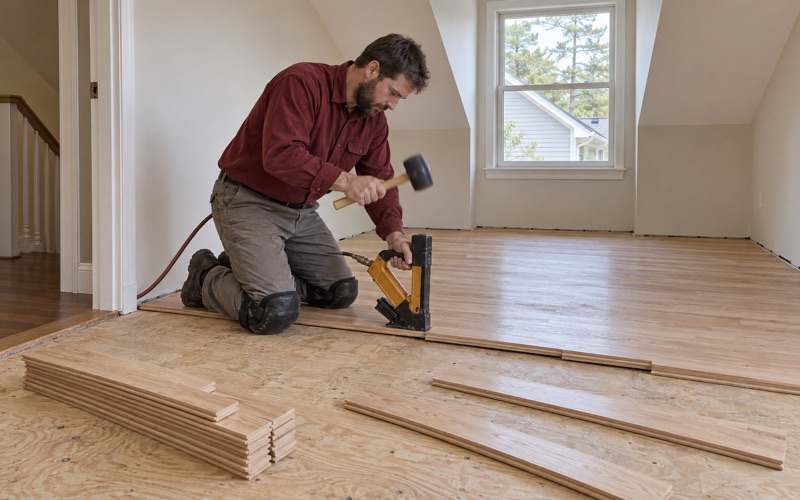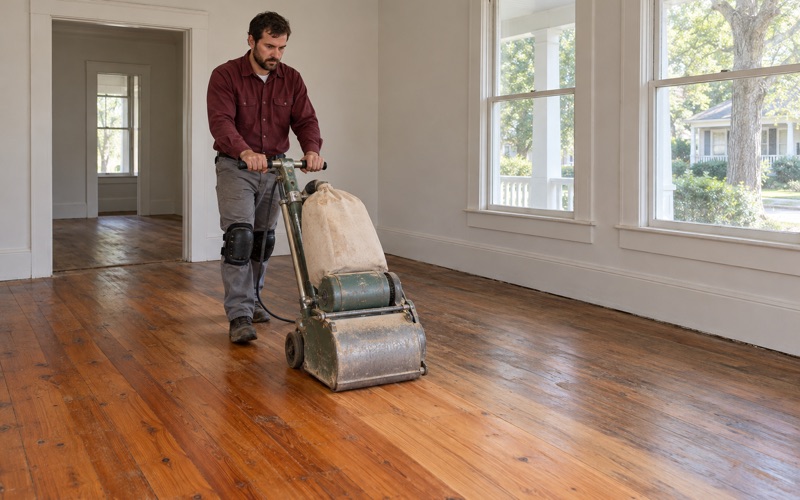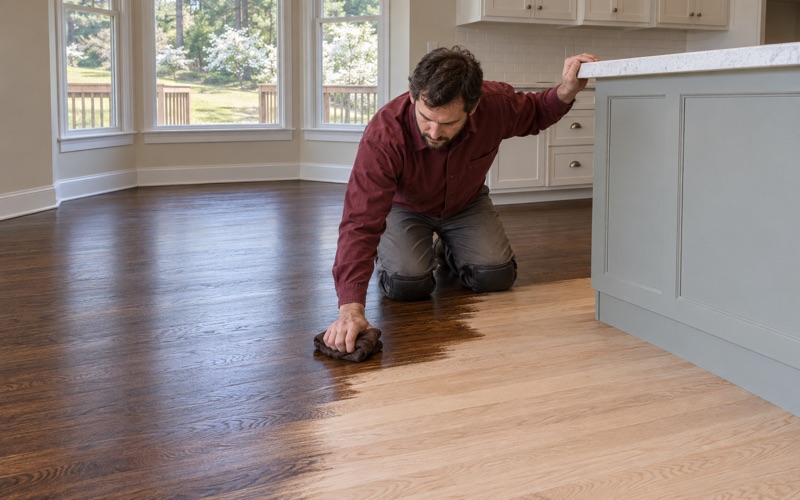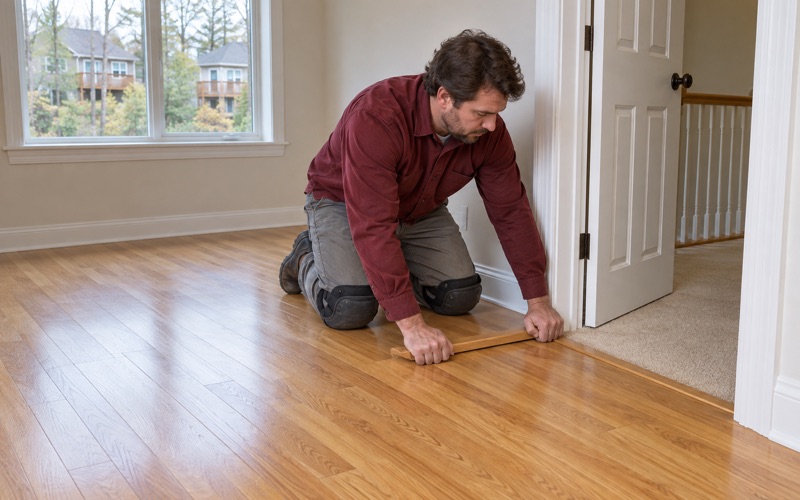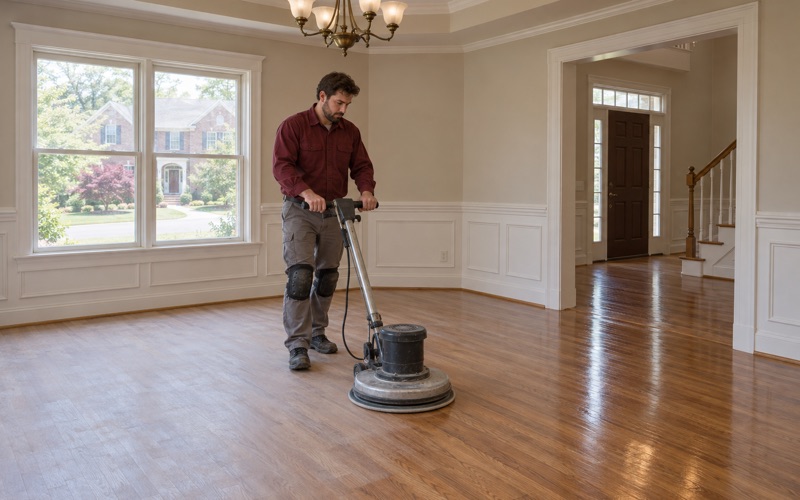
Roswell Wood Flooring has spent more than 20 years on wood flooring in Alpharetta and the towns around it, and the floors that ask the most of us are the oldest ones. A board laid a century ago was milled, nailed and worn in ways a modern plank never will be. So the first job is reading it, with a moisture meter, a close look at the fasteners and a check of what the finish is made of.
This page is about the small group of early-1900s houses that still carry original floors, and what it takes to keep those boards in service. Some owners want a worn floor sanded bright again. Others are taking part of a house apart, or opening a wall, and want to know which boards can be saved for reuse. Both are careful jobs, and neither should start with a drum sander.
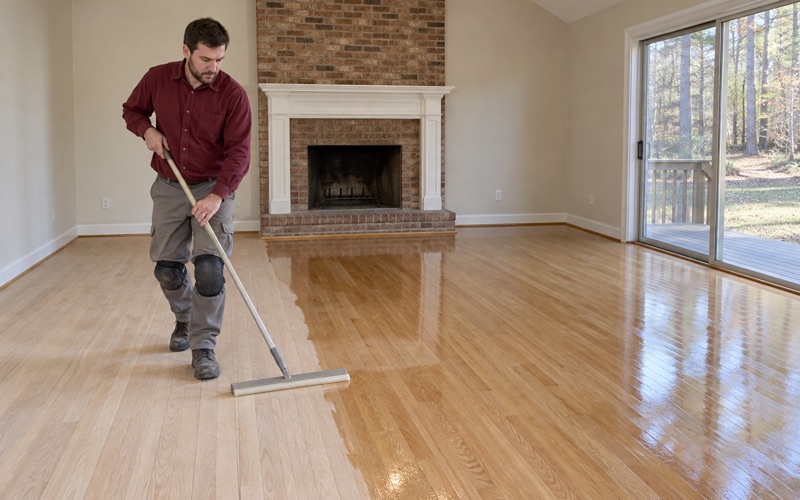
We refinish old floors for what they are rather than for what a catalog says they should look like. Where boards have to be replaced, we match new stock to the color the old wood has earned over the decades. And we lay stain samples on your own floor, in your own light, before you commit to anything.
Alpharetta’s Historic Inventory Around Canton Street
A Former County Seat With Few Old Houses Left
Alpharetta was chartered on December 11, 1858, as the seat of Milton County, and it held that role until 1931, when Milton County merged with Fulton County during the Great Depression. The houses clustered around Canton Street are what remains of that small county-seat town, and they hold the oldest wood floors we see in the city.
They are also rare. Census figures count only 179 housing units in the city built in 1939 or earlier, about 0.7 percent of the stock, and just 7.8 percent of homes predate 1980 at all. Almost every floor we sand here is far younger, which is exactly why the handful of early boards deserve slow hands.
Contributing Inventory Versus the Designated List
The city’s Historic Preservation Commission updates and maintains an inventory of properties and buildings with the potential for designation as historic. Being on that inventory is not the same as being designated. A house can sit in the contributing inventory for years before City Council votes to move it onto the designated historic buildings list.
For a homeowner, that distinction matters before a floor job is planned. We ask early whether a house is inventoried, designated or neither, because the answer shapes who else may want to see plans for restoration work. We would rather learn that on the first visit than halfway through a sanding schedule.
Why Early Floors Need a Slower Start
Houses from this era were built with materials and methods that do not behave like a modern subdivision floor. Before we sand an older home, we check the build year and any painted surfaces, because paint and finish on a house this age can contain lead, and sanding turns it into dust.
We also look hard at fasteners and finish. Face-nailed boards held with cut nails, old shellac or varnish, and patches of mismatched stock all change how a floor should be sanded. They are far easier to plan around than to discover in the middle of a cut.
Looking for wood-flooring closer to Dunwoody? See Wood-Flooring Services in Dunwoody.
The Weatherford House and the Restore-or-Rebuild Question
What the House Is Made Of
The John C. Weatherford House at 193 Canton Street shows what the city’s oldest stock looks like up close. It is a Folk Victorian house built around 1910 to 1920, a wood-framed clapboard building of roughly 2,800 square feet near Mayfield Road. Appen Media reported in October 2025 that it has pine floors, tongue-and-groove walls and a fireplace in every room.
That combination is typical of the period and tells a floor contractor a lot. Fireplaces in every room mean hearth edges where boards were cut, patched and sometimes scorched. Tongue-and-groove walls mean the same milling logic ran up the walls as across the floor. The reporting says only pine, and we would never guess at more than that until a board was in hand.
From a Zoning Condition to Designation
In 2021, City Council approved zoning for a 17-lot subdivision on the 2.4-acre property, with a condition that the Weatherford House be saved, restored and designated under the city’s historic preservation incentive ordinance. On April 28, 2025, council designated the house, moving it from the contributing inventory to the designated historic buildings list.
That sequence shows how a house moves through the city’s system. The inventory flags a building’s potential, a zoning condition can commit an owner to saving it, and a council vote makes the designation formal. Anyone planning work on a similar house should find out where the property sits in that sequence first.
Dismantle by Hand, Rebuild With Reclaimed Material
By October 2025 the picture had shifted. An engineer found nothing on the first floor structurally sound from a modern standpoint, describing wood construction as sagging, cracked or otherwise damaged. The developer said restoration was not feasible and proposed taking the house apart by hand and rebuilding it with reclaimed materials.
The commission’s vice president, Shack Lewis, argued the house needs to be saved because it is a work of art, and a council vote was set for November. The proposal frames a choice every owner of an old Alpharetta house eventually faces with the floor: restore it where it lies, or lift it and carry its boards into something new.
Saving and Reusing Original Pine Floorboards
Lifting Boards Without Splitting Them
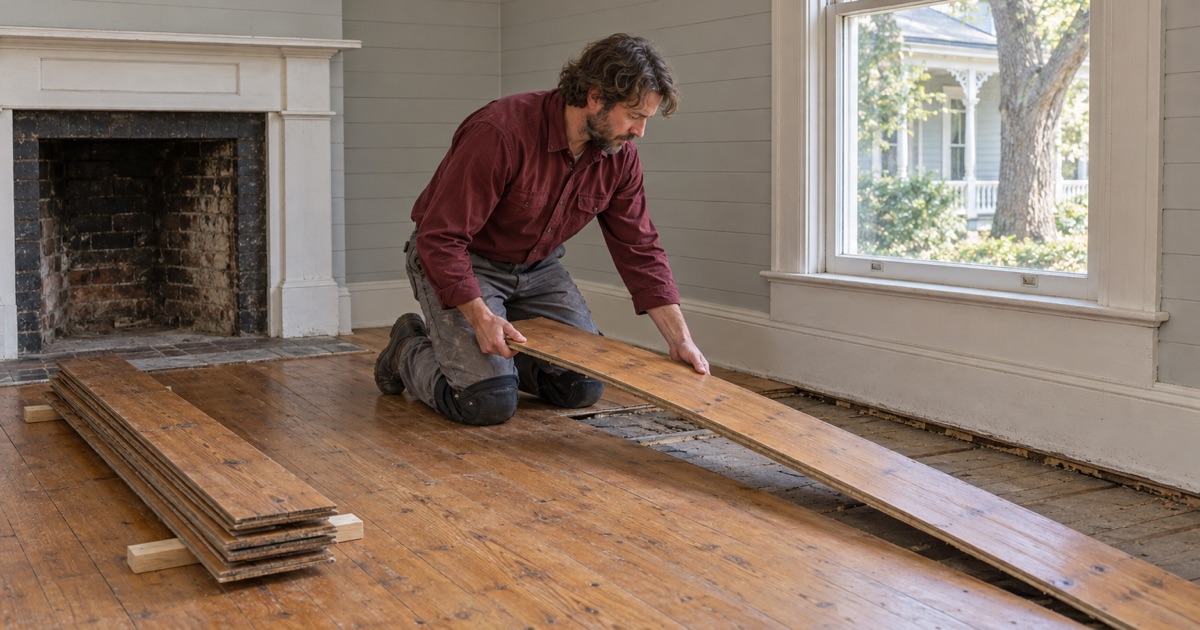
Salvaging an old floor is slow work by design. Tongue-and-groove boards lock into each other, so the first few often have to be cut out to free the rest. After that, every board comes up with its tongue and groove intact or it goes to the scrap pile, and old nails are pulled from the back rather than driven through the face.
Tools matter as much as patience. We work boards loose with flat bars and wood blocks rather than prying against the face, and we stack them flat with spacers so they do not twist while they wait. A board that bows in storage is a board that will not lie flat again.
We number boards as they come up and note which room and run they came from. Wear patterns, traffic lanes and hearth stains belong to a particular spot. A reused floor looks right when those marks land somewhere sensible rather than scattered at random across a new room.
Sorting What Can Go Back Down
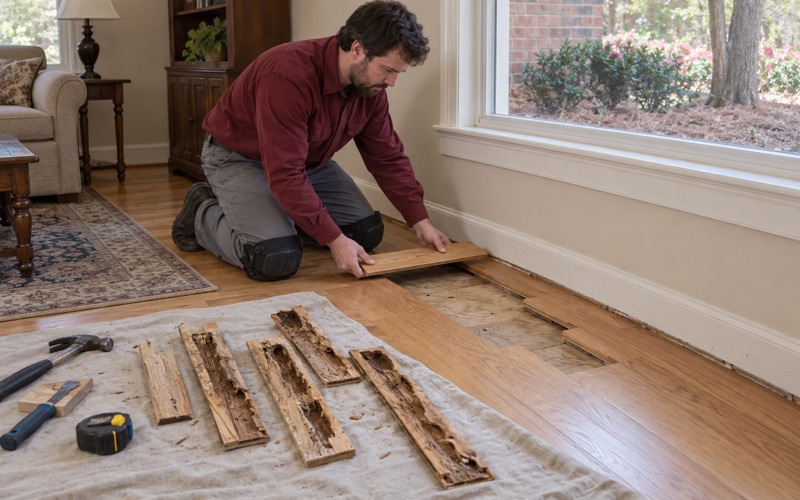
Not every board survives the trip. We set aside pieces with split tongues, rot, or the small powdery holes of powderpost beetles, and we check the edges that sat near sills for subterranean termite damage and mud tubes. Termite-damaged boards are cut out, never filled, and nothing goes back into a house until the pest control company has treated.
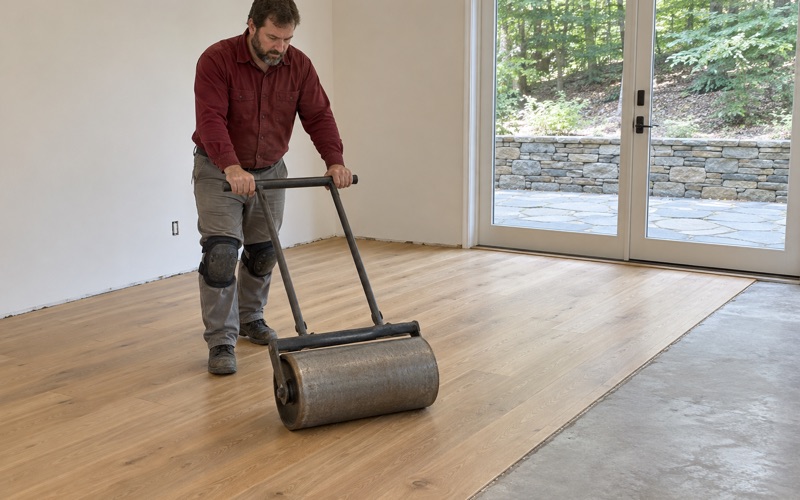
The survivors then sit and acclimate. Wood that spent a century in one house has to settle to the moisture of its new space, and we read it with a moisture meter against the subfloor before any board is fastened. Skipping that step is how a reclaimed floor ends up cupping in a humid Georgia summer.
Weaving Old Boards Into an Existing Floor
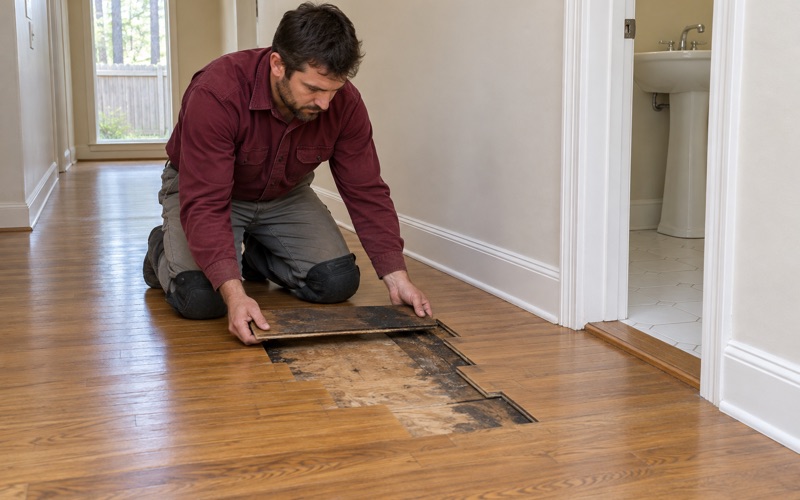
Most salvage never becomes a whole new floor. More often it repairs one: a patch where a wall came out, a section around a rebuilt hearth, a run of boards lost to a leak. We weave salvaged boards into the existing field so the joints stagger naturally, and we match to the color the old floor has actually aged to.
Where there is not enough original stock, we look for pine of similar width and grain and let the finish bring old and new together. A patch should disappear from across the room, not announce itself the moment someone walks in. Hollow spots in a woven patch usually mean a board went down over a low spot in the subfloor, so we check flatness before the first salvaged piece goes in.
Refinishing Early-1900s Floors, Designated or Not
How Much Wood Is Left to Sand
A century-old floor may already have been sanded several times. Before we plan a refinish, we look at a board edge at a vent or threshold to see how much wood remains above the tongue. If it is thin, we skip an aggressive drum sander pass and use a lighter approach, such as a careful orbital cut or a screen and recoat. A board too thin to sand again is replaced with salvaged or matched stock rather than cut down to its tongue.
Soft or spongy spots get the same patience. We open them up and trace them to the subfloor, a joist or the moisture behind them instead of screwing them down and hiding the cause. On a house this age, give underfoot usually means something beneath has changed, and the floor is simply where it shows first.
Choosing a Finish for Old Pine
Pine is softer than oak and takes stain unevenly, so we lean on the wood’s own patina and test samples on the floor itself before anything goes on wide. Waterborne polyurethane keeps a pale floor pale, oil-modified polyurethane deepens it toward amber, and a hardwax oil suits owners who want a low sheen they can spot-repair.
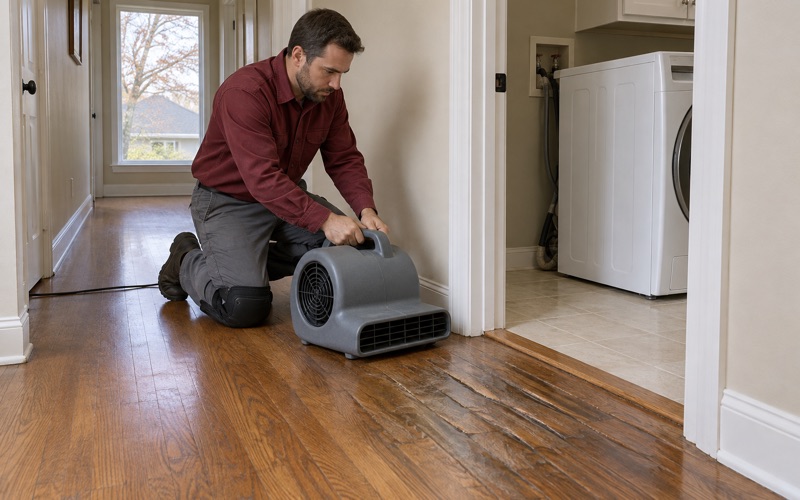
Cupped boards get read before they get sanded. If a floor has cupped or crowned, we find the moisture source first, because sanding the crown flat while the cause is still there leaves a floor that cups the other way a season later.
Gaps between old boards are part of the look, too. Seasonal board gapping in a floor this age is normal, and filling every gap with putty only sets up cracks when the wood moves again. We fill where a gap is a defect and leave the rest alone.
Working on a House the City Has Designated
On a designated house, the Historic Preservation Commission reviews a certificate of appropriateness for restoration work, and city staff review the building permit to confirm it matches what the commission approved. What falls under that review for a particular project is a question for the city, and we would rather owners ask it before work is scheduled than after.
Whether a house is inventoried, designated or simply old, we document the floor before we touch it, with photos of the boards, the hearths and the existing finish. That record helps an owner talk to the city, and it gives everyone a baseline if boards have to come up.
- 20+ Years on Wood Floors
- Moisture Read Before Sanding
- Stain Samples on Your Floor