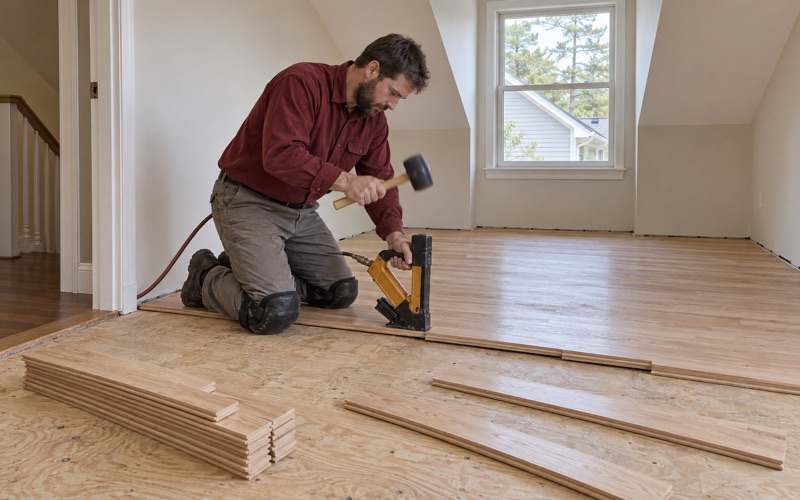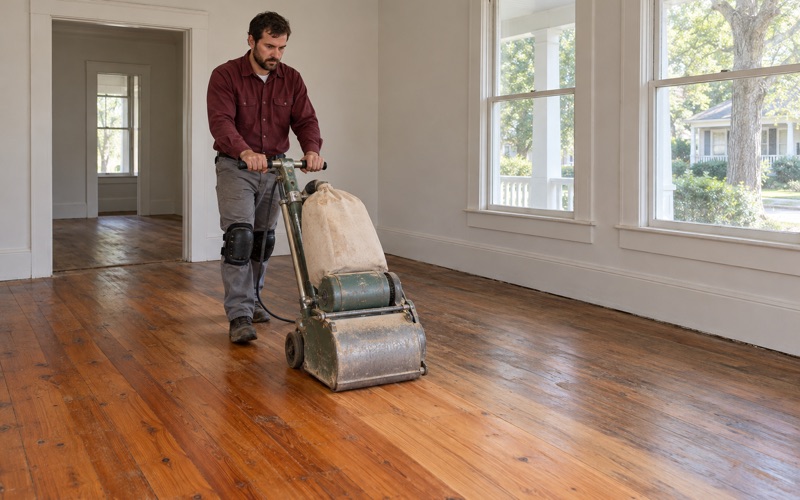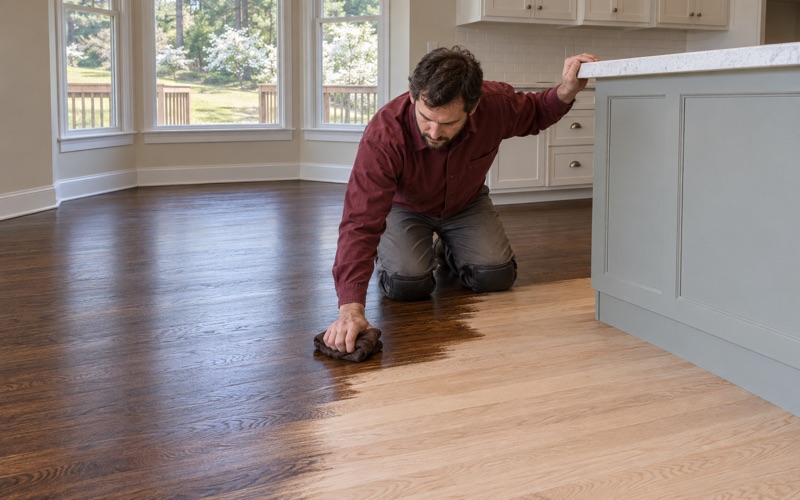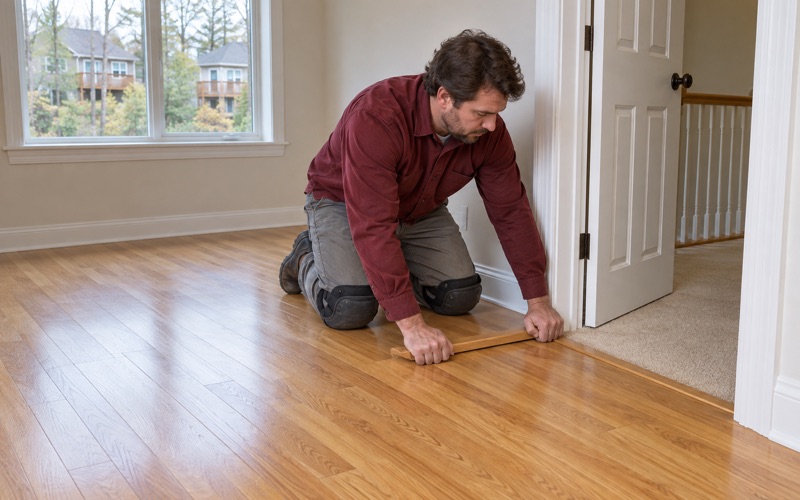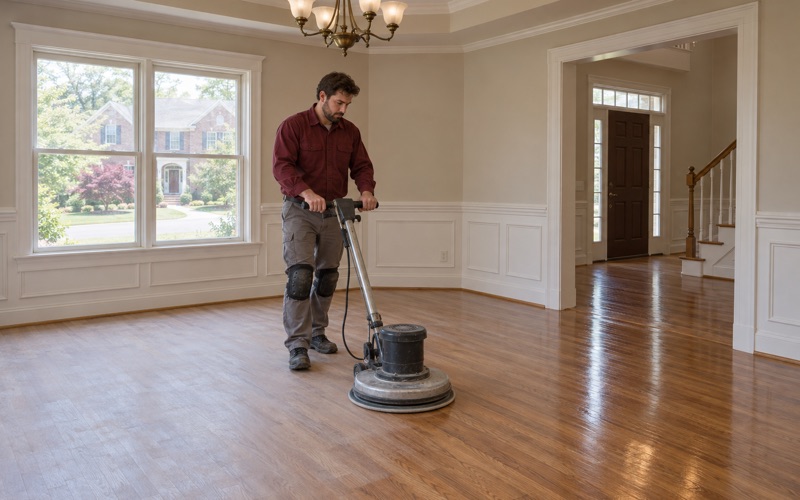
Roswell Wood Flooring handles wood-flooring in Auburn with more than 20 years of work behind us, from sanding and refinishing tired oak to replacing damaged boards, installing new hardwood and rebuilding stairs. Every job starts the same way, by reading the floor before we touch it, because the right repair depends on what is actually happening under the finish.
A cupped board in August usually means moisture is coming from somewhere, so we take moisture meter readings and find the source before any sanding flattens the crown. A soft or spongy spot gets opened up and traced to the subfloor or whatever is wetting it, rather than screwed down and hidden under fresh finish where the same problem returns a season later.
Most of what we see here falls into two groups: the site-finished floors in houses built during the 1980s and 1990s, and the prefinished and builder-grade floors in the newest homes. Below we cover both, along with the river-edge setting and the two-county address that make this city a little different from the places around it.
Auburn at the Apalachee River Edge
Where the River Draws the County Line
Auburn is a city in Barrow and Gwinnett counties, and most of it sits in western Barrow County, with a small portion reaching into Gwinnett. The city’s own 2023 comprehensive plan, prepared with the Northeast Georgia Regional Commission, records that the Apalachee River flows south of Auburn and serves as the boundary between Gwinnett and Barrow counties.
The same plan notes that single-family homes and James Shackelford Park border the river within city limits. For us that means some Auburn houses sit at the edge of a wooded river corridor rather than in an open subdivision, and we plan the visit, the equipment path and the dust control around a lot that backs onto trees instead of a neighbor’s fence.
Homes Beside a 100-Foot Buffer
Barrow County has established a 100-foot natural vegetative buffer along the Apalachee River, which is why most of the land beside it stays forested. That buffer is a land-use rule, not a floor rule, and it changes nothing about how a board is sanded. What it does change is the setting: shade, leaf litter and a damp woodland edge right behind the house.
A shaded, wooded lot is exactly where we pay attention to a musty smell, mold under hardwood or board gapping that opens and closes with the seasons. We read the floor with a moisture meter, check the humidity in the room and look for the actual path the water takes, whether that is a gutter, the grading or a plumbing line, before recommending any repair.
Upstream in the Upper Oconee
The plan also places the city near the upstream end of the Upper Oconee River watershed, within the Rock Creek tributary, and notes that the Apalachee downstream provides drinking water for Morgan and Oconee counties and the city of Madison. We keep that in mind on every job near the water, since what goes down a drain or onto the ground here travels.
In practice we favor waterborne polyurethane where it suits the floor, keep sanding dust bagged and contained, and never rinse finish tools outside. Solvents, rags and used abrasives leave with us. None of it is dramatic, but a river-edge lot is the wrong place to be careless with finish waste, and doing it right costs nothing.
Looking for wood-flooring closer to Alpharetta? See Wood-Flooring in Alpharetta.
Floors in Auburn’s 1980s and 1990s Houses
The housing numbers explain most of our work here. Census estimates show 52.9 percent of Auburn’s homes were built between 1980 and 1999, and 94.8 percent of owner households live in detached houses. That describes a city of single-family homes now roughly 25 to 45 years old, many still carrying the floors and finishes they were built with.
Site-Finished Oak and the Wood Above the Tongue
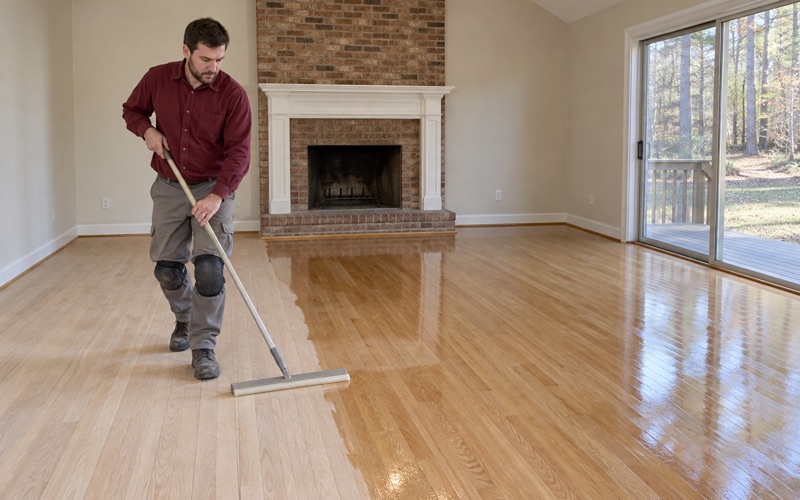
Site-finished red oak and white oak from that era is usually worth keeping. Before we quote a sand and refinish, we check how much wood remains above the tongue, because a floor that has already been sanded once or twice may have only one careful pass left. That measurement decides whether a full sanding, a screen and recoat, or board replacement makes sense.
Floors from these decades often show traffic lanes worn to bare wood, pet urine stains, water stains by the kitchen sink and the orange oak color that aged oil-modified polyurethane leaves behind. We work through a grit sequence with a drum sander and orbital sander, water pop where a stain needs it, and lay stain samples on your own floor, in your own light, before you choose.
Carpet, Parquet Foyers and Two-Story Landings
Plenty of 1990s houses still have carpet in the living areas, a parquet foyer at the front door and builder-grade vinyl in the kitchen. We pull the carpet pad and tack strip, check the subfloor for soft spots and replace those floors with solid hardwood, carrying it up the stairs and across a two-story landing so the house reads as one floor.
Where the new floor meets older wood, we weave boards in rather than ending at a hard reducer in the middle of a room. Matching an older floor means matching its color and patina as it looks today, not a catalog sample, so we sand a test area and build the stain from there.
Build Year Before the Sander
Only 13.3 percent of Auburn’s homes predate 1980, but some do, including houses from the 1940s and earlier near the center the Seaboard Railroad surveyed and platted in 1891. For any older home, we check the build year and look for painted surfaces, such as baseboards, stair risers and painted floors, before a sander touches them.
Where paint could date from before 1978, we plan the work around the lead-safe practices the EPA RRP Rule describes rather than sanding it into the air. It is a short conversation at the start of the job, and it keeps a refinishing project from turning into a cleanup problem in a house where people are still living.
Newer Auburn Homes Since 2020
Auburn is also still growing. Census estimates count 374 homes (±122) built in 2020 or later, alongside developments the city plan names, such as the Townes of Auburn, a 398-townhome community, and Harmony, a mixed-density project at the new Town Center. Newer homes bring a different set of floor questions than the 1990s houses do.
Builder-Grade Floors Worth Upgrading
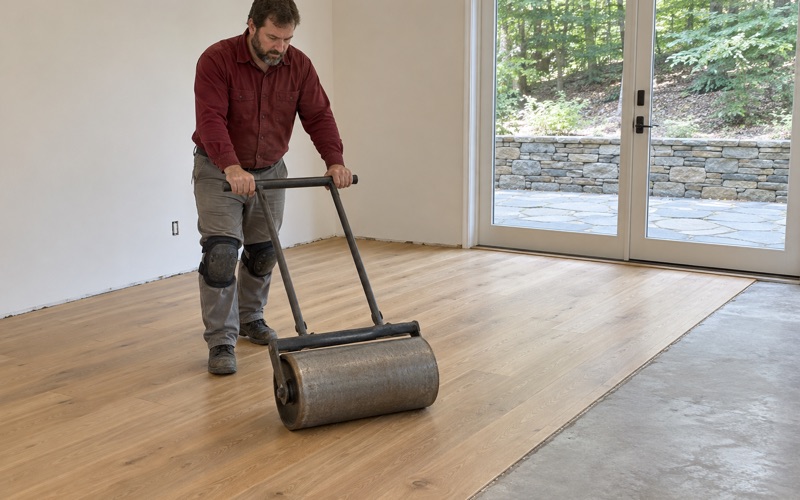
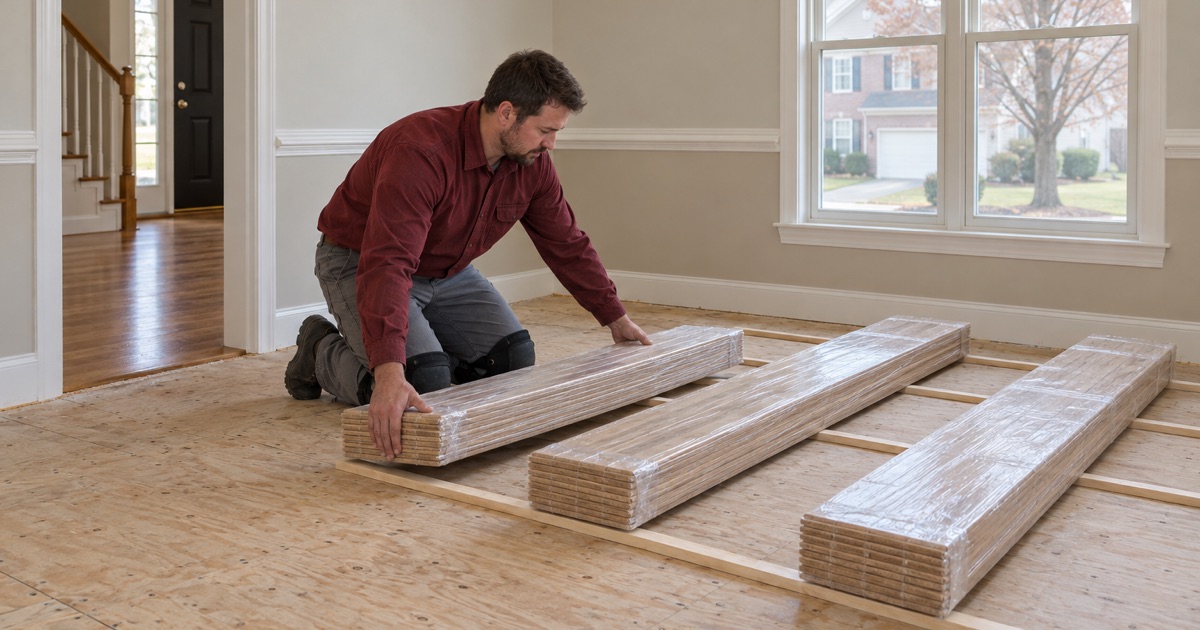
Many new homes come with luxury vinyl plank, a floating floor or thin prefinished engineered wood in the main rooms. When owners want real hardwood, we compare solid hardwood, glue-down engineered and wide plank options by Janka hardness, engineered wear layer and how each handles a busy household, then install to the NWFA Installation Guidelines.
New construction means new framing and building materials that are still giving up moisture. We allow for acclimation, take readings on the subfloor, lay a vapor retarder where the assembly calls for one and leave a proper expansion gap under the quarter round. Skipping those steps is how a floor installed in March ends up buckling or crowning by July.
Stairs Priced Tread by Tread
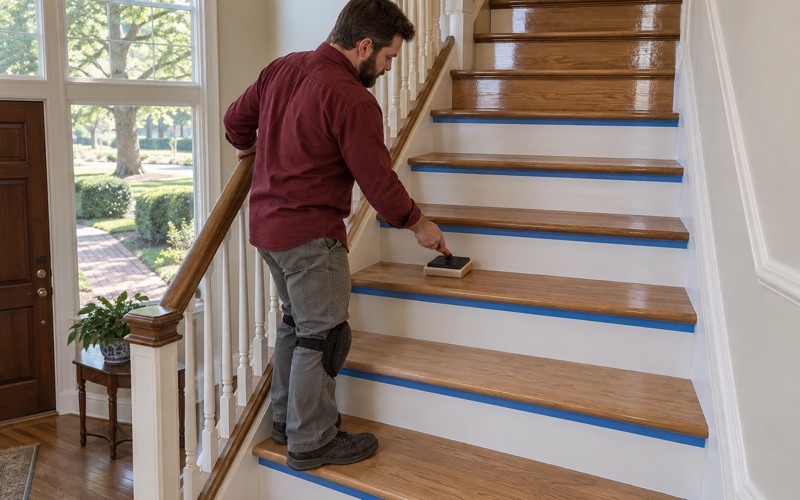
Open staircases and two-story foyers are common in newer plans, and many arrive carpeted. We quote stairs tread by tread, pricing new stair treads, stair risers and stair nosing separately from refinishing existing ones, because replacing a tread and refinishing it are two different jobs with two different costs.
That breakdown lets you choose where to spend. Some owners refinish the treads they have and paint the risers; others replace carpeted builder treads with solid oak to match a new hallway floor. Either way, you see what each step costs before we start, rather than a single stair number with the details buried inside it.
HOA Approval Before Work Starts
Townhome communities and many newer subdivisions come with a homeowners association and a recorded declaration. Any interior flooring rule, whether it concerns underlayment or a notice period, comes from that declaration rather than from us or the city, so we confirm your HOA’s written approval before work begins.
It is a small step that prevents a large one. A floor installed without approval can mean tearing it back out, and nobody wants that conversation after the finish has cured. If the declaration says nothing about flooring, we note that too, so you have a clear record either way.
One City, Two Counties: Barrow and Gwinnett
The National Weather Service puts the city’s center in forecast zone GAZ035, named Barrow, and that is the forecast we check before a finish goes down on a humid week. The county line does not change how we refinish a floor, but the address does follow the paperwork, especially when a house is under contract and an inspection turns something up.
Termite Letters and Closing Dates
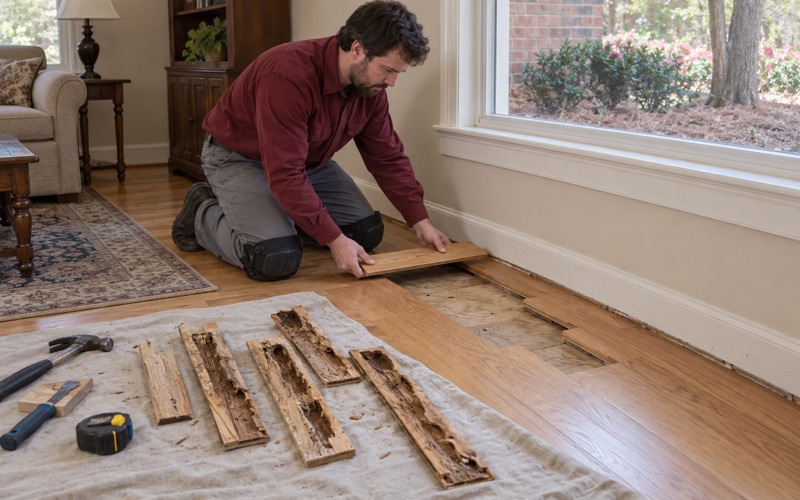
Subterranean termites are a steady part of floor work in Georgia, and mud tubes on a joist often show up first on a buyer’s inspection. When an Official Georgia Wood Infestation Inspection Report, the termite letter, flags damaged flooring, we help sellers work toward the closing date instead of letting the repair hold up the sale.
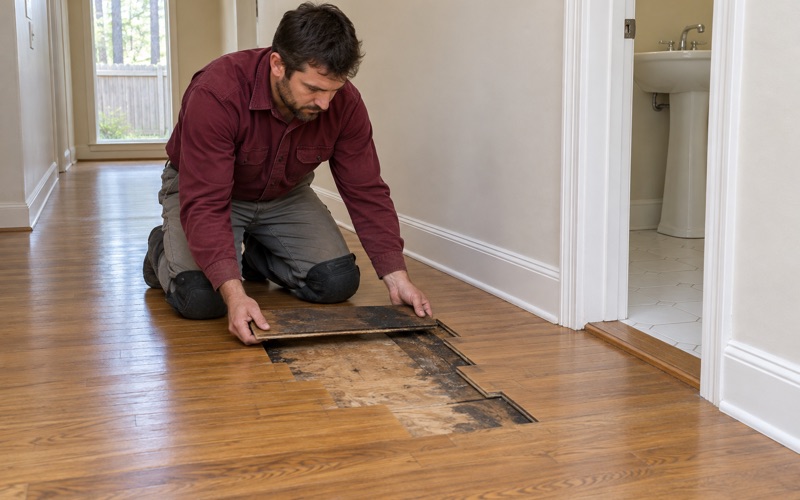
Our part comes after the pest control company has treated. We cut out the damaged boards and weave in matching stock, never filling or covering over the damage, and we document the repair for the buyer’s side. Termite swarmers in spring, powderpost beetles and carpenter ants each leave different signs, and we tell you which one we are looking at.
Water Traced, Dried and Documented
A leaking washer, dishwasher or supply line, or water driven in by a storm, is the other common reason we get called. We trace where it came from, dry the floor with a dehumidifier and airflow, and measure until the readings settle before replacing any board, because new wood laid over a wet subfloor simply repeats the damage.
For insurance claims we document the damage room by room, with moisture readings, photos and board counts the adjuster can follow. Whether your policy is written on a Barrow or a Gwinnett address, the adjuster wants the same thing: a clear account of what got wet, how far it spread and what it will take to put right.
- 20+ Years on Wood Floors
- Moisture Read Before Sanding
- Stain Samples on Your Floor