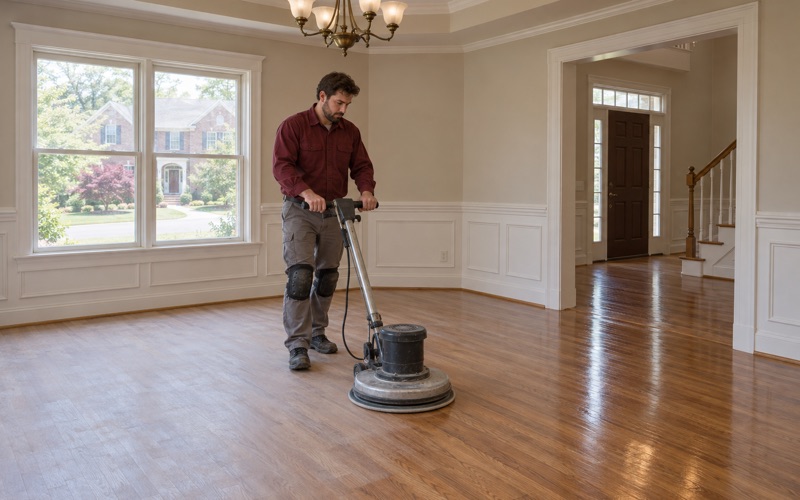
Roswell Wood Flooring handles wood-flooring in Clarkston with more than 20 years in the trade, and much of that work is keeping older floors in service rather than starting over. We repair boards, refinish worn surfaces and replace floors that are past saving, in apartments, townhomes and small houses alike.
Every job starts with a reading, not a guess. A floor that has cupped or turned clammy through a humid Georgia summer gets checked with a moisture meter, and the source found, before any sander touches the crown. Soft or spongy spots get opened and traced to the subfloor rather than screwed down and hidden under fresh finish.
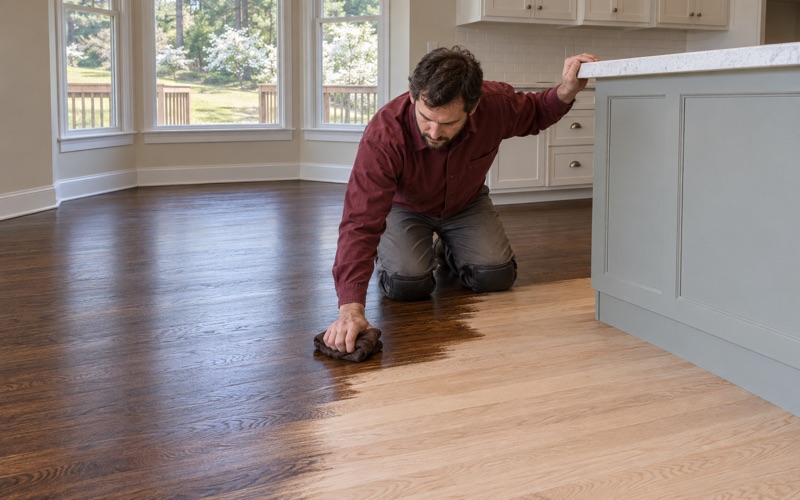
Before we sand anything in an older home, we confirm the build year and look at the painted surfaces nearby, including baseboards, shoe molding and stair risers. Then we lay stain samples on your own boards, in your own light, so the color you choose is the color you live with.
What Clarkston’s 2040 Plan Says About Aging Housing
The Plan’s Own Figures
Clarkston’s 2040 Comprehensive Plan Update, sent to the Atlanta Regional Commission in September 2021 and adopted in 2022, is direct about the city’s housing. On page 48 it notes that most residents are renters and states, as the plan’s own figure, that 84 percent of the housing stock was built before 1980.
The American Community Survey’s 2024 five-year estimates tell a related but different story. They count 2,579 of 4,892 units, or 52.7 percent, as built before 1980, with the 1970s the largest single decade at 31.2 percent. The two sources use different vintages and possibly different city boundaries, since the plan mentions recently annexed parcels, so we report both rather than choosing one.
Enhancing Instead of Replacing
The plan’s proposed housing policy is to ‘Enhance the existing housing stock, specifically the aging multi-family properties.’ A proposed priority on page 49 goes further: ‘Extend the useful life of existing affordable rental housing by funding acquisition and/or rehabilitation.’ Its third community priority is to address disrepair in apartments and safety concerns for residents.
Neither line mentions floors, but floors are often where a building’s age shows first. A 1970s unit with board gapping, water stains near the kitchen and gray traffic lanes down the hallway can frequently be brought back with board replacement and a refinish, keeping it livable without tearing it back to the joists.
A Renter City With Owners Too
ACS 2024 counts 81.7 percent of Clarkston’s occupied homes as rented, 3,223 of 3,947. That leaves 724 owner households, 527 of them in detached houses, and the plan says plainly that the community wants to attract more homeowners.
Whether you own a single unit or a single house, the questions we ask are the same: what sits under the finish, how much wood remains above the tongue, and whether the damage has a source still feeding it. We answer those before we write a quote.
Looking for wood-flooring closer to Cumming? See Cumming Wood-Flooring.
Keeping Pre-1980 Apartments and Townhomes in Service
What 1970s Garden Buildings Tend to Need
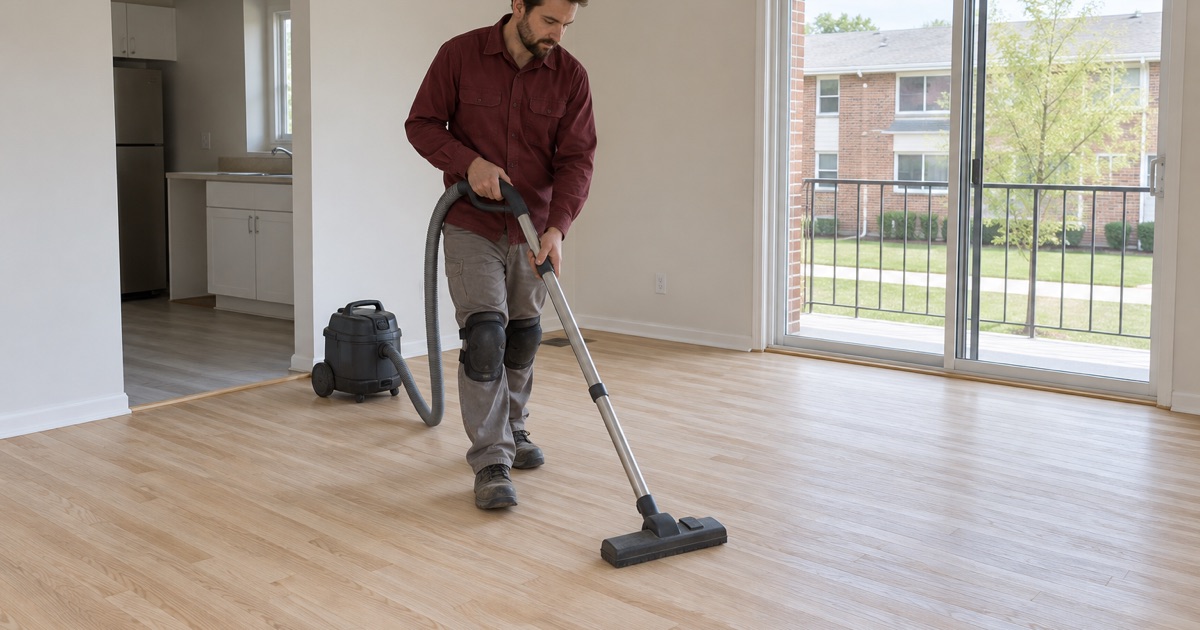
Buildings of three to nineteen units hold 62.4 percent of Clarkston’s homes in the ACS 2024 count, and the 1970s were the busiest building decade. Floors in units like these have usually seen decades of move-ins, carpet swaps and quick patches. Carpet pad and tack strip left from earlier layers, parquet worn through at entries and boards loosened by stacked repairs are all common in buildings of that era.
We read the floor as it actually is. Pulling a threshold or a vent cover shows the board thickness, the tongue and groove and how the floor was fastened, which tells us whether it can take a full sanding or only a screen and recoat.
Some older units also hide wood under luxury vinyl plank or a floating floor laid during an earlier turnover. We lift a corner before quoting, because what lies under that layer, whether salvageable boards or a damaged subfloor, changes the job entirely.
Repair Before Replacement
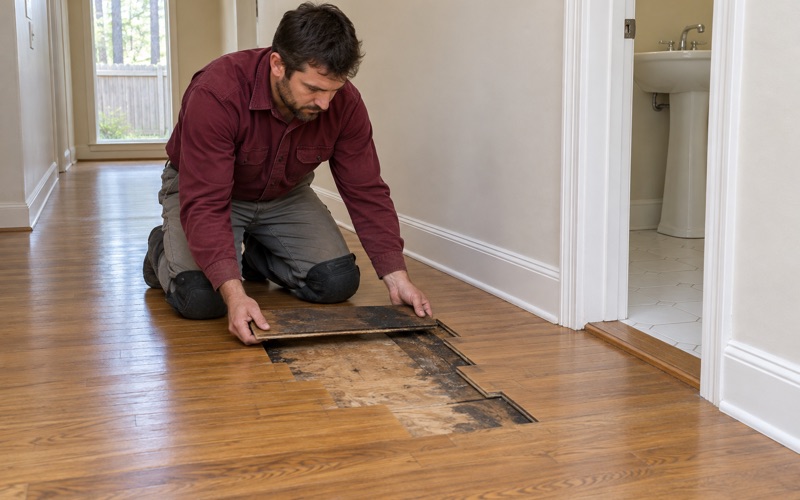
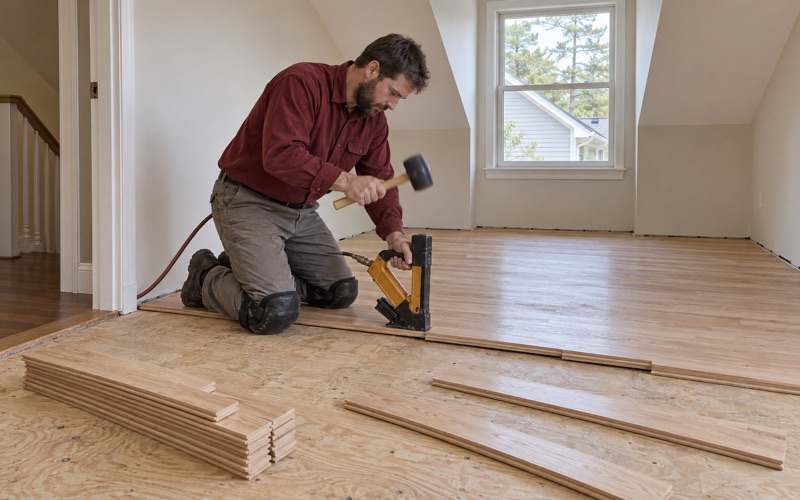
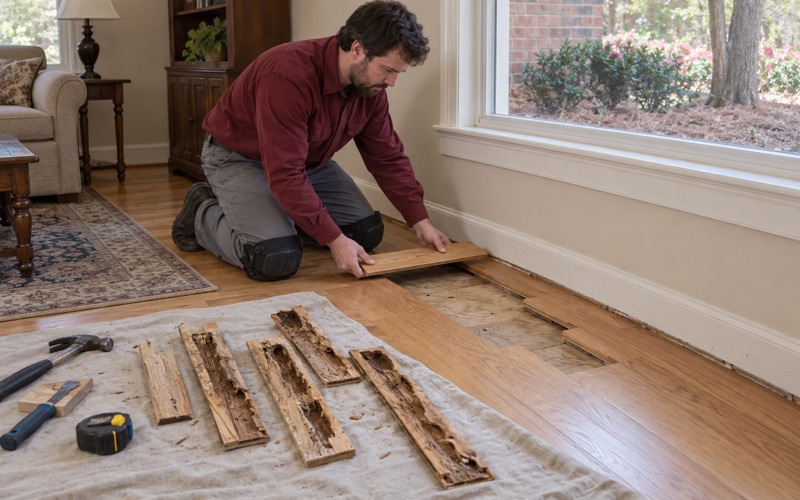
Board replacement is the center of this work. Where a washer hose, a dishwasher or a leaking supply line has stained or cupped a section, we trace the water, dry the area with a dehumidifier and measure again before cutting anything out. Once the readings settle, new boards are woven into the existing field so the repair follows the original layout instead of reading as a patch.
When the water came from a single event, we document the affected rooms one by one for the adjuster, with moisture readings attached. That record matters when a claim is reviewed weeks after the floor has dried and the evidence is gone.
When a Floor Is Past Saving
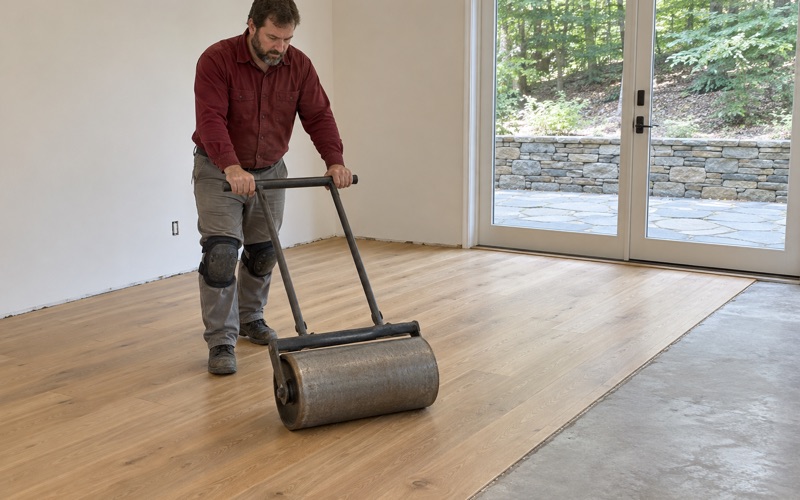
Some floors have been sanded so often that little wood is left above the tongue, and some were never solid hardwood to begin with. In those cases we replace worn carpet, damaged parquet and tired builder-grade floors with hardwood, and we fit engineered wood with a proper vapor retarder wherever a floor sits below grade.
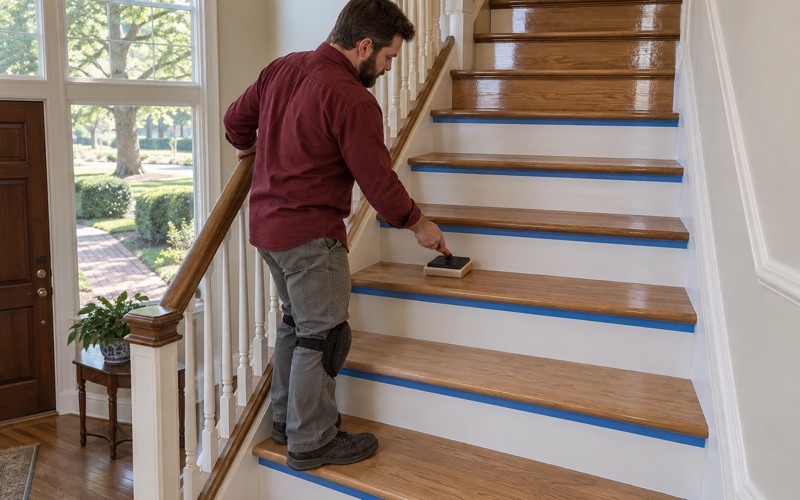
Stairs in two-story townhomes get quoted tread by tread. Refinishing existing treads and installing new stair treads, risers and nosing are priced as the separate jobs they are, so you can see what each choice costs before deciding.
Sanding Safely in Homes Built Before 1978
Why the Build Year Comes First
With the 1970s the largest decade in the city’s housing, a good share of Clarkston’s units predate 1978, the year lead-based paint was banned for residential use. The floor finish itself is rarely the worry. The worry is the paint on baseboards, shoe molding, door casings and stair risers that an edger can scuff while it works the perimeter.
So we confirm the build year before we schedule any sanding. Where painted trim is in play, we plan the edges around the paint rather than through it, removing or protecting trim, closing off the room and cleaning thoroughly once the work is done.
Dust Control and Finish Choices
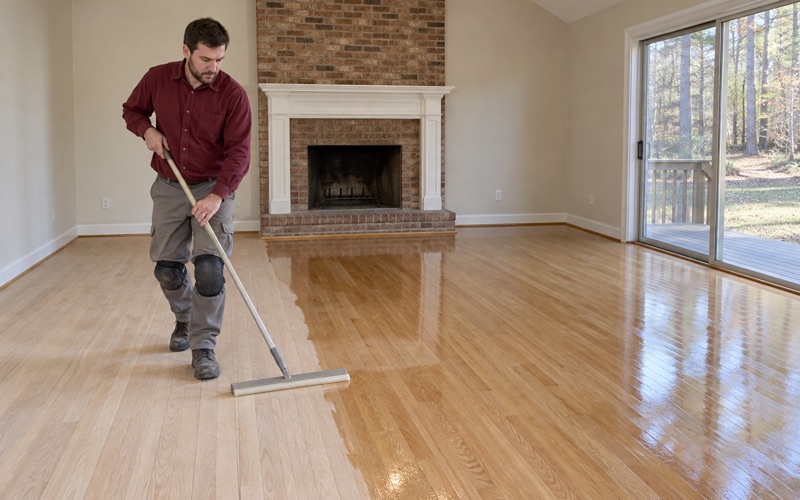
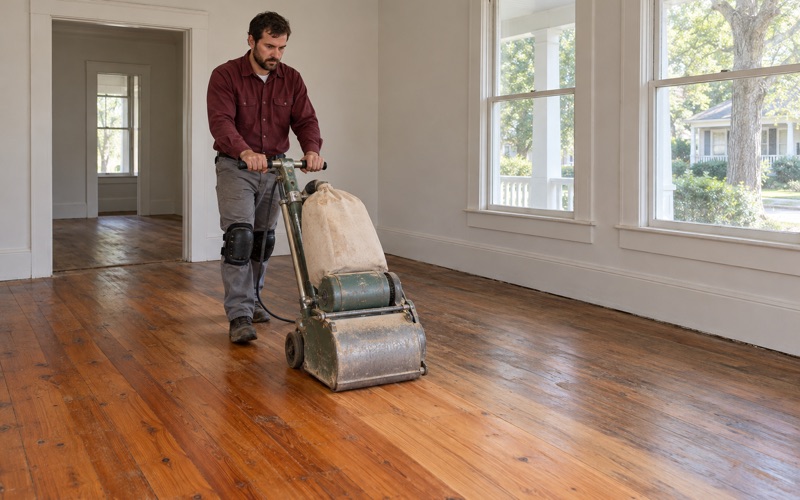
Dustless sanding with vacuum-connected equipment keeps most debris out of the air, which matters in buildings where a shared hallway or stairwell connects several units. We work through a planned grit sequence, drum sander in the field and orbital sander at the edges, then vacuum and tack the surface before any finish goes down.
For occupied homes, waterborne polyurethane is often the practical pick. It dries faster and carries less odor than oil-modified polyurethane, so a household gets back onto the floor sooner. We choose sheen level on samples too, since satin hides traffic wear better than gloss in a busy hallway.
Screen and Recoat as the Lighter Route
Not every floor needs sanding to bare wood. If the finish is dull but intact, with no gray, worn-through wood, a screen and recoat abrades the top coat and adds a fresh one without cutting into the boards. In an older painted room, that can be the lower-disturbance route for a floor that is simply tired.
It also buys time. A recoat every few years protects the remaining wear layer, which matters most in a floor that has already been sanded more than once and has fewer full refinishes left in it.
Repairs for Clarkston’s Owner-Occupied Houses
Detached Houses and Aging in Place
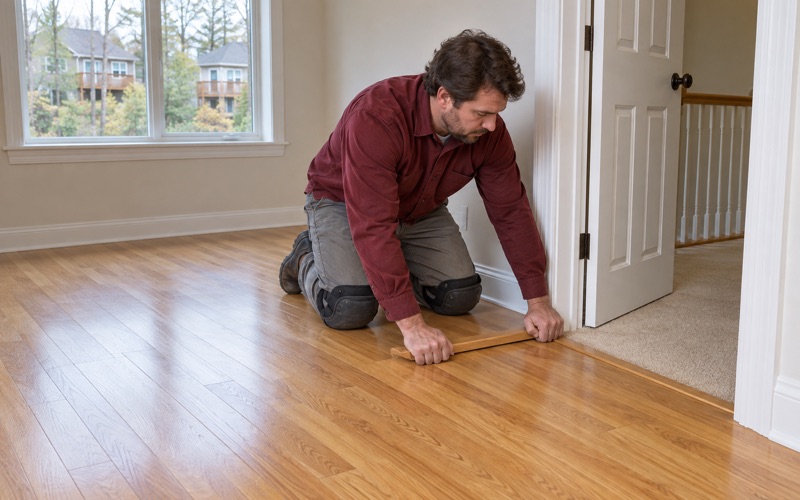
Owners in Clarkston’s detached houses deal with the same aging stock, often on a longer horizon. The 2040 plan encourages development that allows aging in place, and floors are part of that. Loose boards, buckling at a doorway and uneven reducers between rooms are trip points we can correct without replacing a whole floor.
Where a house has site-finished oak from the 1980s, refinishing usually beats tearing it out, provided the wood is thick enough. We check how much remains above the tongue before recommending it, because that measurement decides how many more sandings the floor can take.
Termites, Moisture and What Lies Beneath
Subterranean termites are common in Georgia, and their damage often surfaces as hollow spots or boards that give under a thumb. We cut damaged boards out and weave in matching stock only after your pest control company has treated, never filling or covering the damage. If a termite letter or inspection turns up damaged flooring before a sale, we work against your closing date.
Powderpost beetles and carpenter ants leave different signs, fine powder in one case and coarse shavings in the other. We point out what we see so the right specialist treats the source before any board goes back.
A musty smell or a spongy floor often points to moisture below. The plan notes about 1.25 acres of 100-year floodplain running through Milam Park, but inside a house the cause is usually closer at hand: a failed supply line, a slow drain or summer humidity with nowhere to go.
Matching Older Floors
Older floors carry a patina that no catalog sample matches. When we replace boards in a red oak or white oak floor, we select and stain new stock to the color actually on your floor, and we compare the samples beside the old boards before committing.
Where a room needs new flooring rather than repair, species choice follows use. Red oak and white oak take stain predictably, hickory and maple bring more Janka hardness to a kitchen or a room with pets, and engineered wood with a thick wear layer suits spots where solid boards would struggle.
In a townhome or condominium community, we confirm the association’s written approval before work starts, since any interior flooring rule comes from your own declaration. That one step keeps a finished floor from turning into a dispute afterward.
- 20+ Years on Wood Floors
- Moisture Read Before Sanding
- Stain Samples on Your Floor