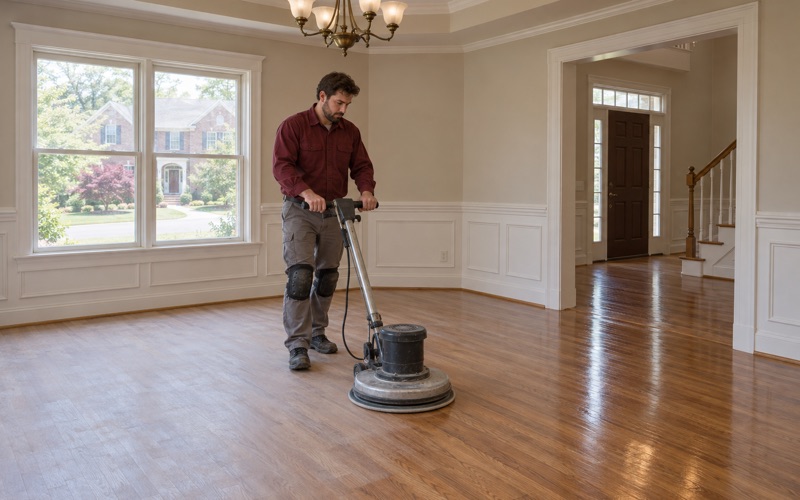
Roswell Wood Flooring handles wood-flooring in College Park for owners, landlords and condo boards whose floors have seen decades of wear, and we bring more than 20 years at this trade to every job. We start by reading what is under your feet: the species, how much wood is left above the tongue, and whether moisture or pests have had a hand in the damage.
Much of our work here is renewal rather than new construction. Traffic lanes worn gray, pet urine stains, water stains beside a dishwasher, sun fade near a sliding door and soft spots that give underfoot all have different causes, and each is diagnosed before a sander or a saw comes out. A floor that has cupped gets a moisture meter reading first, so we know the source before we touch the surface.
When a floor is past saving, we replace it with solid hardwood where the structure suits it and engineered wood where it does not. Stain samples go down on your own boards, in your own light, so the color you choose is the one you actually live with.
College Park’s 1960s and 1970s Housing
College Park is a city in Fulton and Clayton counties, adjacent to the southern boundary of Atlanta, and its housing shows clearly when it was built. The historic core along Main Street was listed on the National Register in 1996, but that district covers only the older part of town. Outside it, the homes we work in are mostly mid-century.
The figures below come from the Census Bureau’s 2024 five-year American Community Survey. We use them to describe the housing we meet, not to guess at any single house, and each floor still gets its own inspection.
The Largest Build Decade
The survey counts 7,364 housing units in College Park. Of those, 1,968 were built in the 1970s, the single largest decade on record, and another 1,481 went up in the 1960s. Together that is 3,449 units, or 46.8 percent of the city’s housing, built across those twenty years.
Only 19.3 percent of units date from 2000 or later. For flooring, that means most of what we see has been walked on, refinished, covered or replaced at least once, and the history of a floor matters as much as its age.
Most of the City Predates 1980
All told, 70.6 percent of College Park’s units were built before 1980, and 906 predate 1940. That age profile changes the order of our work. Before sanding an older home, we check the build year and look for painted surfaces, since paint from those decades can contain lead and the EPA RRP Rule governs how that dust is handled.
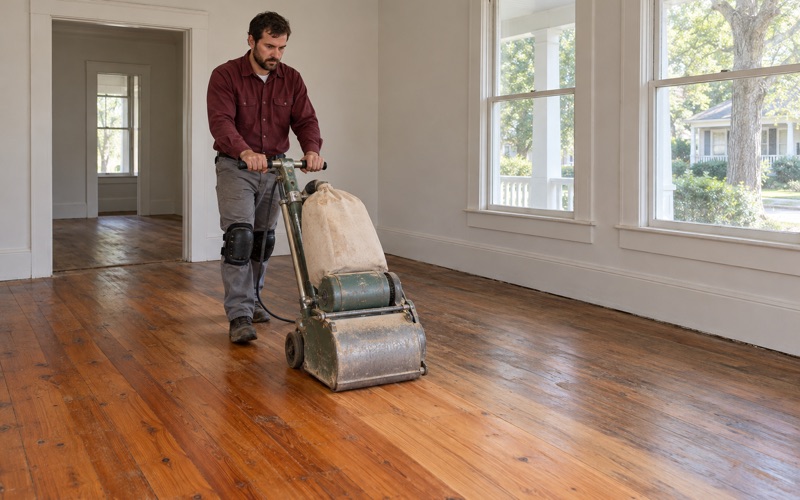
A floor from this period may already have been sanded several times. We measure the wood remaining above the tongue before promising a refinish, because a board sanded thin cannot take another full pass with a drum sander.
Looking for wood-flooring closer to Forest Park? See Wood-Flooring Services in Forest Park.
Floors in Small and Mid-Size Apartment Buildings
College Park is a city of apartment buildings as much as houses. According to the same survey, 3,801 units, or 51.6 percent, sit in buildings of five to forty-nine units: 1,816 in five-to-nine unit buildings, 1,430 in ten-to-nineteen and 555 in twenty-to-forty-nine. Among renters, 2,721 households live in buildings of five to nineteen units.
Those counts come from a different table than the build-year figures, so they do not tell us how many of these buildings date from the 1960s or 1970s. We look at each building on its own terms when we arrive.
What Changes in a Shared Building
Work inside an apartment or condo unit happens with neighbors on the other side of the floor and the walls. We use dustless sanding where it fits, stage materials so hallways stay clear, and run the drum sander during the hours the building allows. Waterborne polyurethane cures with less odor than oil-modified polyurethane, which matters when the next door sits a few feet away.
Where a unit belongs to an association, we confirm the board’s written approval before work starts. Any rule about interior flooring, including underlayment under new wood, comes from that community’s own declaration, so we ask for it in writing and build the job to it rather than assuming.
Landlords and Turnovers
Many of these units change tenants regularly, and a floor that must be ready by a move-in date needs a plan built around that date. A screen and recoat can refresh a sound finish in a short window, while pet urine stains, deep water stains or loose boards call for board replacement with matching stock.
When a unit has had carpet, we pull the carpet pad and tack strip and look at what is underneath before we quote. What we find sets the price, and we would rather tell you before the job than partway through it.
Owners of several units often want the same floor across each one so turnovers stay simple. We keep a record of species, stain and sheen for each job so a later unit, or a later repair, can match the first.
Detached Houses Where Owners Live
Owners in College Park live almost entirely in single-family homes. Of the city’s 1,325 owner households, 1,314 are in one-unit detached houses. So when an owner calls us about a floor, it is nearly always a freestanding house with its own subfloor, joists and moisture conditions to read.
Postwar Houses and Humid Summers
A detached house faces Georgia humidity on its own. Floors that cup or feel clammy in summer get a moisture meter reading and a search for the source, whether a leaking supply line, a missing vapor retarder or poor airflow, before anyone sands a crowned board flat. Sanding too early leaves a floor that cups the other way once it dries.
College Park sits in National Weather Service forecast zone GAZ044, South Fulton, and damp months there call for patience. Replacement boards go through acclimation before they are nailed down, and we leave a proper expansion gap at the walls.
Soft, spongy spots get opened up rather than screwed down and hidden. The cause might be a failing subfloor panel, a slow leak or old insect damage, and each needs a different repair.
Traffic Lanes and Covered Floors
Where carpet or vinyl has been laid over wood in an older house, we lift a corner first and check for staple holes, tack strip damage and glue residue. Then we tell you whether the wood beneath can be sanded clean or needs board replacement in patches.
Traffic lanes from a front door to the kitchen wear through the finish first. If the wood beneath is still sound, a screen and recoat can buy years, but once gray wood shows through, a full sand is the fix.
Termites, Water and a Closing Date
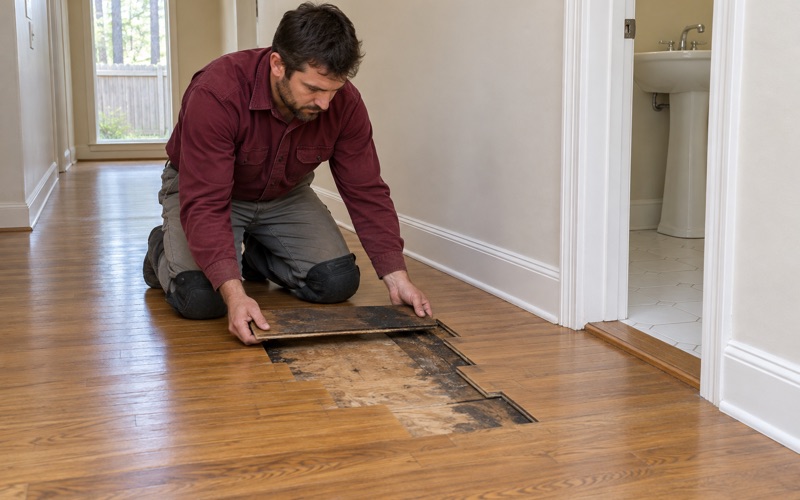
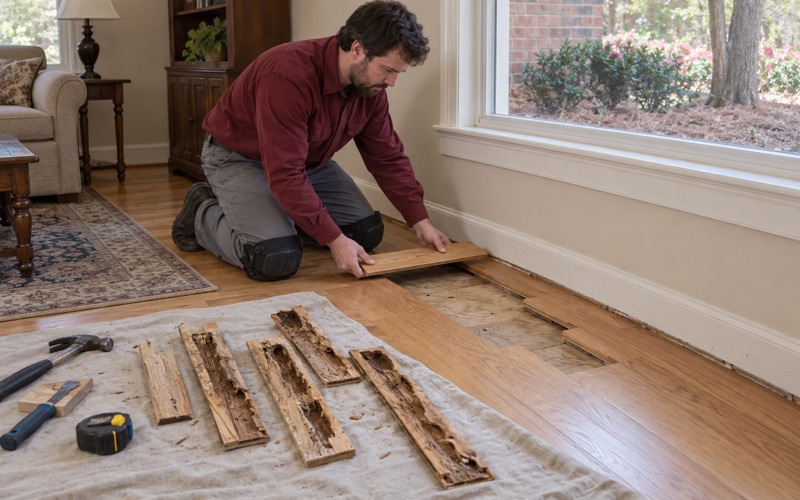
Mud tubes near a floor edge or a hollow spot underfoot can point to subterranean termites. Once the pest control company has treated, we cut out the damaged boards and weave in matching stock rather than filling or covering the damage. Sellers facing a closing date after a termite letter turns up damaged flooring can call us to fit the repair into that schedule.
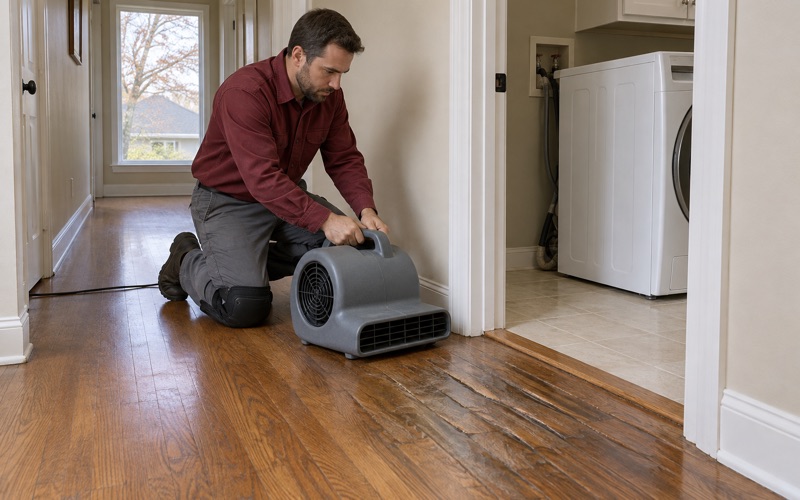
Powderpost beetles and carpenter ants leave different signs than termites, so we note what we see and the right company treats it first. Water from a washer, dishwasher or storm is traced, dried and measured before any board comes out, and documented room by room for your adjuster.
Refinishing or Replacing Floors From the 1960s and 1970s
Most College Park floors we see follow one of two paths: keep the wood and renew it, or take out what is there and start over. The floor itself makes that decision, not a preference for either job.
Whichever path your floor takes, you get a written scope before work begins: what we found, what we recommend, and what each step costs. If the answer is that a floor only needs a cleaning and a fresh coat, we will say so.
When Refinishing Makes Sense
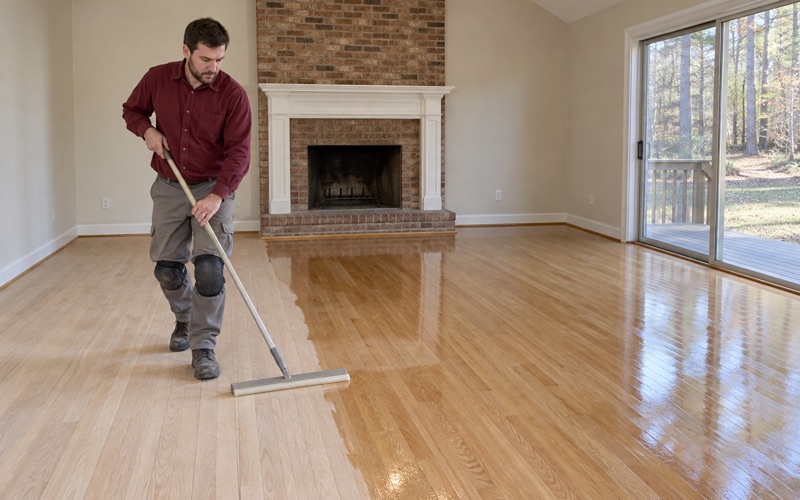
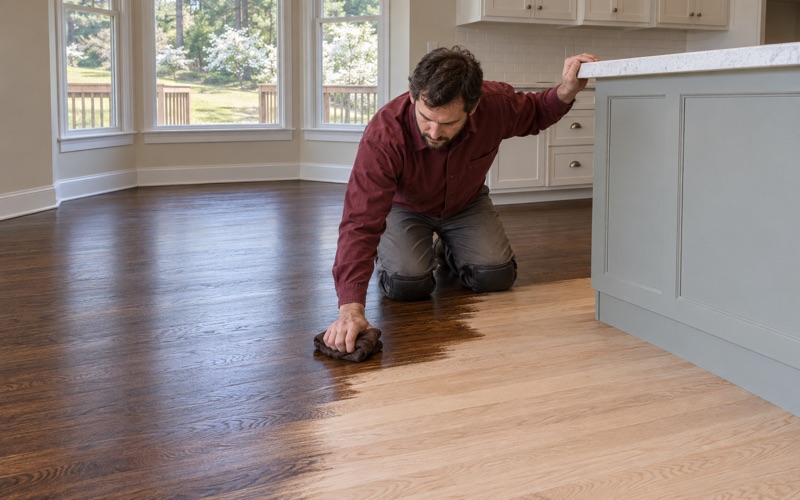
Site-finished oak with enough wood above the tongue is usually worth sanding. We run a full grit sequence, water pop the grain when a darker stain needs even absorption, and test colors directly on your floor so you can judge each one against your trim. An orange oak finish from decades past can often be sanded back to a more neutral color.
Finish choice depends on how the room is used. Waterborne polyurethane stays clearer, oil-modified polyurethane warms the tone, and hardwax oil suits owners who would rather spot-repair than recoat a whole room. We settle the sheen level on a sample too, since high gloss shows every scratch in a hallway.
When Replacement Is the Better Call
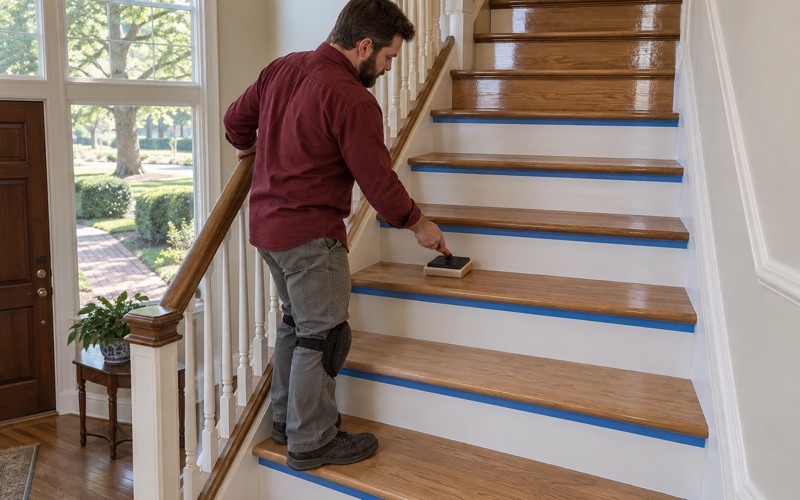
Carpet, worn builder-grade floors and tired parquet foyers can all give way to hardwood, stairs and landings included. Stairs are quoted tread by tread, with refinishing existing stair treads and installing new ones priced as the two separate jobs they are, and the nosing, risers and quarter round finished to match.
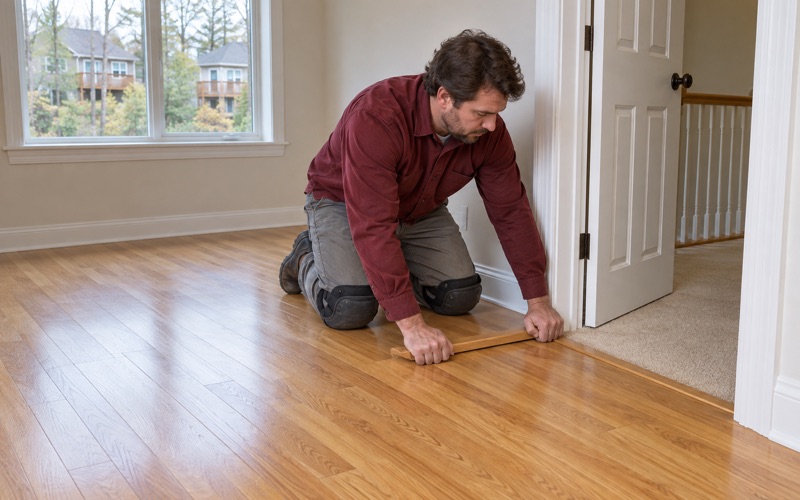
Red oak and white oak remain the common choices, while hickory and maple bring more Janka hardness to busy rooms and wide plank boards change how a small room reads. Prefinished boards shorten the job, and site-finished floors let us blend new wood into an adjoining room.
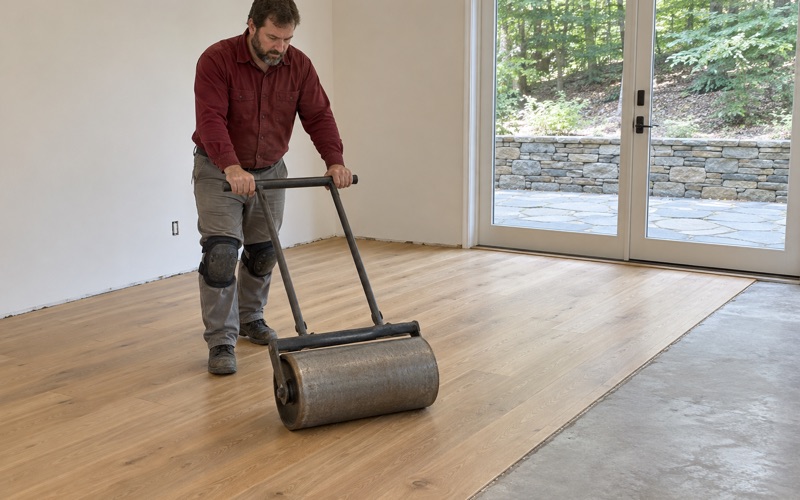
Over concrete or below grade, solid wood does not belong. We match an engineered floor to those rooms, with an engineered wear layer thick enough to sand later, and choose glue-down or floating installation based on what the concrete can take.
Older Floors Near the Historic Core
Some owners live in older houses near Main Street, where boards may carry decades of patina. We refinish old floors for what they are and match new boards to the existing color rather than a catalog sample, checking fasteners and board profiles before we order stock so a repair reads as part of the original room.
- 20+ Years on Wood Floors
- Moisture Read Before Sanding
- Stain Samples on Your Floor