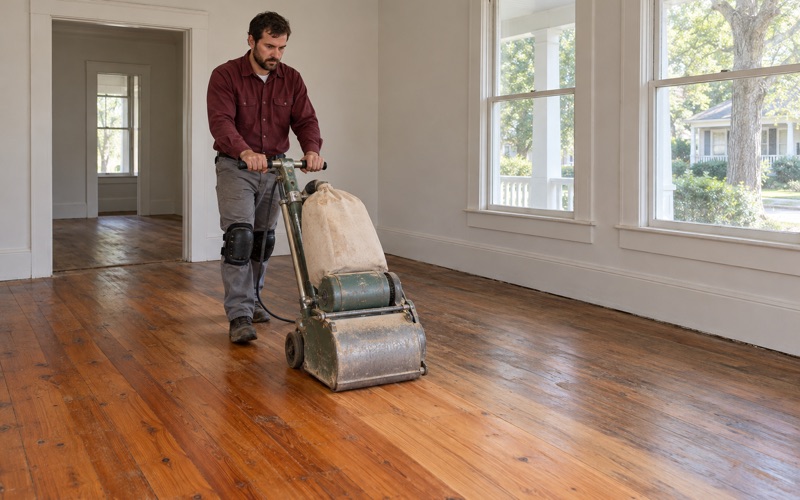
Roswell Wood Flooring brings more than 20 years of work to wood-flooring in Forest Park, and this page is written for the people who own the house they live in. The work that brings an owner to us is rarely cosmetic. A board has gone soft near the kitchen, a hallway has cupped, or old carpet has finally worn through to a floor nobody has seen in decades.
Owners in that position tend to weigh the floor against everything else the house needs. A water heater near the end of its life, a tired roof and a failing HVAC unit all compete for the same money, so we price floor work in pieces an owner can schedule. Refinishing, board replacement and full replacement are quoted as separate jobs, and stairs are quoted tread by tread.
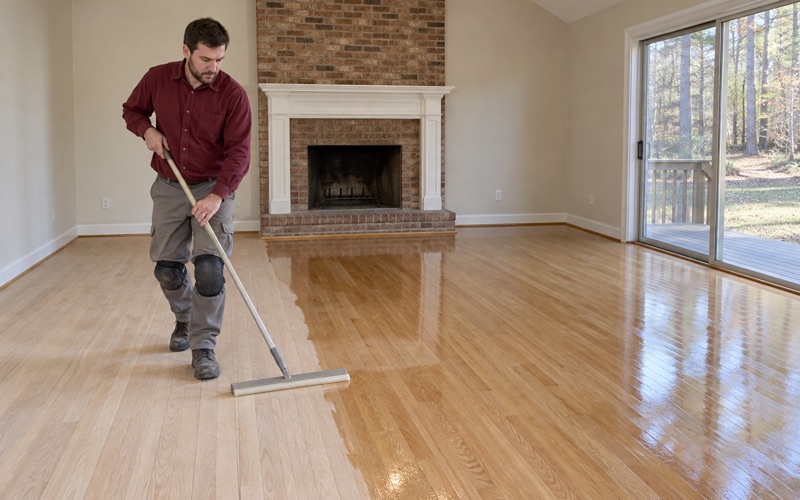
Color choices are made with stain samples laid on the owner’s own floor, in the room’s own light, and nothing is sanded until the moisture readings say the boards are stable. That order protects a floor that has already lasted since the middle of the last century.
Forest Park’s H.O.M.E. Repair Grants and Who They Served
What the City Funded
Forest Park, a city of 19,932 people in Clayton County at the 2020 census, set aside $1.3 million in American Rescue Plan money for its Homeowner Maintenance Enhancements Program, known as H.O.M.E. The city describes eligible work as ranging from roofing, painting and minor electrical work to ADA improvements, siding and more, and says the grant funds do not have to be repaid.
News coverage filled in the details. FOX 5 Atlanta reported in December 2024 that the grants reached up to $10,000 per home and were limited to owner-occupied houses. The city manager, Ricky Clark Jr., said the repairs were also meant to bring down utility costs over the long term, which puts the program closer to maintenance than to remodeling.
Seniors First, Then Ages 18 to 61
The grants went out in phases. The first round served residents 62 and older, and FOX 5 reported that phase as completed by December 2024. A second round then opened to residents ages 18 to 61, and WSB-TV reported in November 2024 that it was for people living within the incorporated city who meet federal income requirements.
That second round carried a December 31 deadline for online applications. The city’s program page now states that the current application period is closed, and we have no information about any future round. We are not part of the program and cannot apply on anyone’s behalf; questions about it belong with the City of Forest Park.
Owner-Occupied Homes Only
The grants were tied to homes lived in by their owners, and in Forest Park that describes fewer than half of occupied homes. The 2024 American Community Survey counts 2,698 owner households against 3,992 renters. Of those owner households, 94.3 percent live in detached houses, so the typical owner-occupied home is a standalone house with its own floors to maintain.
Looking for wood-flooring closer to Dallas? See Dallas Wood-Flooring.
Where Floors Fit Among Essential Home Repairs
Flooring Beside Roofs and Water Heaters
The city’s program page does not name flooring among its examples, and WSB-TV’s report on the second round listed HVAC systems, roofs, windows and more. Floors appear in the coverage through a single recipient: FOX 5 reported that one homeowner “got new flooring, a water heater, and window screens.” That is one household’s outcome, not a rule about what the program paid for.
Still, the pairing is telling. A floor rarely fails on its own schedule; it often fails because a water heater leaked into the hallway, a roof let water into a wall, or an aging HVAC system kept the house damp through a Georgia summer. When we look at a damaged floor, we trace that cause before we price a single board.
Budgeting Floors One Item at a Time
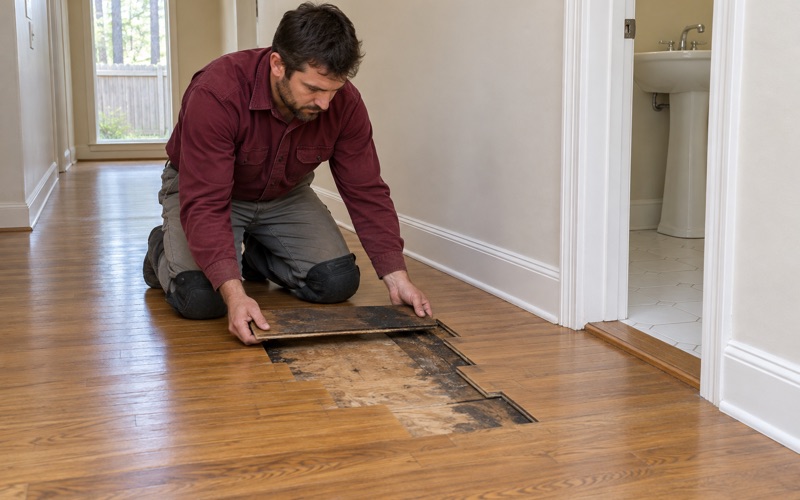
Owners who handle repairs item by item need a floor estimate that can be split. We separate the urgent work, such as cutting out rotted boards around a leak or opening a spongy floor to find the cause, from the work that can wait, such as refinishing traffic lanes or replacing worn carpet with hardwood.
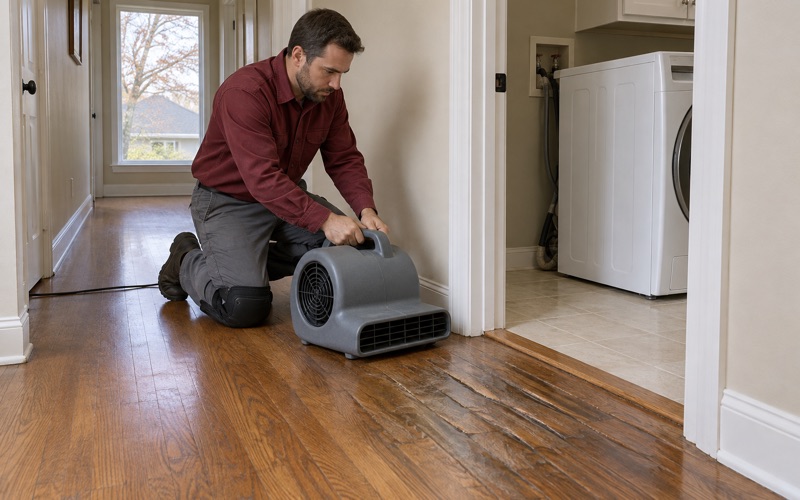
That split lets a household fix the hazard now and plan the finish work later without paying to do anything twice. Where a leak is the cause, we dry the area, take moisture meter readings and document the damage room by room, which matters if an insurance adjuster is involved. Replacement boards go in only after the readings come back where they should be.
Floors and Utility Costs
The city manager’s point about utility costs applies to floors more than it might seem. Gaps between boards, loose quarter round and open joints along the walls can let drafts into a room. Tightening those details during a repair is modest work, and we usually handle it in the same visit as the board replacement.
Repairing and Replacing Floors in 1950s and 1960s Houses
A Housing Stock From Mid-Century
Forest Park’s housing is concentrated in two decades. Census estimates count 1,876 homes built in the 1950s and 2,202 built in the 1960s, which together make up 55.9 percent of the city’s 7,290 housing units. Counting everything built before 1980, the share reaches 78.0 percent. That age shapes most of the decisions we make before any work begins.
A floor that has been in place for sixty or seventy years may have been sanded several times, patched after old leaks or covered with carpet, vinyl or tile along the way. We pull a floor register or lift a piece of trim to see how much wood remains above the tongue before we promise a refinish rather than a replacement.
Lead-Era Paint and Finishes
Houses from the 1950s and 1960s were built when lead-based paint was still in common use, and painted baseboards, shoe molding and stair risers can carry it. We confirm the build year and check painted surfaces before sanding, because the EPA RRP Rule sets lead-safe work practices for renovation that disturbs paint in homes built before 1978.
Where lead paint is present or presumed, the sanding plan changes: trim may come off before the floor is sanded, and containment and cleanup follow the rule’s requirements. Owners get that plan in writing before work is scheduled.
Soft Spots, Cupping and Termite Damage
The problems we find in houses of this age tend to repeat. Cupped boards usually point to moisture from below or from a leak, so we read them with a moisture meter and find the source before sanding anything flat. A soft or spongy spot gets opened up and traced to the subfloor or joist rather than screwed down and hidden under a rug.
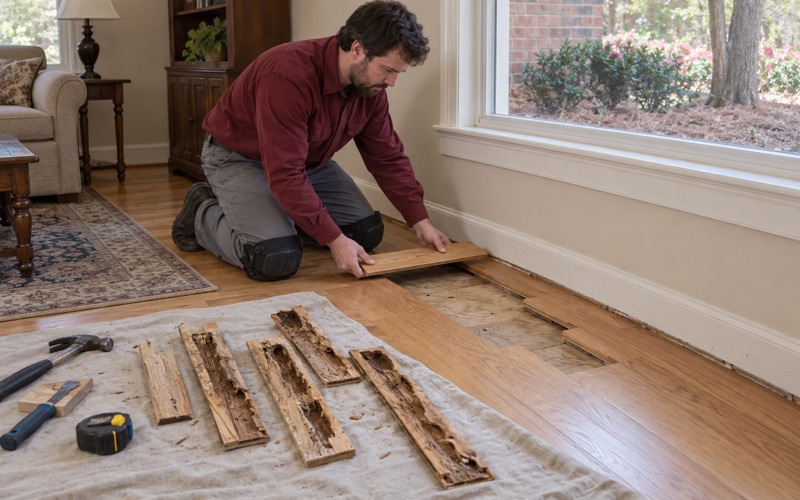
Subterranean termites are the other common find. Mud tubes along a wall or boards that sound hollow under a heel are signs worth reporting to a pest control company first. Once the house has been treated, we cut out the damaged boards and weave in matching stock, never filling or covering the damage.
When Replacement Makes More Sense
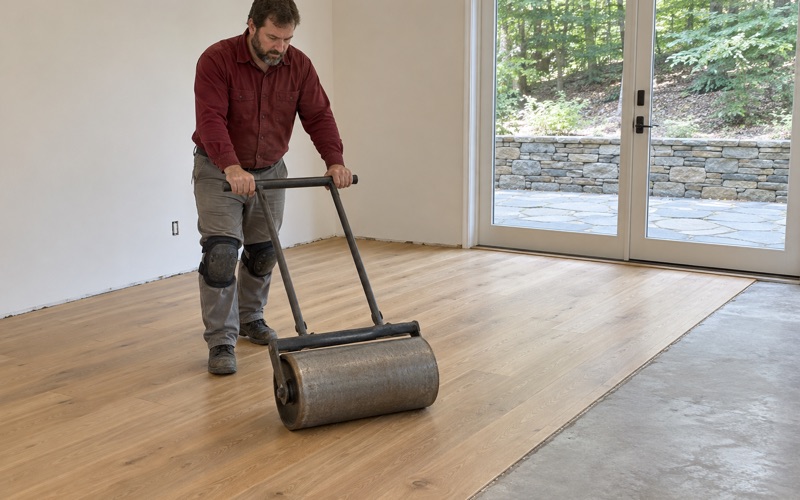
Some floors have been sanded too many times, and some rooms turn out to have only a plywood subfloor under the carpet. In those rooms we replace worn carpet, pad and tack strip with solid hardwood or engineered wood, choosing the species and width with an eye to the rest of the house. Red oak, white oak and hickory each wear differently under foot traffic, and we walk an owner through the Janka hardness of each before they choose.
Where a new floor meets an older one, we match the new boards to the existing color rather than to a catalog sample, and we finish transitions with a reducer or matching nosing. That keeps a partial replacement from reading as a patch when the rest of the house is refinished later.
Planning Floor Work While the Grant Round Is Closed
What a Closed Application Period Means
Because the city lists the current application period as closed, an owner planning floor work today should budget it as a private repair. We do not know whether Forest Park will run another round, and we would not advise anyone to leave a failing floor untouched while waiting for one. A leak or a soft spot left alone tends to grow.
If an owner received a grant for other repairs, such as a roof or a water heater, that work often changes what the floor needs. A new water heater can end a slow leak; a new roof can stop water reaching an interior wall. We plan floor repairs after those fixes are in, so the boards we replace stay dry.
A Lighter Option for Sound Floors
For a floor that is sound but dull, there is a cheaper step before a full sanding. A screen and recoat abrades the existing finish and adds a fresh coat of polyurethane without cutting into the wood, which suits a floor with dulled walkways but no bare wood. It can postpone the heavier job, and on a floor that has already been sanded several times, it spares wood.
When a floor is sanded to bare wood, the finish decision opens up again. Waterborne polyurethane dries clearer and faster, while oil-modified polyurethane ambers over time and deepens the color of red oak. We show both on the owner’s boards before the choice is made.
Getting an Estimate in Forest Park
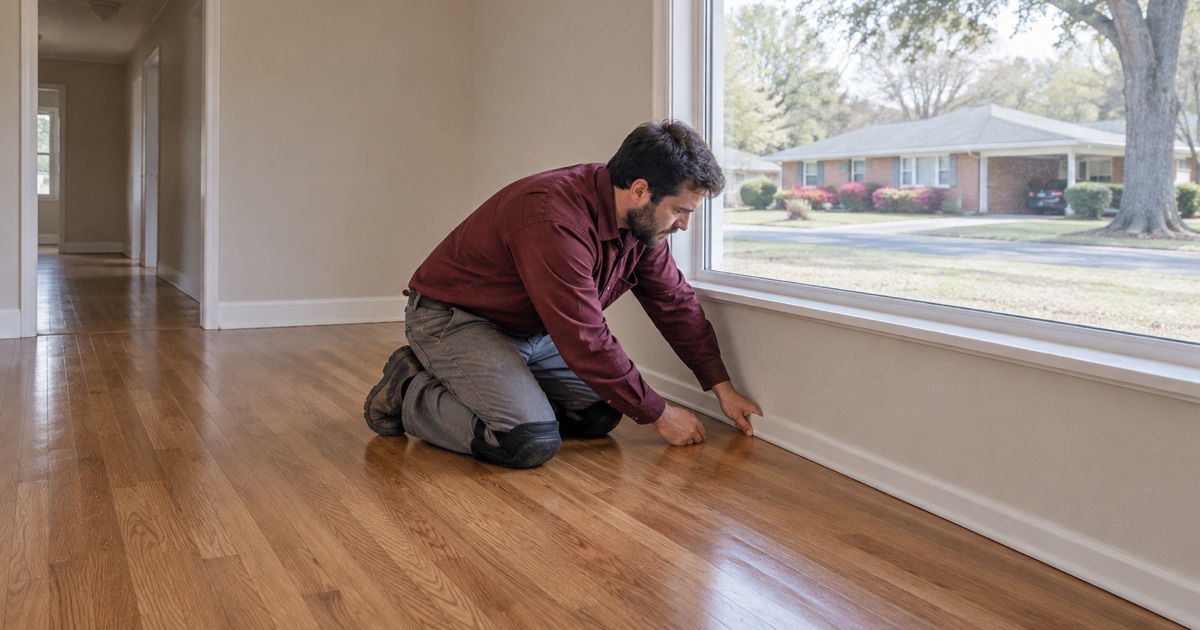
Forest Park falls within National Weather Service forecast zone GAZ055, named Clayton, where humid summers push moisture into wood floors. An estimate here starts with a walk through the house and moisture readings in each room we would work in, taken before any recommendation is written down.
Owners usually want to know two things: whether the floor can be saved, and what it will cost to do the urgent part now. We answer both in writing after the readings are in, and we tell an owner plainly when a floor needs replacing rather than another refinish.
- 20+ Years on Wood Floors
- Moisture Read Before Sanding
- Stain Samples on Your Floor