
Roswell Wood Flooring handles hardwood floor repair in Roswell, GA, serving surrounding cities including Alpharetta, Dunwoody, Milton, Sandy Springs and Johns Creek. For more than 20 years we have repaired cupped boards, soft spots, squeaks, gaps and stains, and the rule has always been the same: find what caused the damage before replacing anything.
A damaged floor is usually a symptom. Cupping points to moisture, a soft spot points to something under the boards, and a stain that keeps coming back points to a leak or a pet that has found a favorite corner. Replacing boards without addressing the cause means paying for the same repair twice.
Most repairs do not require a new floor. We cut out damaged boards, weave in matching stock and blend the area so the repair is hard to find, often at a fraction of the cost of replacing a room.
Diagnosing the Damage First
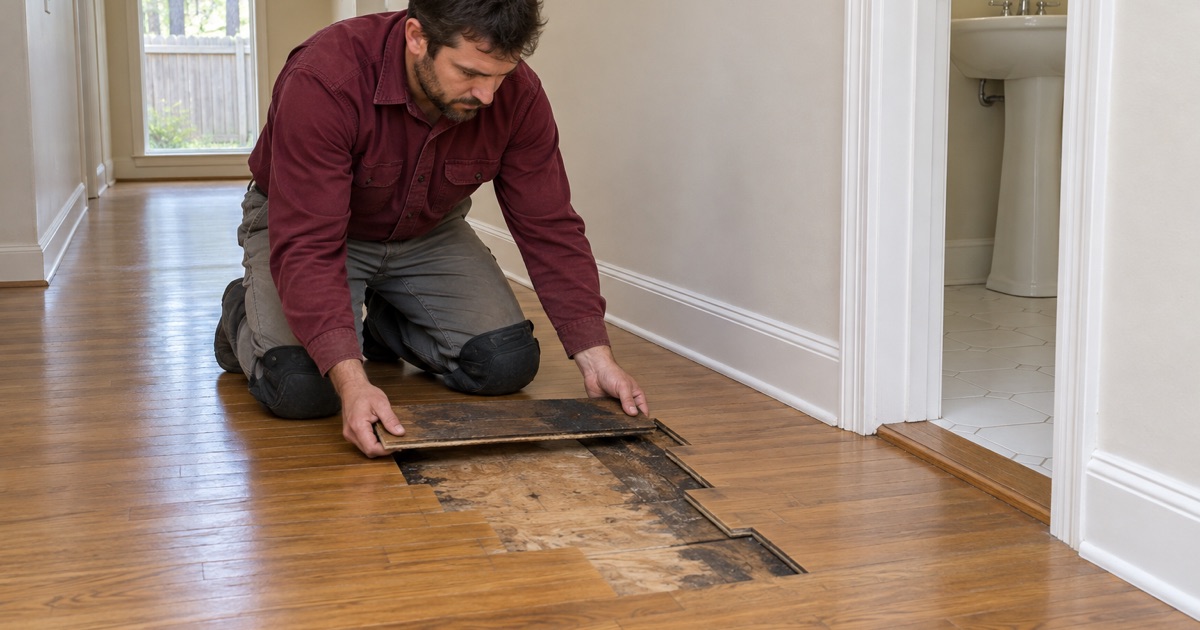
Cupping, Crowning and Buckling
Cupped boards have raised edges and a lower center, while crowned boards are higher in the middle, often because a cupped floor was sanded before it dried. Buckling is the most severe, with boards lifting off the subfloor. All three trace back to moisture, and we use a moisture meter on the boards and the subfloor to find where it is coming from.
In Georgia, the usual suspects are a damp crawl space, summer humidity inside a house that is not dehumidified, a slow leak or water from a storm. Once the source is fixed and the wood dries, many cupped floors flatten on their own, and a refinish is all that remains.
Soft Spots and Spongy Floors
A spot that gives underfoot is never just a flooring problem. The subfloor may have softened from a long-term leak, a joist may be cracked or undersized, or the floor may have lost support where it meets a wall or opening. Occasionally the cause is insect damage from termites or powderpost beetles.
We open the floor at the soft spot to see what is actually there. Screwing the boards down tighter only hides the problem until it grows, while repairing the subfloor or sistering the joist fixes it at the source.
Musty Smells and Hidden Moisture
A musty smell near the floor, especially in a lower level or over a crawl space, often means moisture is trapped where you cannot see it. Mold can grow on the underside of hardwood long before anything shows on top. We take readings, pull a board where the numbers point and inspect the subfloor.
If we find mold or active moisture, drying and fixing the source come before any board replacement. We recommend ventilation, a dehumidifier or crawl space work as needed, since new flooring over a damp subfloor will fail the same way.
Repairing Boards That Can Be Saved
Squeaks and Loose Boards
Squeaks come from wood rubbing on wood or on a loose fastener, usually where the subfloor has pulled away from a joist or the flooring has lost its grip on the subfloor. From a basement or crawl space, we can secure the subfloor from below. From above, we use small face fasteners, countersunk and filled to match.
Not every squeak is worth chasing, and we tell you honestly which ones are a nuisance and which ones signal a loose subfloor or structural movement that needs attention. A squeak that appeared suddenly, or one paired with a dip in the floor, deserves a closer look.
Seasonal Gaps and Board Gapping
Wood shrinks in dry winter air and swells in humid summers, so small gaps that open and close with the seasons are normal. Filling those gaps with rigid filler often just cracks the filler out again. Permanent gaps that stay open all year, or keep widening, are a different matter.
For permanent gaps, we can insert thin wood slivers glued to one side of the board, or replace boards where the gaps have grown too wide. We also look at why the gaps appeared, since heating systems, missing humidity control and installation errors all play a role.
Scratches, Dents and Worn Areas
Light scratches and worn finish often respond to a screen and recoat without touching the wood. Deeper scratches and dents from furniture, pets or dropped objects may need spot sanding or board replacement. Worn traffic lanes through kitchens and hallways usually mean the finish is gone and the wood is exposed.
We look at how deep the damage goes before recommending the lightest fix that will work. A floor that only needs a recoat should not be sanded, and a board with a deep gouge should not be filled and left to stand out.
Replacing Boards That Cannot Be Saved
Pet Urine and Black Water Stains
Pet urine and standing water react with the tannins in oak and turn the wood gray or black. Once a stain has soaked through the board, sanding only lightens it. We cut out the stained boards and replace them rather than sanding deeper and deeper into the floor around them.
We also check the subfloor beneath pet stains, since urine can soak through and leave an odor that returns in humid weather. Sealing or replacing that section of subfloor keeps the smell from coming back through the new boards.
Weaving In New Boards
A good repair follows the floor’s own pattern. We remove damaged boards in staggered lengths, so the new ones interlock with the existing floor rather than forming a square patch. Each new board is fitted tongue and groove and fastened like the original floor.
The new wood must be the same species, width and thickness as the old. For red oak and white oak that is usually straightforward, while old heart pine, wide plank or unusual widths may need reclaimed or custom-milled boards.
Blending the Repair
New boards start out a different color than a floor that has aged for decades. We sand the repair area, match the stain to the surrounding floor and finish it to the same sheen. For a repair in the middle of a large room, refinishing the whole room often gives a better result than trying to feather a patch.
We discuss those options before starting, including cost and how much disruption each involves, so you choose the level of blending that fits your budget and your plans for the floor.
Repairs Tied to Bigger Problems
Termite and Insect Damage
Subterranean termites and powderpost beetles can hollow boards and subfloor from the inside, leaving a surface that looks fine until it gives way. When we find insect damage, the pest control company treats first. We then remove the damaged wood, check the subfloor and joists, and weave in matching boards.
We never fill termite galleries with putty or cover damaged boards with a rug and a fresh coat of finish. If the damage turns up during a sale, we can assess and price the floor repair quickly so it fits the closing timeline, since the termite report itself gives no repair estimate.
Water Damage From Leaks and Storms
Water from a washer, dishwasher, supply line or storm needs to be traced and dried before any repair. We measure moisture until the boards and subfloor return to normal, then decide what can be saved. For insurance claims, we document readings and photos room by room for the adjuster.
Boards that cupped from a single, quickly stopped leak often flatten as they dry and need only refinishing. Boards soaked for weeks, or stained black, usually need replacement. Waiting for accurate readings before deciding keeps you from replacing wood that would have recovered, or refinishing wood that will keep moving.
- 20+ Years on Wood Floors
- Moisture Read Before Sanding
- Stain Samples on Your Floor