
Roswell Wood Flooring repairs hardwood floor water damage in Roswell, GA, serving surrounding cities including Alpharetta, Dunwoody, Milton, Sandy Springs and Johns Creek. With more than 20 years on local floors, we have learned that the costliest mistake after a leak is acting too fast, so we trace the water, dry the floor and measure it before any board is replaced.
Water damage rarely stays where you see it. A washer hose that let go upstairs can soak a subfloor, run along a joist and surface two rooms away, while a slow dishwasher leak can wet the underside of a kitchen floor for weeks before a single board cups. Finding the full extent of the moisture is what separates a lasting repair from one that has to be done twice.
We also document everything as we go, with moisture readings, photos and a room-by-room scope, because most water damage ends up as an insurance claim and your adjuster needs a clear record to work from.
Where the Water Comes From
Washers, Dishwashers and Supply Lines
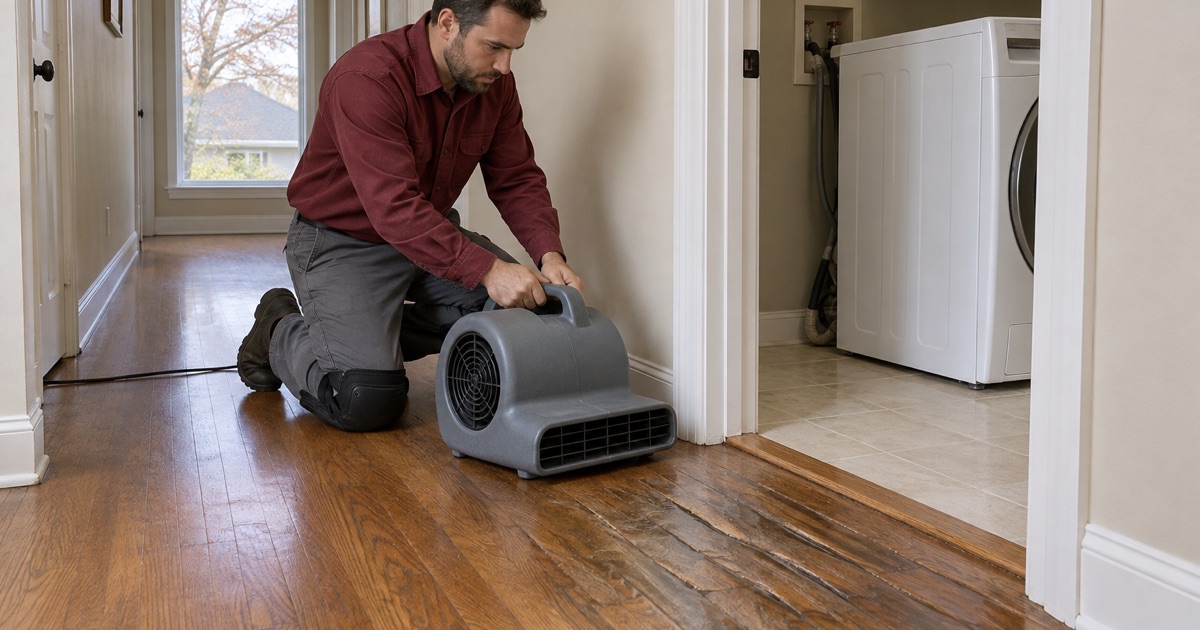
Appliance leaks are among the most common sources of hardwood water damage we see. A burst washer hose floods quickly and obviously, while a dishwasher drain or refrigerator supply line may drip unnoticed under the cabinets until the floor in front of them starts to cup. Both soak the subfloor as well as the boards, which is why surface drying alone is never enough.
We start by confirming the source has been repaired, then map the wet area with a moisture meter, often finding moisture well beyond the visibly damaged boards. That map becomes the plan for drying and the basis for your adjuster’s scope, so nothing wet is left behind to cause mold or cupping later.
Storms and Rising Creek Water
Water from outside behaves differently from a plumbing leak. Storm runoff and rising creek water tend to enter lower levels from below or from the base of the walls, often carrying silt and contamination. Roswell sits along the Chattahoochee River, with Big Creek and Vickery Creek running through the city, and lower levels near water are the most exposed during heavy rain.
Flooring soaked by outside water often needs replacement rather than drying, both because of contamination and because it usually sat wet for longer. Rising water is typically covered by a separate flood policy, not standard homeowners coverage, so we document it separately and clearly for whichever policy applies.
Slow Leaks and Hidden Moisture
Some water damage builds over months. A toilet seal, a shower pan, an ice maker line or condensation from ductwork in a crawl space can keep a subfloor damp long enough to cup boards, grow mold on their undersides and soften the wood beneath. A musty smell or a soft spot is often the first sign anything is wrong.
These cases take more investigation, and they are often not covered by insurance because the damage developed gradually. We open the floor where readings point, find the source and explain the repair clearly, so you can fix the underlying problem before any new wood goes down.
Drying and Measuring Before Repair
Why We Wait for the Wood to Dry
Cupping happens when the underside of a board holds more moisture than the top. As the wood dries, many cupped floors flatten substantially on their own. If a cupped floor is sanded flat while still wet, the edges are cut away, and when the boards finally dry, the centers stand higher than the edges, which is a permanent defect called crowning.
That is why we never sand, refinish or replace a water-damaged floor until moisture readings are back in the normal range for your house. It can feel slow, but it keeps you from paying for work on wood that is still moving.
Drying Equipment and Monitoring
Depending on the extent of the damage, drying can involve dehumidifiers, air movers and, in some cases, specialized mats that pull moisture up through the boards. Crawl spaces and basements may need their own dehumidification. We avoid aggressive heat, which can crack and split boards that are drying too fast.
We take readings in the flooring and the subfloor on a regular schedule and compare them with dry areas elsewhere in the house. When the wet area matches the dry reference, the floor is ready for the next decision.
We share those readings with you as the drying progresses, so you can see the numbers moving rather than taking our word for it. If a spot stops improving, that usually means water is still getting in from somewhere, and we go back to the source before anything else happens.
Documenting Damage for Your Adjuster
Insurance claims move faster when the documentation is clear. We record moisture readings with dates and locations, photograph the damage before and during drying, and list the affected area room by room. That record shows the adjuster what was wet, how far it spread and what the repair involves.
We do not decide or promise what your policy covers. That is between you and your insurer. Our role is to give the adjuster an accurate picture and a clear repair scope, so the claim is not stalled by missing information.
Repairing the Floor
Deciding What Can Be Saved
Once the floor is dry, we look again. Boards that have flattened and show no staining or delamination can often be sanded and refinished. Boards that remain cupped, have turned black from standing water, or show separating layers on an engineered floor need replacement.
We also check the subfloor. Plywood or OSB that swelled and softened may have to be replaced before new flooring goes down, since flooring fastened over a weakened subfloor will squeak, move and develop soft spots. Joists are inspected wherever we can reach them.
Replacing Boards and Blending the Repair
We remove damaged boards in staggered lengths and weave in new ones of the same species, width and thickness, so the repair follows the pattern of the floor. For solid oak that usually means matching red or white oak, while engineered floors may need the same product or a close match from the manufacturer.
Blending the color is the final step. A small repair can be sanded and finished to match, while larger repairs often look best when the connected rooms are refinished together. We explain those options with your adjuster’s scope in mind.
Choosing a Floor for Lower Levels
If a basement or lower level floor has been lost to water, it is worth asking whether solid wood belongs there at all. Engineered hardwood tolerates moisture far better below grade, and in rooms that have flooded before, luxury vinyl plank may be the more honest recommendation.
We talk through those choices before replacing a lower-level floor, since putting the same material back in the same conditions can mean facing the same damage after the next storm.
Where solid hardwood upstairs was damaged by a plumbing leak, the answer is usually to replace like with like, since the conditions that suited it before have not changed. The goal in every case is a floor that matches the rest of the house and holds up to the room it is in, not simply the fastest way to close the claim.
- 20+ Years on Wood Floors
- Moisture Read Before Sanding
- Stain Samples on Your Floor