Roswell Wood Flooring refinishes and repairs heart pine flooring in Roswell, GA, serving surrounding cities including Alpharetta, Dunwoody, Milton, Sandy Springs and Johns Creek. In more than 20 years of work on old floors, we have learned that heart pine should be refinished for what it is, not sanded and stained as if it were new oak.
Heart pine is the dense, resin-rich heartwood of old-growth longleaf pine, and it was the everyday flooring of the South long before oak strip took over. The old trees that produced it are largely gone, which is why an original heart pine floor is worth saving and why replacement boards now come from reclaimed timbers. Its deep amber color, tight grain and decades of patina are the reasons homeowners want to keep it.
Where We Find Heart Pine
Older Homes in Historic Roswell
The Roswell Historic District, listed on the National Register in 1974, grew around the mill village laid out in the 1830s, with Greek Revival homes of the mill owners and smaller homes built for mill workers. Older houses in and around the district, near Canton Street and the Roswell Mill area, are where original heart pine and narrow-strip oak floors still turn up.
The city’s Historic Preservation Commission reviews exterior changes in the historic overlay, and its ordinance states it does not consider interior arrangement that has no effect on exterior features. We keep floor work inside the house, and if a project also involves exterior changes, we suggest checking with the city first.
Under Carpet, Tile and Later Floors
Heart pine often hides under later layers. We find it under wall-to-wall carpet, under vinyl or tile in kitchens and bathrooms, and sometimes under a second wood floor laid over it. Old tar paper, adhesive and tack strip damage are common, and boards under a bathroom floor may have dipped near a toilet from years of slow leaks.
Once the covering is off, we assess the boards one by one. Most of the floor can usually be saved, with damaged sections replaced before sanding.
Refinishing Heart Pine
Sanding Resinous Old-Growth Wood
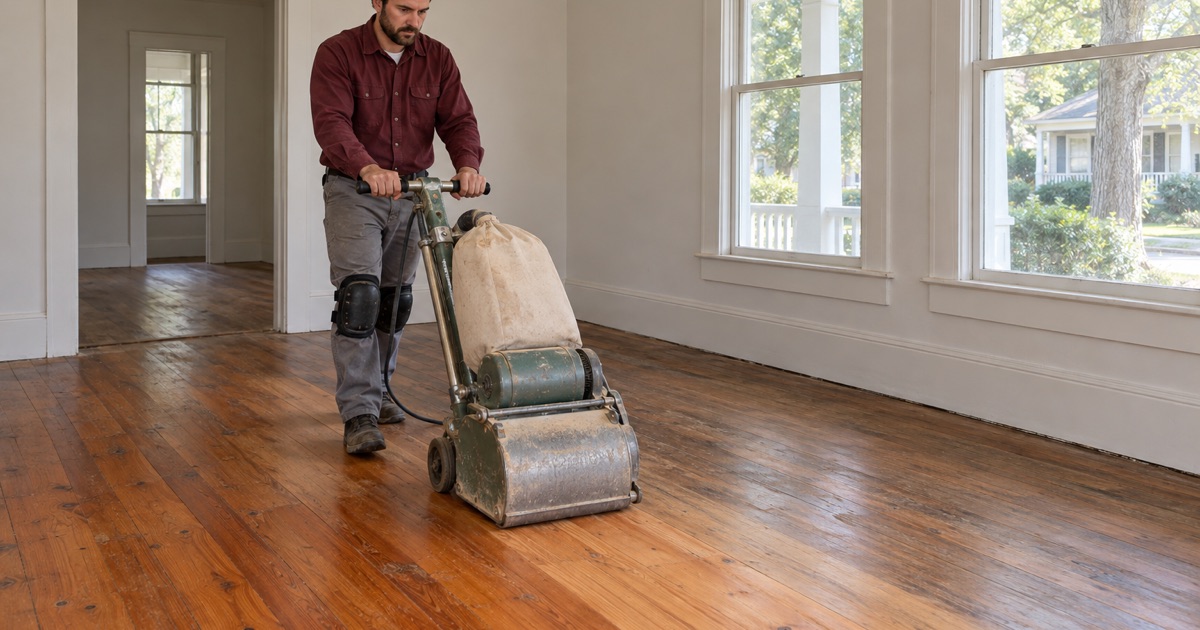
Heart pine is full of resin, which heats up under a sander and can load sandpaper quickly, leaving gummy streaks. We adjust the grit sequence, change paper often and keep the machines moving to avoid burning or gouging the soft latewood between harder grain lines. Old floors are also rarely perfectly flat, so we sand to preserve thickness rather than chase every dip.
Old cut nails, often set just below the surface, need to be found and set deeper before sanding so they do not tear the paper or scar the floor. Tar paper and old adhesive ground into the boards are removed carefully rather than sanded through.
Keeping the Amber Patina
Much of heart pine’s warmth comes from its aged surface. A heavy sanding and a clear waterborne finish can leave it looking pale and new, which disappoints many owners. We sand only as deep as needed and sample finishes on your floor, since an oil-modified finish or amber toning restores much of the traditional color.
If a previous refinish left the floor uneven or oddly colored, we can correct it, re-sanding the uneven work and adjusting the finish until the color reads right again.
Checking Remaining Thickness
A floor that is a century old may have been sanded several times already. Before we sand, we measure the wood left above the tongue at a vent or threshold. If it is thin, we sand as lightly as possible or recommend a screen and recoat, since the wood that remains is irreplaceable.
Thin boards also show their limits in other ways, such as exposed tongues, visible nail heads or splits along the edges. Where a few boards have worn through, we replace just those, which lets the rest of the floor keep its original wood for another generation.
Repairing and Matching Heart Pine
Replacing Damaged Boards
Water, pets, termites and old plumbing leave damaged sections in many heart pine floors. We cut out damaged boards in staggered lengths and weave in replacements so the repair follows the floor’s pattern. Rotted wood along rusted nail lines, soft spots near old bathrooms and boards eaten by insects are all replaced rather than filled.
Where damage reaches the subfloor or joists, we repair those first. Many old houses have board subfloors or no subfloor at all, which changes how the repair is fastened.
Matching New Boards to Old Color
The biggest challenge in heart pine repair is color. Newly milled wood, even antique heart pine remilled from reclaimed timbers, starts lighter than a floor that has aged for decades. We match the new boards to the old floor’s color with careful selection and toning, not to a catalog sample.
Southern yellow pine is sometimes used as a lower-cost substitute, but it lacks the density and color of true heart pine. We explain the difference and let you decide where each makes sense, such as a closet versus a front room.
Why Reclaimed Boards Cost More
Antique heart pine is reclaimed from old beams and timbers, and much of each lot is lost to milling, up to 55 percent by one supplier’s figure. The remaining boards are sorted by grain and color. That makes patch material more expensive than new oak, but it is the only way to get a repair that truly matches.
For small repairs, we sometimes take boards from a closet or under a built-in and use new material in their place, so the most visible rooms get original wood. We discuss that option when the damaged area is in a front room or hallway where a mismatch would show most.
- 20+ Years on Wood Floors
- Moisture Read Before Sanding
- Stain Samples on Your Floor