Roswell Wood Flooring has spent more than 20 years on wood flooring in Johns Creek, and most of the floors we see here share a birthday. They went down when the houses went up, they have carried a family or two since, and they are now due for their first serious decision.
We start every job by reading the floor before recommending anything, and we price what the floor actually needs rather than the biggest job it could absorb. A floor with years of sanding left should be refinished, a damaged one repaired, and a worn-out builder floor replaced, and we will say plainly which of those you are looking at.
The work itself runs the usual range: sanding and refinishing, board replacement, new hardwood where carpet or a tired builder floor sits today, and stairs priced tread by tread. What changes in this city is the age and size of the houses, and the sections below explain why that shapes nearly every quote we write here.
How Johns Creek’s Houses Arrived and Where They Stand Now
Jobs First, Then Houses
Johns Creek started with offices, not subdivisions. In 1981, Georgia Tech graduates who had founded Technology Park/Atlanta bought 1,700 acres of rural land along McGinnis Ferry Road and Medlock Bridge Road to build a second, master-planned campus. They named it Technology Park/Johns Creek after a small creek they spotted on an old map.
The offices came first. The area grew into the home of 200 companies, and in the city’s own telling, with the jobs came houses and shopping centers, lifting the population to about 60,000. The City of Johns Creek itself did not exist until December 1, 2006, long after most of those houses were finished.
One Decade of Construction
The census shows how concentrated that building was. Of the 29,895 housing units counted in the most recent five-year estimates, 13,477 were built between 1990 and 1999, or 45.1 percent. Stretch the window to 1980 through 2009 and it covers 85.3 percent of the housing stock. Only 4.5 percent of homes here predate 1980.
These are owners’ houses, too. In all, 80.4 percent of occupied homes are owner-occupied, and 90.6 percent of those owners live in a one-unit detached house. For us, that means large, single-family floor plans where one family has often lived on the same floors for decades and now wants to decide what happens to them.
Newer homes are a minority: 27.8 percent date from 2000 or later. A smaller group of owners, 8.2 percent, live in one-unit attached homes, and those jobs run on tighter footprints with fewer rooms to blend. Either way, the floors we quote here are overwhelmingly from one building wave, which is why owners’ questions sound so similar.
Floors at 25 to 35 Years
A floor laid in 1995 is about 30 years old now. That is roughly the age when a site-finished floor often has its finish worn through in the kitchen and hallway traffic lanes, when prefinished boards show gaps and scratches that no longer respond to cleaning, and when the carpet upstairs is on its second or third replacement.
It is also the age when owners face three distinct jobs, and we treat them separately: a first full refinish of the original hardwood, replacing floors the builder chose, and matching new wood to old when one room changes and the rest must blend. The next two sections take each in turn.
Looking for wood-flooring closer to Peachtree Corners? See Peachtree Corners Wood-Flooring.
Refinishing Original Hardwood After 25 to 35 Years
What Remains Above the Tongue
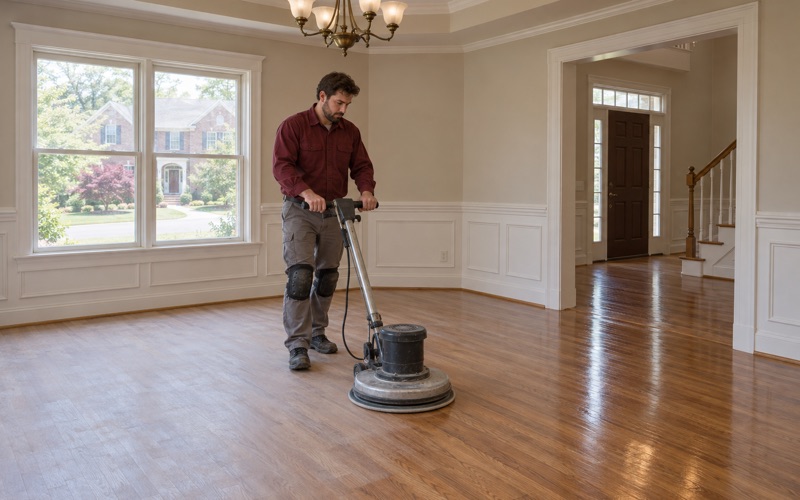
A solid hardwood floor can be sanded only so many times, and the limit is the wood above the tongue and groove. A 1990s floor that has never been fully sanded often has room left, but one that was aggressively sanded at a previous sale may not. We pull a floor vent or a threshold and look before we quote sanding.
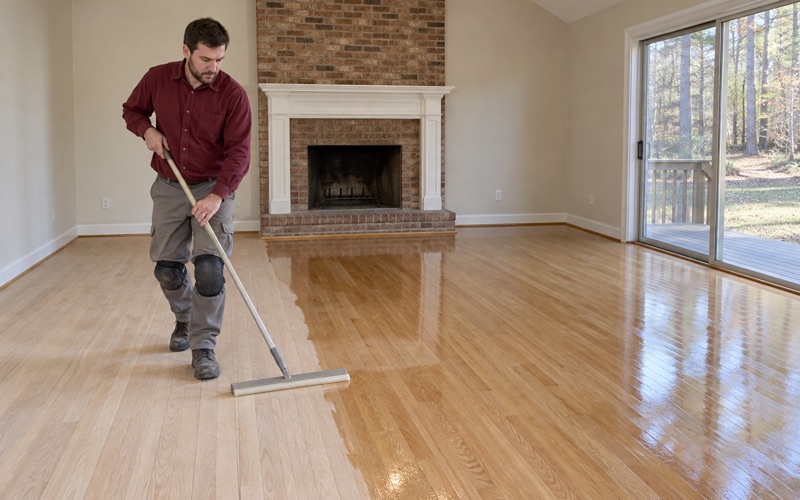
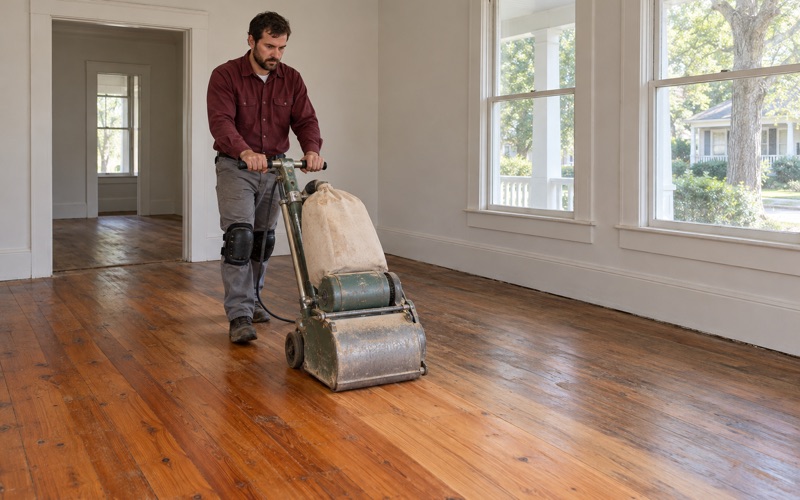
If there is enough wood, a full sand with a drum sander and a proper grit sequence takes the floor back to bare, clean wood. Where the wear is only in the finish, a screen and recoat can buy several more years for far less. We will tell you which one your floor actually needs.
Prefinished floors from the 1990s and 2000s need a different conversation. Their factory finish is tough but the beveled edges complicate sanding, because taking the finish off means cutting down past those bevels. We test a small area first, since some prefinished floors refinish well and others are better recoated or replaced.
Orange Tones, Sun Fade and Stain Choices
Many floors finished in that era were coated with oil-modified polyurethane, which ambers with age and gives the orange cast many owners now want gone. Sun fade near tall windows and pet urine stains in a back hallway complicate the picture, because a stain color that looks right in one room can read very differently in another.
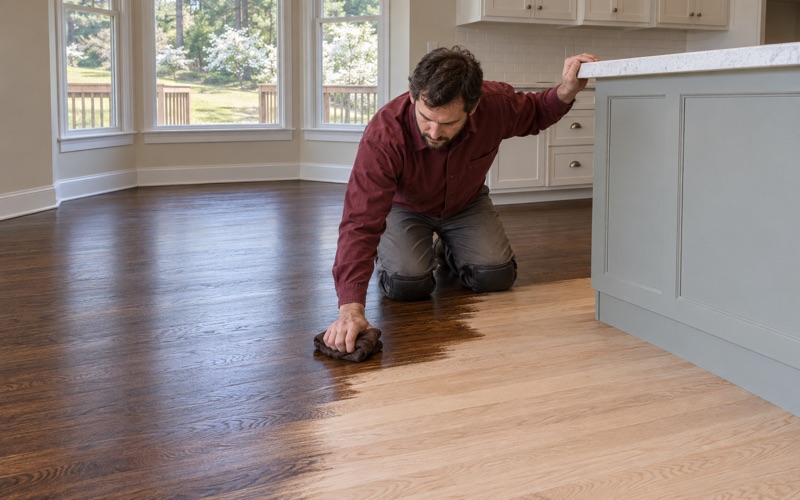
So we lay stain samples on your own floor, in your own light, and leave them for you to see morning and evening. Once a color is settled, we talk through finish: waterborne polyurethane for a clearer look that stays closer to the stain, oil-modified for warmth, or hardwax oil where an owner prefers spot repair to recoating.
Sheen, Dust and Living in the House
Many owners in a detached family house stay home during a refinish, so we plan the work in zones and use dustless sanding to keep the rest of the house livable. Sheen level matters more than people expect in open floor plans, where a two-story foyer and a kitchen can share one continuous run of floor.
A satin finish hides the daily scuffs of kids and dogs better than gloss, while matte suits wide rooms with low winter sun. We walk the whole run of floor with you before the first pass, so nobody discovers a transition problem at the kitchen doorway halfway through the job.
Replacing Builder Floors and Matching Old to New
Carpet, Parquet Foyers and Two-Story Landings
In houses of this age we often find hardwood only in the foyer and kitchen, carpet everywhere else, and sometimes a parquet entry. Replacing those builder-grade floors with hardwood is a frequent request here, and it usually takes in the stairs and the upstairs landing that overlooks a two-story foyer.
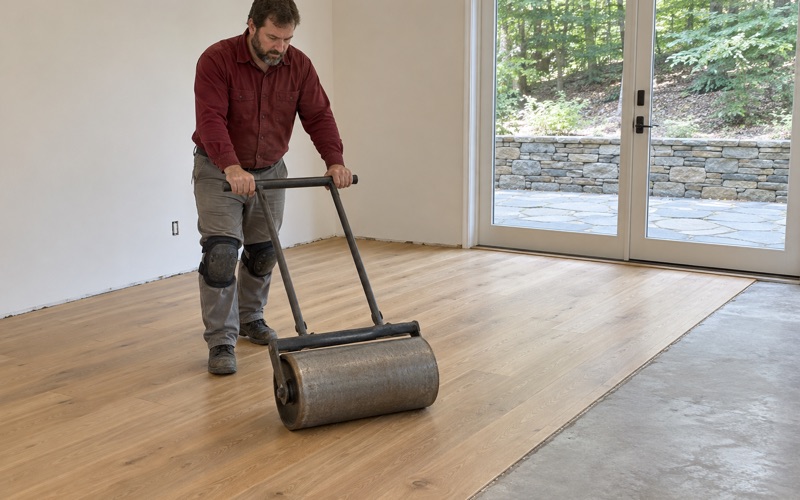
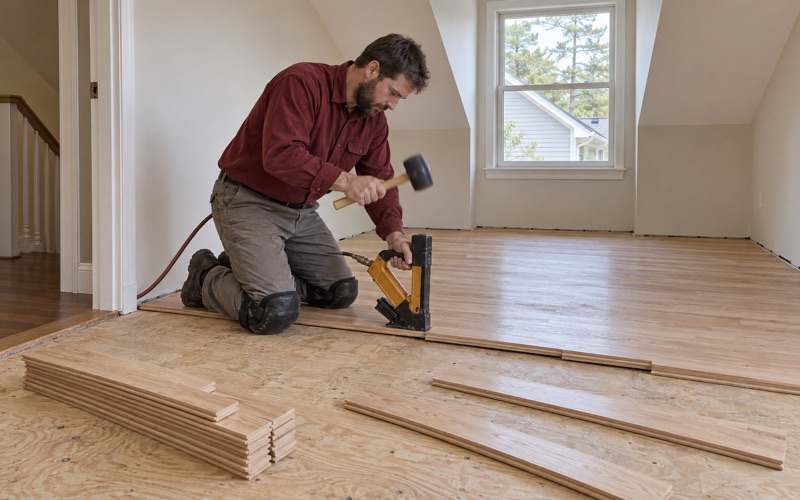
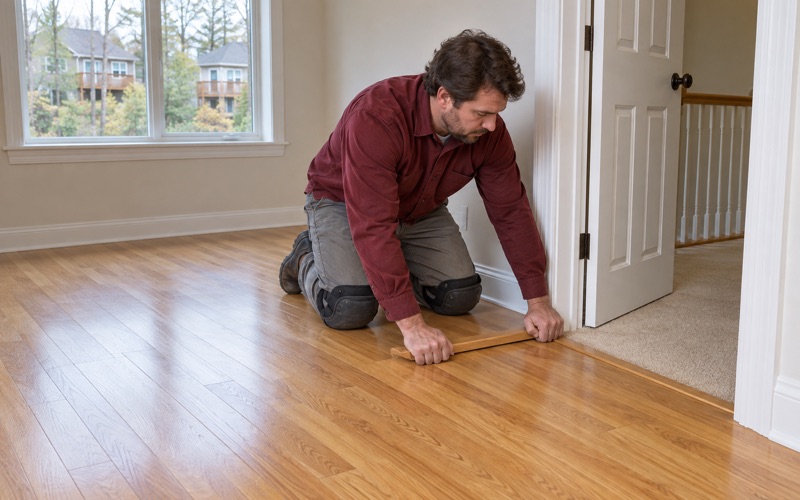
Pulling carpet means removing the pad and every tack strip, then checking the subfloor for squeaks, loose panels and old pet damage before a single board goes down. We fasten new solid hardwood with flooring cleats or staples as the product calls for, leave the expansion gap at every wall, and finish edges with quarter round or a reducer.
Stairs Priced as Two Different Jobs
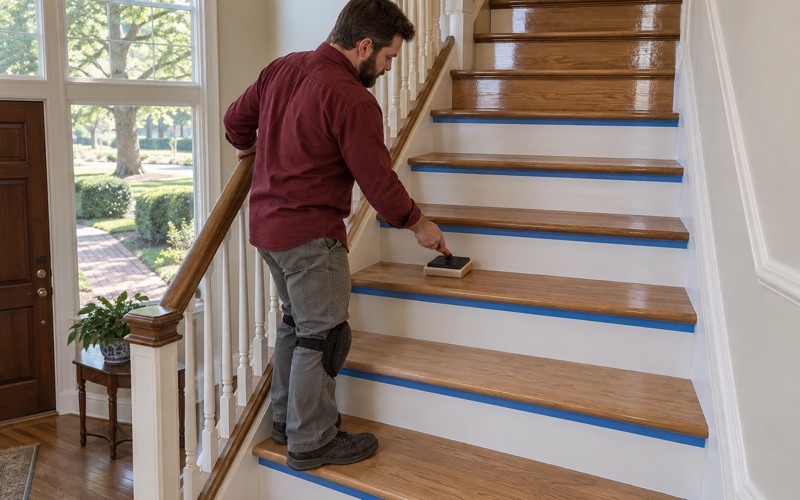
A staircase in a two-story house is often the most visible wood in it. We quote stairs tread by tread, and we price refinishing existing treads separately from installing new stair treads, risers and nosing, because the labor and material behind those two jobs have almost nothing in common.
Carpeted stairs from the original build often hide plain structural treads that were never meant to be seen. In that case new hardwood treads are the honest answer, and we say so up front rather than letting a sanding quote turn into a replacement job midway through.
Matching New Hardwood to Old Across a Big House
When one area changes, such as a kitchen remodel or carpet coming out of a family room, the new boards have to meet 30-year-old wood that has aged, faded and taken on patina. We identify the species, width and grade of what is already there, then match new stock to the color your floor has become rather than to a catalog sample.
In a detached house with one continuous floor from the front door to the breakfast room, the cleanest result often comes from weaving new boards into the old and then sanding and finishing the whole run together. That costs more than patching one room, but it avoids a visible line where the old floor stops.
Golf Club Neighborhoods, Humidity and Hidden Damage
Homes Around the Courses
Golf arrived here long before the city did. The Atlanta Athletic Club built its first courses in 1967, in what was then unincorporated Fulton County, and later hosted the 2001 and 2011 PGA Championships. St. Ives Country Club, a gated community established in 1989, sits along the Chattahoochee River at the city’s southern edge.
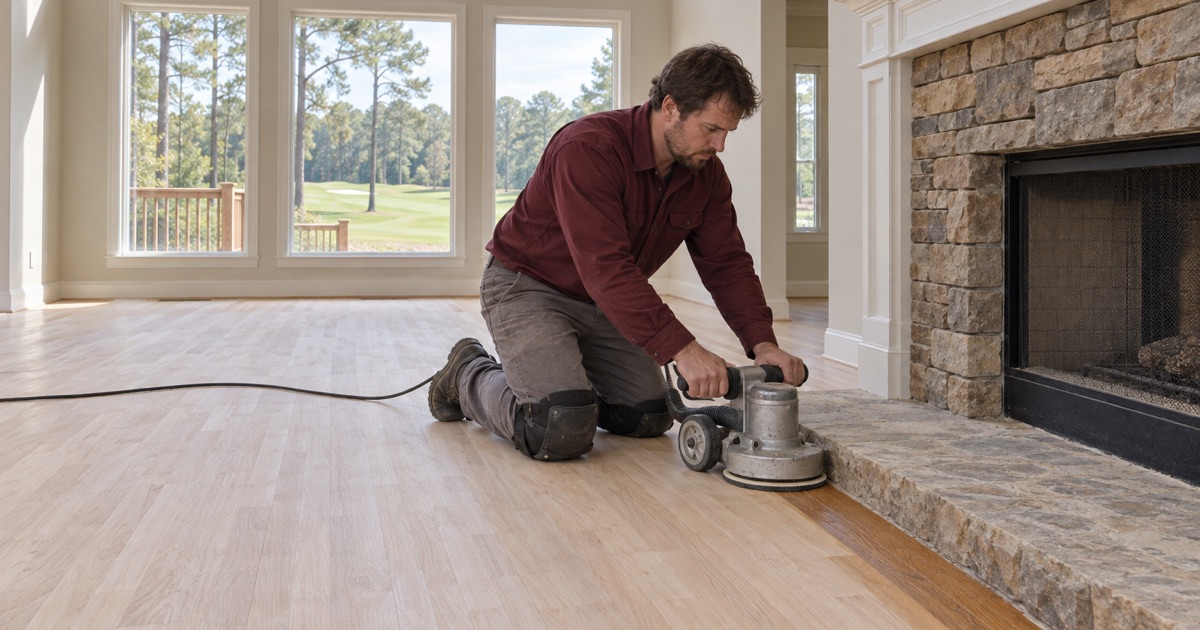
Houses in golf club neighborhoods are often among the larger homes we work in, with long sightlines, big windows facing the fairways, and floors that run through several connected rooms. That scale is exactly where matching, sheen and sun fade planning pay off, and where we budget extra time for stain samples in more than one room.
Cupping, Soft Spots and Water
Georgia summers are humid, and a floor that cups or feels clammy in July is telling you something about moisture. We read it with a moisture meter and find the source, whether that is a leaking supply line, a dishwasher, or humidity the house is not controlling, before anyone sands a crowned floor flat and locks the problem in.
Soft or spongy spots get the same treatment. We open them up and trace them to the subfloor or the water behind them instead of screwing them down and hiding the cause. When a washer or storm is involved, we dry and measure before replacing boards and document each room for your insurance adjuster.
New wood gets the same respect. Boards acclimate in the house before installation, and we check that the subfloor reads within range of the new stock, because hardwood laid wet in a Johns Creek August can gap by February. A dehumidifier running during a summer install is often cheaper than a callback.
Termite Damage Before a Sale
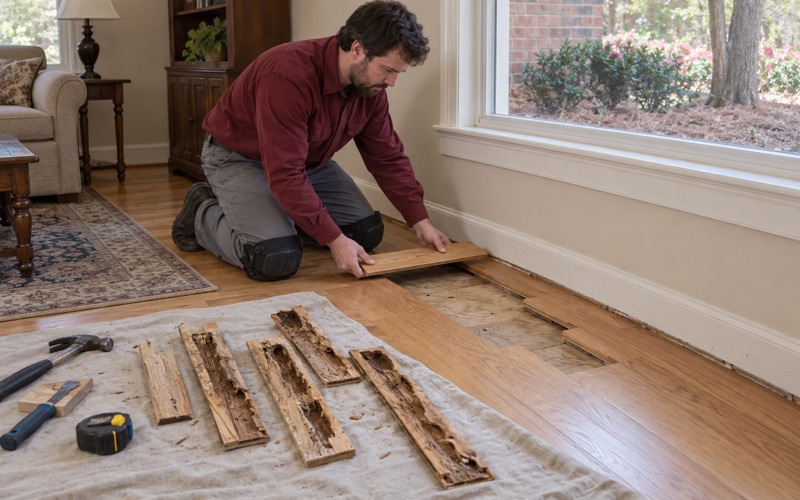
Subterranean termites are a fact of life in Georgia, and in a house this age a mud tube along a sill or a patch of hollow boards can surface during a sale. When an Official Georgia Wood Infestation Inspection Report or termite letter turns up damaged flooring, we work to your closing date.
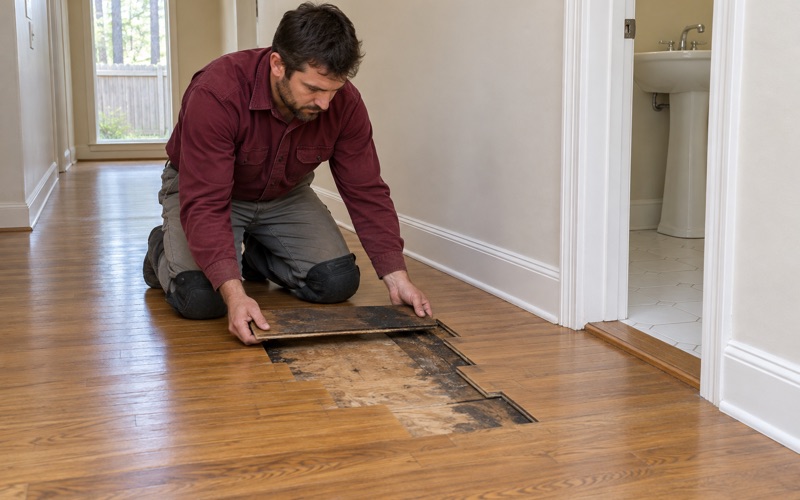
The order matters. Your pest control company treats first, then we cut out the damaged boards and weave in matching stock so the repair blends into the surrounding floor. We never fill termite damage or cover it with a rug-sized patch of something else, because a buyer’s next inspector is likely to find it.
- 20+ Years on Wood Floors
- Moisture Read Before Sanding
- Stain Samples on Your Floor