Roswell Wood Flooring has spent more than 20 years on wood-flooring in Marietta and across the metro, and the work we find most demanding here is the old house that no longer lives like a house. A front room that once held a family now holds a reception desk, a display table or a waiting area, and its floor takes a different kind of wear.
Street shoes, rolling chairs and a steady line of visitors wear a path through the finish far faster than a household does. We plan those floors around the traffic they carry now, not the traffic they were laid for, and we read the wood itself before we decide how hard a sander can work it.
That same care applies to homes that are still homes. Whether a room serves a client or a family, we check the build year and any painted surfaces before sanding, lay stain samples on the actual floor, and quote repairs, refinishing and stairs as separate jobs so the price tells you what each part of the work costs.
A Neighborhood Fragment South of Marietta Square
Marietta is the county seat of Cobb County, and a few blocks south of its central business district sits the Atlanta-Frasier Street Historic District. It was entered in the National Register of Historic Places on June 20, 1995, and it covers Atlanta and Frasier Streets between the Georgia Highway 120 Loop and Dixie Avenue.
Cut Off by the Highway 120 Loop
The registration form describes the district as an intact piece of a once larger residential area. Construction of the Highway 120 Loop, South Marietta Parkway, in the early 1980s cut it off from adjacent development to the north and east, so what survives is a fragment rather than a whole neighborhood.
For flooring work, that history is more than trivia. A small cluster of old houses beside a busy road is exactly where the 1995 form found uses other than family living, and the floors inside reflect that shift in ways we notice as soon as we walk a room.
Seventeen Contributing Houses
The district counts 17 contributing buildings and 4 noncontributing ones. Its houses were built from the 1840s to the 1930s, which puts nearly a century of construction on two streets. Only 1.7 percent of housing units in the city of Marietta predate 1940, so this concentration of older fabric is unusual here.
The recorded materials are brick foundations and weatherboard walls. We do not assume anything about what lies beneath a given floor until we have looked, because a house that has stood since the 1840s has usually been repaired, patched and adapted by several owners before we arrive.
Greek Revival to Craftsman in a Few Blocks
The form classifies the architecture as Greek Revival, Queen Anne, Folk Victorian, Colonial Revival, Bungalow/Craftsman and Italianate. The Slaughter House, built around 1840 to 1845, is a one-story, wood-framed house with Greek Revival details. The Bostwick-Fraser House, built around 1844 by Charles C. Bostwick, is a two-story house on a Georgian plan with a central hallway.
Ann Couper Fraser documented in an 1865 letter that Federal troops used that house as a hospital in the summer of 1864. The Alexander Stephens Clay House, from the 1880s, is a large two-story Queen Anne. Each style brings its own room sizes and floor layouts, which shape how we plan a sanding sequence.
Looking for wood-flooring closer to Fair Oaks? See Fair Oaks Wood-Flooring.
When a House Becomes an Office or Shop
Turning a house into an office changes almost nothing about its floor and almost everything about the demands on it. The boards stay where they were nailed, while the number of feet, chairs and carts crossing them climbs.
What the 1995 Form Recorded
The houses were built as single dwellings. By the time the registration form was prepared, the district’s recorded current functions included single dwellings, institutional housing, professional offices and specialty stores. The form lists those uses for the district as a whole rather than house by house, and we treat it that way.
What it tells a flooring contractor is that parlors, bedrooms and hallways in this district have been asked to do jobs they were never framed for. When we are called to one of these houses, we ask first how the room is used today, because that answer drives nearly every choice that follows.
Customer Traffic on a Parlor Floor
A residential floor sees a handful of people walking familiar routes. An office or shop floor sees strangers in street shoes, often tracking grit from a parking area straight across the threshold. Traffic lanes form quickly between the door, the counter and the restroom, and the finish in those lanes wears through while the corners still look new.
Rolling desk chairs are harder still, grinding a dull circle into the finish under each workstation. We often recommend chair mats, walk-off mats at every entry and felt pads under display furniture. None of that is glamorous, but it is the difference between a screen and recoat every few years and a full sanding far too soon.
Institutional Housing and Mixed Use
Institutional housing puts a different load on a floor: more occupants than a family, shared hallways and kitchens, and less tolerance for a room being closed for days. In those settings we look hardest at the busiest paths, where board gapping, loose boards and worn finish show up first.
Some houses in the district may still be homes, and a building can also split its use, with living space upstairs and a business below. We ask who needs which rooms and when, then sequence the job so the people who depend on the building keep a working route through it.
Refinishing Floors That Now Carry Business Traffic
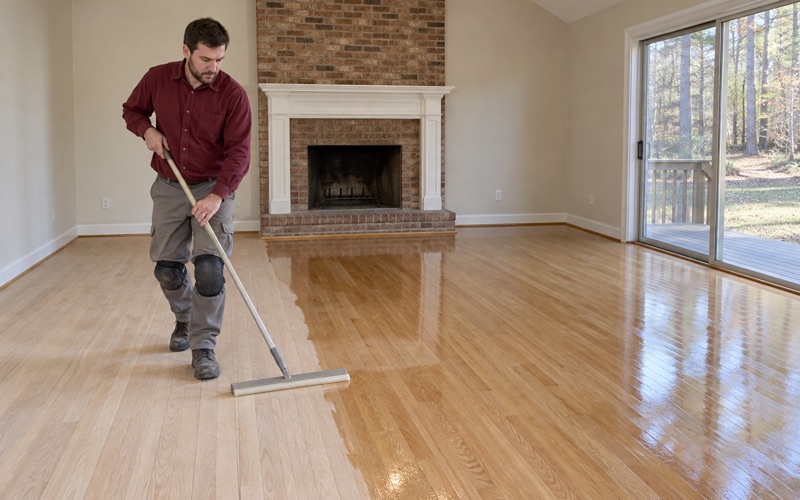
Refinishing a floor that serves the public is a different project from refinishing a family room. The wood may be the same age and species, but the finish, the schedule and the maintenance plan all have to suit its daily visitors.
Reading the Wood Before Sanding
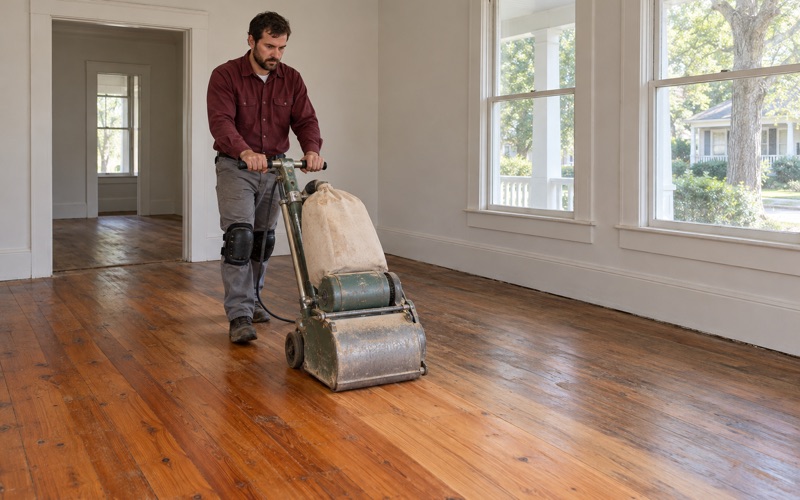
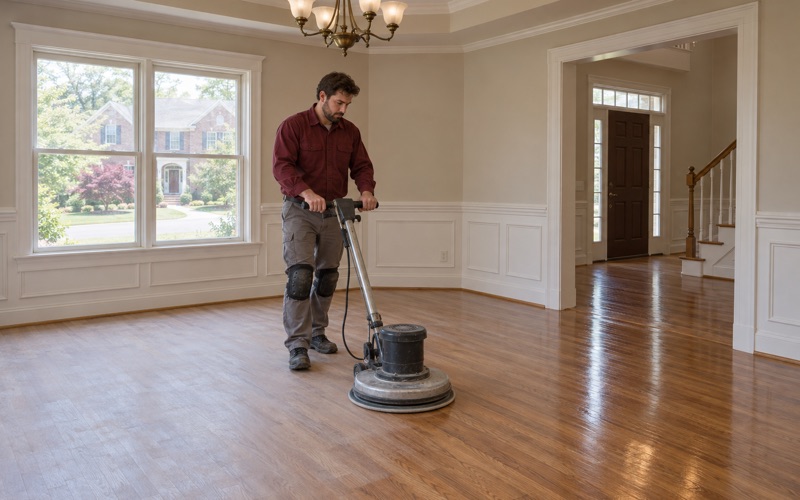
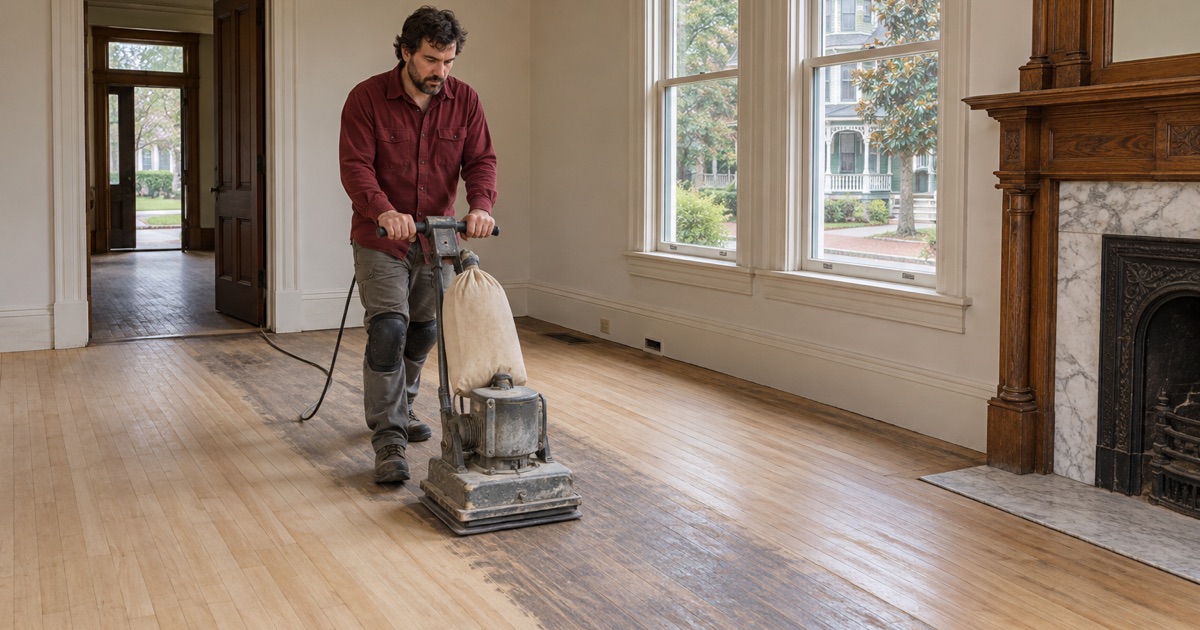
Old floors have usually been sanded before, sometimes more than once, and every pass removes wood above the tongue. Before a drum sander touches a floor in one of these houses, we pull a floor register or check an edge to see how much wear surface remains. That measurement decides whether a full sanding is safe.
Where the wood is thin, we lean on a lighter approach with an orbital sander, or a screen and recoat that renews the finish without cutting into the boards. Where there is plenty left, we run a careful grit sequence and keep the patina of the surrounding wood in mind rather than chasing a factory-new look.
Finish Choices for Working Rooms
A floor under business traffic needs a finish that resists abrasion and can be maintained without a full shutdown. Waterborne polyurethane dries quickly, stays clearer and lets a room reopen sooner. Oil-modified polyurethane builds an amber tone that suits some older wood but needs longer before furniture and foot traffic return.
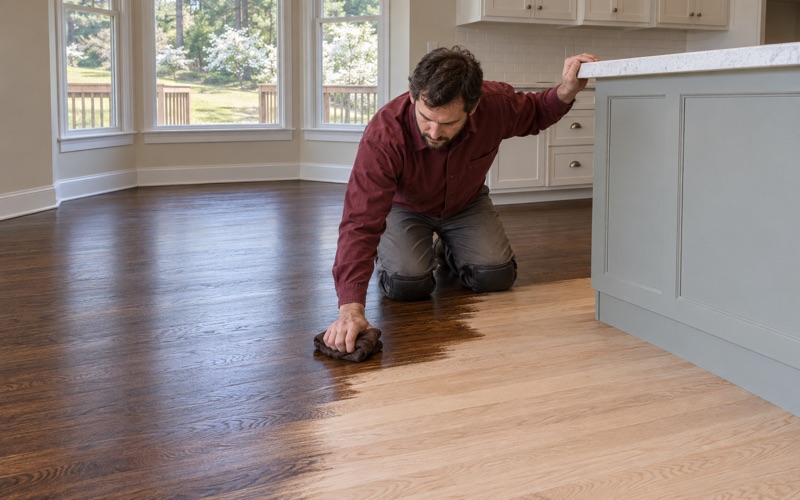
Sheen level matters more in a public room than a private one. A satin or matte finish hides the fine scratches that grit leaves behind, while gloss shows every one. We lay stain samples on the floor itself, in the room’s own light, so an owner sees the real color before we commit.
Working Around Open Hours
A business cannot always close for a week. We break larger jobs into sections, finishing one room while the next stays open, and we plan cure times so a waiting area or front office is usable again as soon as the finish allows. Dustless sanding keeps fine dust out of files, stock and neighboring rooms.
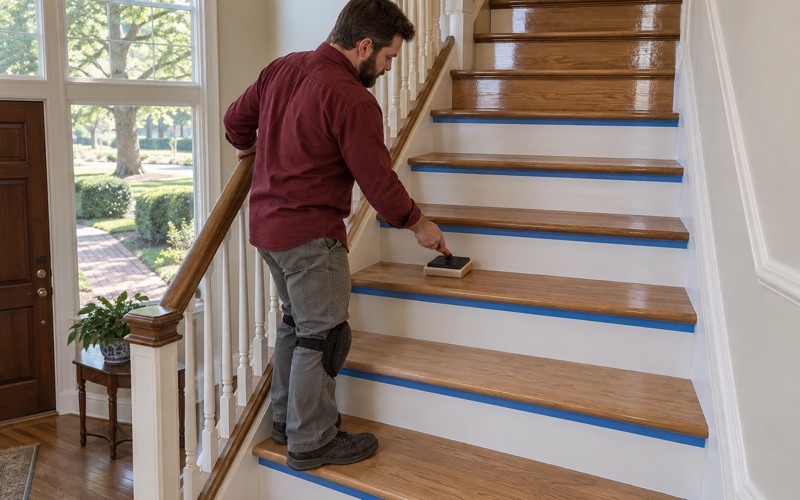
Stairs in a converted house often carry more traffic than any other surface, since a single stairway may serve offices on two floors. We quote stairs tread by tread and price refinishing separately from new stair treads, so an owner can see exactly what worn nosing or a cracked tread will cost.
Repairs Inside Houses on Atlanta and Frasier Streets
Repairs in a house of this age are rarely one-board problems. We look at why a board failed before we replace it, because a patch that ignores the cause simply fails again under the next season of business traffic.
Matching New Boards to Old Color
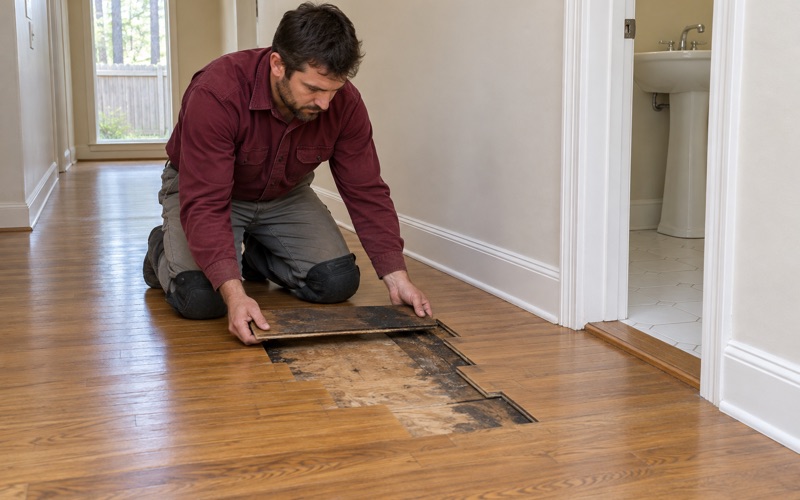
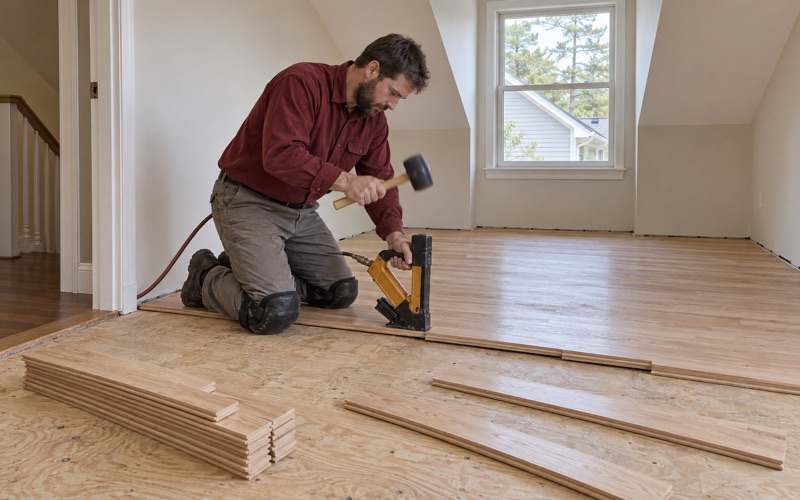
When a board is split, stained by pet urine or water, or worn beyond saving, we cut it out and weave in replacement stock rather than filling the gap or laying something over it. In an old house, the replacement has to match the surrounding wood’s age and tone, not a sample from a catalog.
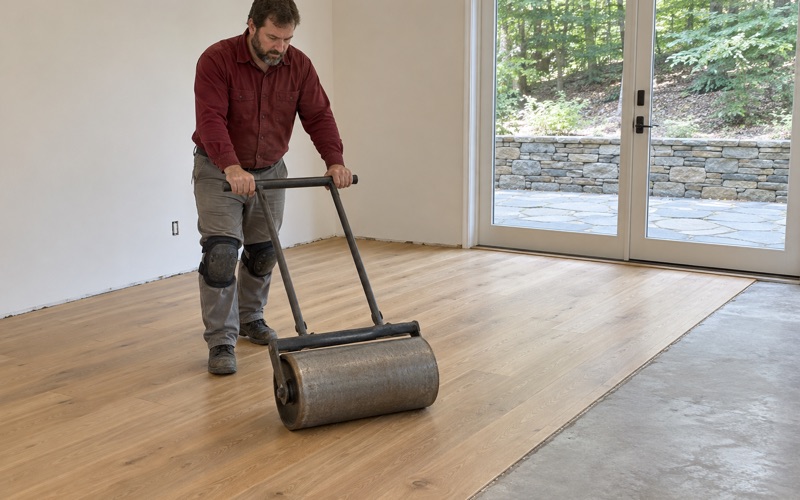
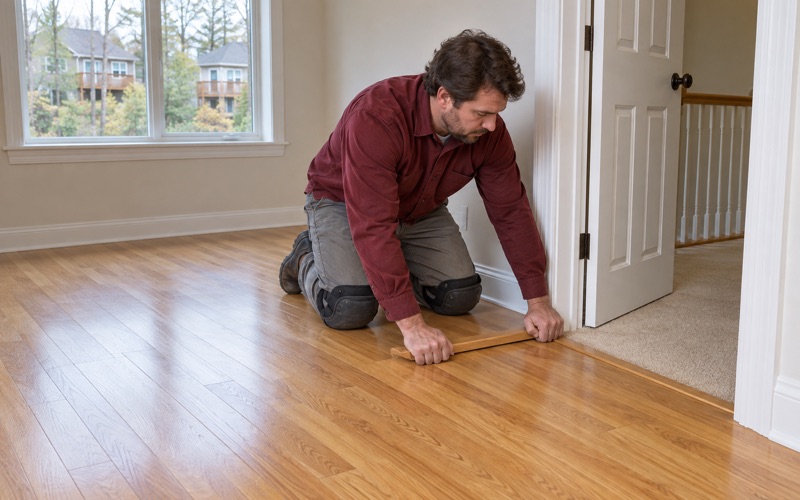
We identify the species and board profile on site rather than assuming them from the house’s age. A floor laid in the 1840s and one laid in the 1930s can differ in board width, species and fastening, and a repair needs to respect whichever one is actually there.
Soft Spots, Moisture and Termites
A spongy floor or a soft spot near a doorway gets opened up and traced, not screwed down and hidden. The cause may be a failing subfloor, a joist problem or moisture from below, and we find out which before replacing anything. Cupping in a humid Georgia summer gets a moisture meter reading and a source before any sanding.
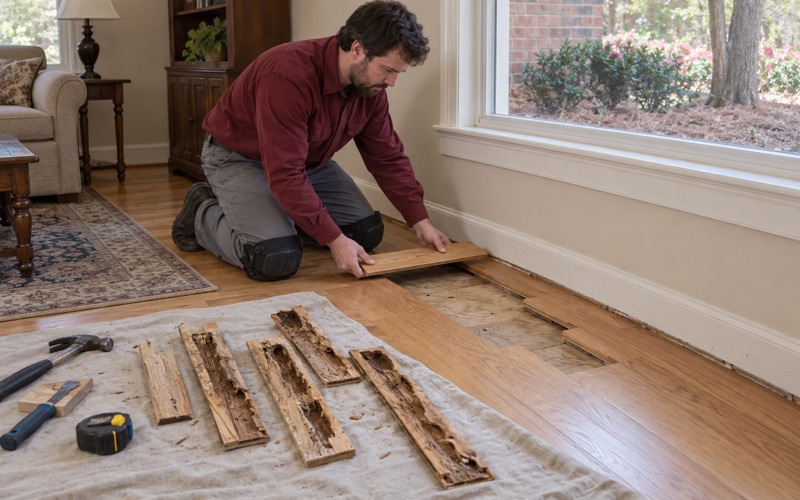
Subterranean termites are a concern in any older wood-framed house. When mud tubes or damaged boards turn up, we wait until the pest control company has treated, then cut out the damaged wood and set in boards that match. If a termite letter surfaces during a sale, we work toward the closing date.
Paint, Build Year and Water Damage
Every contributing house in this district dates from the 1930s or earlier, well inside the era the EPA RRP Rule addresses. Before any sanding starts, we check the build year and look at baseboards, thresholds and any painted floor, then plan containment around what we find.
Water from a supply line, a dishwasher in an office kitchenette or a storm gets traced, dried with a dehumidifier and measured before we replace a board. We document the damage room by room for the adjuster, which matters when a business needs its space back and its claim settled quickly.
- 20+ Years on Wood Floors
- Moisture Read Before Sanding
- Stain Samples on Your Floor