Roswell Wood Flooring has handled wood-flooring in Milton for more than 20 years, and a good share of that work happens on streets where a homeowners association sits between the front door and the public road. We refinish, repair and install hardwood for owners who want the floor done right and the neighborhood left undisturbed, which in an association community means planning past the property line.
Before a drum sander comes off the trailer, we sort out who needs to hear about the project, where the crew parks, how the flooring gets delivered and when the loud days fall. None of that changes the floor itself. It changes whether the week goes smoothly for you, your board and the family next door.
Inside the house the work is what it always is: moisture readings before anything is sanded, stain samples laid on your own boards in your own light, and stairs priced tread by tread. The sections below cover the parts that are specific to owning a home in a Milton community with rules of its own.
How Milton Divides Work Between HOAs and the City

Milton has only been a city since December 1, 2006, and it has put deliberate effort into explaining where its authority ends and an association’s begins. That line matters for a floor project, because the questions an owner should ask depend on which body actually answers them.
The City’s HOA Contact Registry
The City of Milton keeps a registry where HOA leaders sign up a contact to receive regular email updates on information affecting homeowners associations in the city. A board that has registered hears from City Hall directly rather than secondhand. For an owner, that makes your association’s leadership a sensible first call, since they are likely to be current on how city matters touch the neighborhood.
We suggest asking the board or management company one plain question before a large job: does our declaration or any adopted rule say anything about contractor hours, parking or deliveries? That answer shapes the schedule we build with you, and it takes one email to get.
What the City’s HOA Workshop Covered
The City invited HOA board members to an informational workshop in the Council Chambers to learn the defined roles and responsibilities of HOAs and those of the City. Topics included permitting, landscaping and the differences between public and private streets. A follow-up release reported that dozens of HOA leaders attended, with staff from four City departments and Mayor Peyton Jamison addressing the room.
The takeaway for a flooring job is straightforward. Permitting is a City matter, handled through Community Development, and we look up what applies to your specific project rather than guessing. Private streets and common-area landscaping are where an association’s own responsibilities tend to show up, and those are exactly the things a crew van and a delivery truck touch.
Where Your Own Declaration Fits
We never assume an association regulates what goes on inside your house, and we never assume it does not. Any interior flooring rule would come from your own declaration and whatever rules your board has adopted, so we ask you to confirm in writing before work starts. If the documents are silent, you have your answer; if they say something, we plan around it.
Outside the house, the same documents may also address things our work does affect: where a dumpster may sit, which hours are open to contractors and whether work trucks can park on the street. Those rules are worth reading before the first delivery, and we are glad to go through them with you.
Looking for wood-flooring closer to Sandy Springs? See Wood-Flooring in Sandy Springs.
Planning a Floor Project in an Association Neighborhood
Most of what a board notices during a flooring job happens outside: the driveway, the curb, the common areas and the noise. We plan those pieces the same way we plan a grit sequence, in order and ahead of time.
Notice to the Board and the Neighbors
For a refinish or a new installation that runs several days, we give you a written schedule you can forward to your board or management company. It lists the arrival window, the days the drum sander and orbital sander run, and when finish goes down and the house needs to stay closed. Boards tend to respond well when an owner brings the plan to them first.
A short note to the houses on either side does the same work on a smaller scale. Nobody minds a loud Tuesday nearly as much when they heard about it on Sunday.
Dust Control and Debris
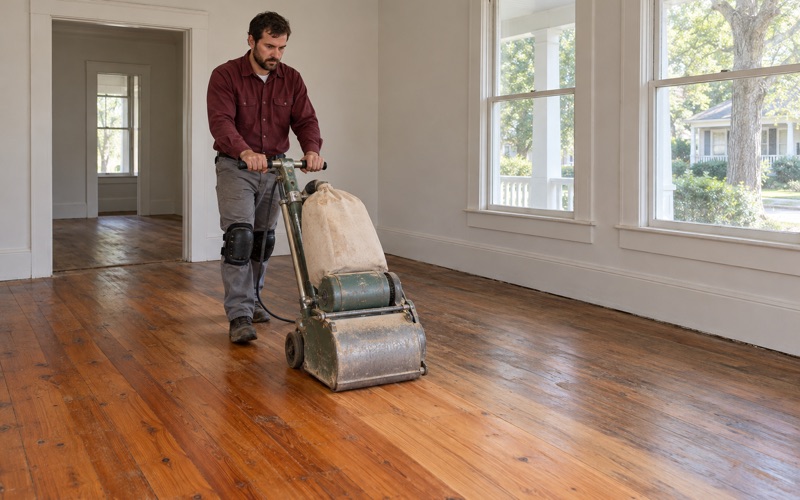
Our sanding runs through dust containment connected to the machines, which keeps fine dust in the collection bags instead of drifting out an open garage door. Old carpet, carpet pad and tack strip leave the house bagged and rolled, and they go straight onto our vehicle rather than sitting at the curb for a week.
Pulling a parquet foyer or builder-grade floors produces heavier, bulkier debris. We ask ahead whether your community allows a dumpster in the driveway at all, and when it does not, we haul out loads at the end of each working day instead.
Finish Days and Odor
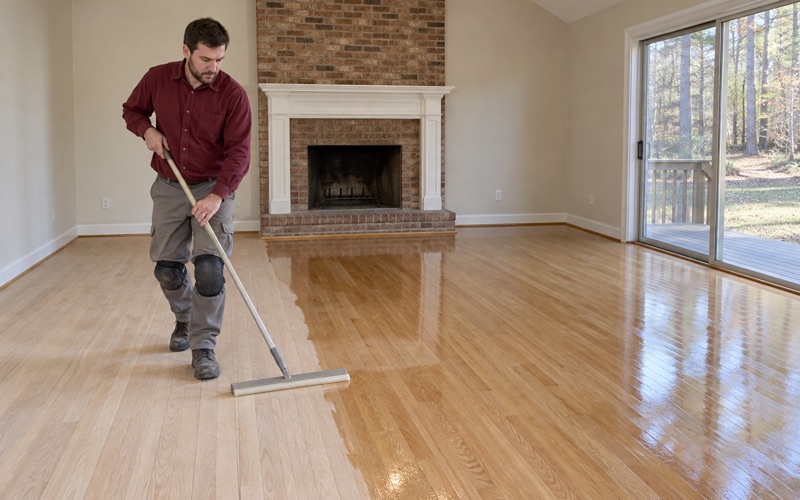
Waterborne polyurethane has a light odor and dries quickly, while oil-modified polyurethane carries a stronger smell and a longer cure. Where houses sit close together and windows are open in spring, that difference is worth weighing alongside sheen level and durability. We walk through both options, with samples on your floor, before you choose.
Hardwax oil is a third option some owners ask about. It has its own odor, look and maintenance routine, and we explain each finish honestly rather than steering you toward whichever one is fastest for us to apply.
Private Streets, Deliveries and Crew Access
The City’s workshop drew a line between public and private streets for a reason. In a gated or privately maintained community, the road to your driveway may belong to the association, and that affects how our vehicles get in and where they can sit during the job.
Getting Through the Gate
If your neighborhood has a gate code, a guard list or a call box, we ask for the access method the week before. A crew held at the entrance loses the morning, and a flooring delivery turned away has to be rebooked with the supplier. Where a management company issues contractor passes, we register our vehicles ahead of the first day.
Work hours matter as much as access. Where an association sets quiet hours or limits contractor start times, we build the sanding days inside them, and we tell you on the first morning if a job is running long so you can let the board know before anyone has to ask.
Deliveries and Acclimation
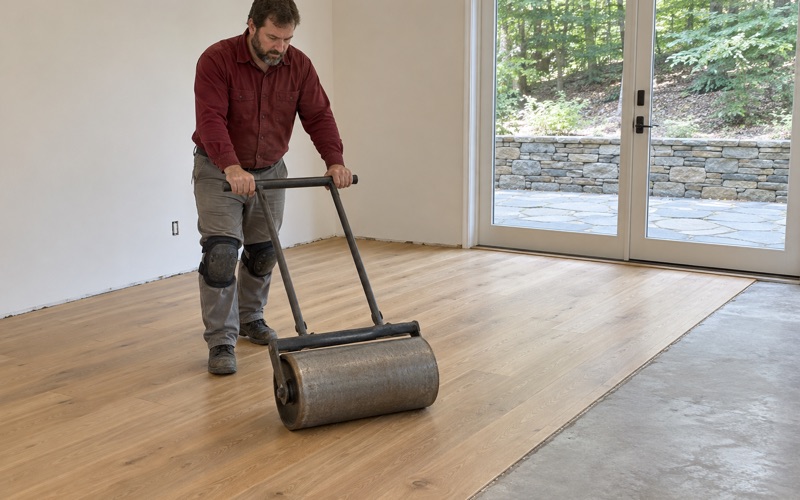
Solid hardwood and engineered flooring arrive by the pallet or in carton stacks, usually on a box truck. We coordinate the drop-off for a time when the truck can pull close without blocking a narrow private lane, and the boxes go straight inside to acclimate in the rooms where they will be installed.
Acclimation is measured, not counted in days. We read the new boards and the subfloor with a moisture meter and install once the numbers sit within the range the NWFA Installation Guidelines call for. That step protects the floor against board gapping in winter and cupping through a humid Georgia summer.
Parking the Trailer and Equipment
Some associations limit overnight parking of trailers and work vehicles on their streets. We keep equipment in your driveway during working hours and take it with us at night unless your board has told you otherwise. We also keep clear of neighbors’ mailboxes, shared walks and any landscaped islands the association maintains.
On a narrow private street, we also time the work so our vehicles are not lined along the curb when school buses, landscape crews or trash pickup come through. A crew that stays out of the way gives your neighbors and your board nothing to call about.
Floors for Milton Owners in Their Peak Working Years
Owners aged 45 to 54 are the largest age group among Milton’s owner householders, 3,609 of 11,044, according to the Census Bureau’s 2024 five-year estimates. With 72.5 percent of the city’s homes owner-occupied, most of our Milton customers own the house they live in and are fitting a floor project around full careers and busy households.
Working Around a Full Calendar
We schedule refinishing so the loudest work lands on days you are away, and we sequence rooms so a home office or a bedroom stays usable as long as possible. A screen and recoat on a floor that is dull but not damaged is a much shorter job, which suits a household that cannot clear out for a week.
When a full sand is the right call, we tell you plainly how many nights the finish needs before furniture goes back and when the floor can take socks, then shoes, then rugs.
Homes Bought in the 2010s
About half of Milton’s owners, 5,605 of 11,044, moved in between 2010 and 2019, and another 1,832 arrived between 2020 and 2022. Most of their houses date from 1990 through 2019, the era of 88.2 percent of the city’s housing units. That adds up to floors a decade or two past their last finish, with traffic lanes, sun fade along the windows and pet urine stains near the back door.
Site-finished red oak and white oak from the 1990s usually has sanding left in it. We check the wood remaining above the tongue before recommending a full sand, and if an older finish has pushed red oak toward orange, we test stains on the floor that bring it back to a quieter tone.
Refinish, Repair or Replace
Not every tired floor needs to come out. Soft spots and a spongy floor near a dishwasher or washer get opened up and traced to the subfloor or the moisture behind them, and water damage is dried and measured before any board replacement, with room-by-room documentation for your adjuster. Carpeted stairs and landings can give way to hardwood treads, quoted tread by tread.
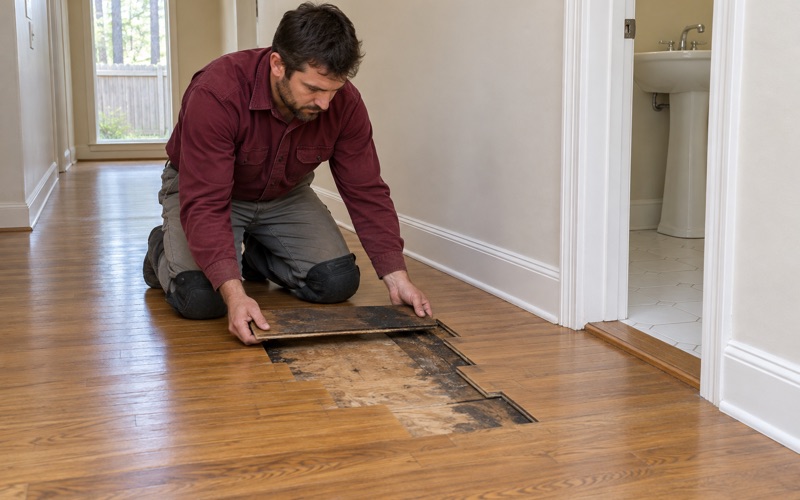
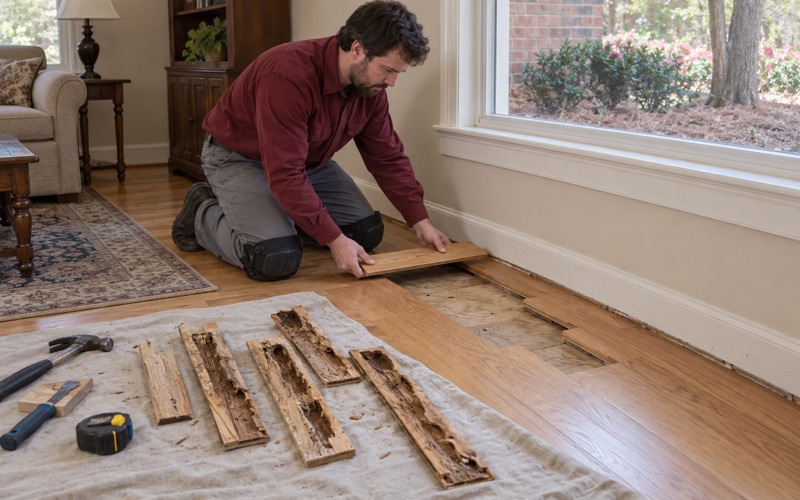
Owners preparing to sell run on a calendar too. If a termite letter or inspection turns up damaged boards, we cut them out and weave in matching stock after the pest control company has treated, working back from your closing date so the floor is finished before the buyer’s walkthrough.
- 20+ Years on Wood Floors
- Moisture Read Before Sanding
- Stain Samples on Your Floor