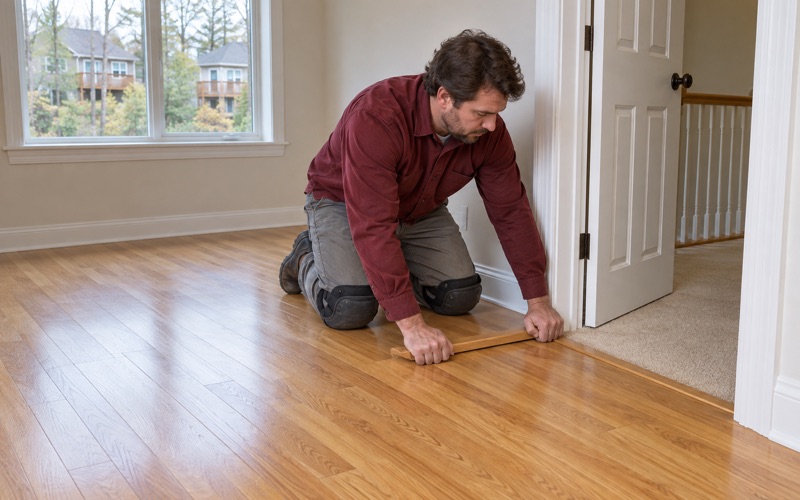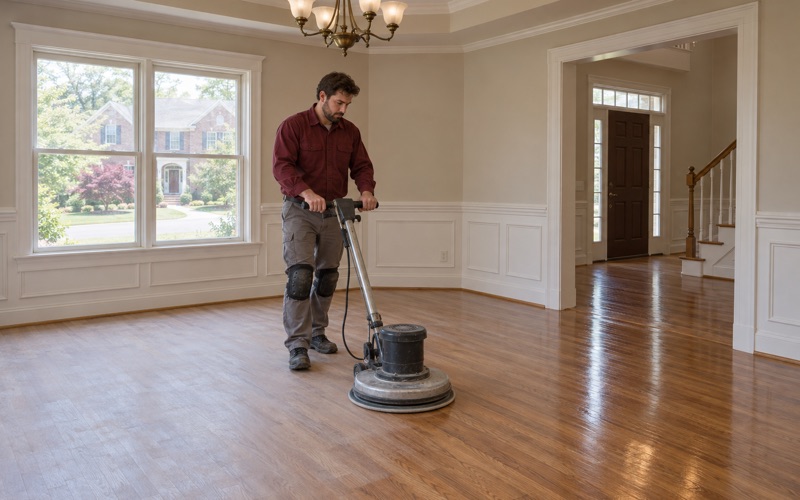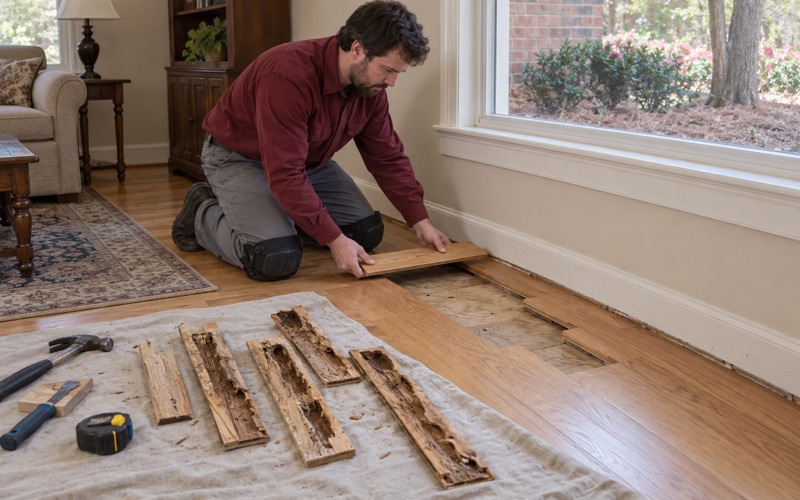
Roswell Wood Flooring brings more than 20 years of work to wood flooring in Sandy Springs, and most of the calls we take here start the same way: someone has just bought an older house and wants the floors to feel like theirs. That usually means a floor that can be saved, a floor that should go, and a clear answer about which is which.
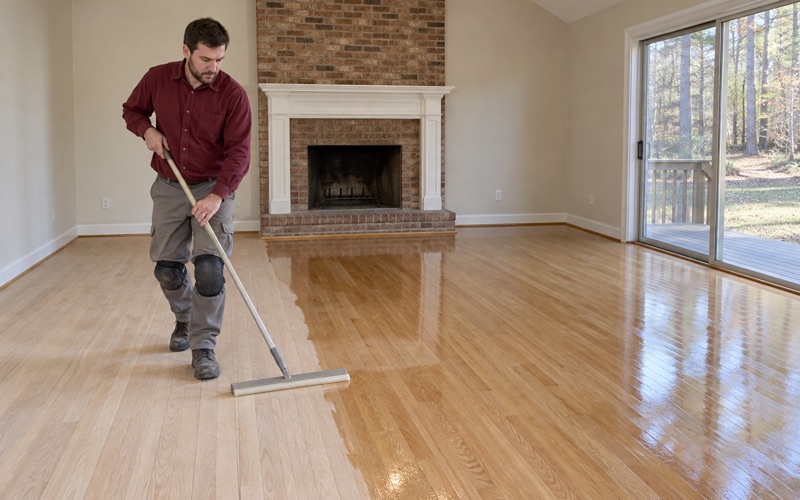
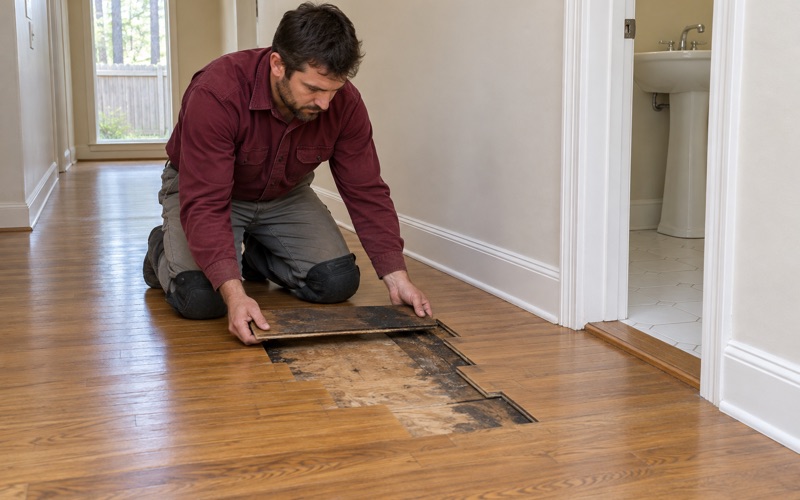
We sand and refinish site-finished oak, cut out and weave in damaged boards, replace worn carpet and dated parquet with hardwood, and rebuild stairs tread by tread. Before any machine touches a floor we read it with a moisture meter, check the wood left above the tongue, and note the build year and any painted surfaces nearby.
The goal is simple. Keep the good wood, fix the real problem under the bad wood, and give you a finished floor without tearing out more than the house needs.
What the City’s Housing Study Says About Older Homes
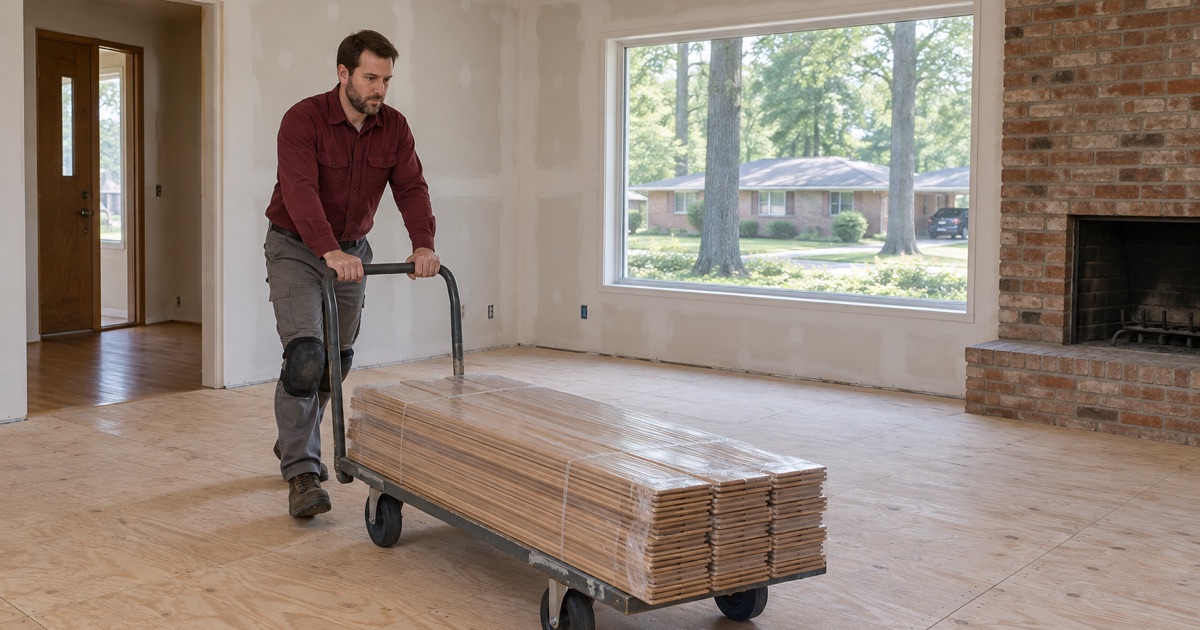
In November 2020, HR&A Advisors prepared a Housing Needs Assessment for the City of Sandy Springs. It is a housing document, not a flooring one, but a few of its findings describe the houses we are asked to work in better than any sales pitch could. Read alongside census counts, they explain why so much of our work in this city is updating rather than building new.
A Resale Band Made of Houses That Need Work
The study looked at sales from 2017 to 2019 and found that 81 percent of single-family homes sold for more than $400,000. Within that market, it singled out one band: sales in the $400,000 to $600,000 category “tend to be transactions of older homes that may require renovation.”
That is the buyer we meet most often. The house is sound, the location is right, and the interior is a generation behind. Floors are usually near the top of the list, because they touch every room and are far easier to redo before the furniture arrives than after.
Renovating Instead of Starting Over
The same study estimated that 250 to 350 single-family homes were demolished and replaced with new single-family construction between 2011 and 2020. HR&A built that range from tax assessor appraisals, so it is an estimate of a pattern rather than a tally of addresses.
For an owner weighing the two paths, floor work is one of the clearest parts of the renovate side. A tired floor in an older house is rarely a reason to start over. Worn finish, traffic lanes, pet urine stains and sun fade are surface problems, and a floor with enough wood left can be sanded back and finished again.
The 1980s Houses Behind the Numbers
Census figures fill in what “older” means here. Of the 55,203 housing units counted in the 2024 American Community Survey five-year estimates, 13,569 were built in the 1980s, the largest share of any decade. Another 28.8 percent of units predate 1980.
Much of that 1980s stock went in with site-finished oak, often red oak under a finish that has turned orange with age. Those floors are frequently better candidates for refinishing than their color suggests, which is why we look before anyone quotes a tear-out.
Owners Who Stay and Update
Not every renovation follows a sale. The study describes the city’s homeowner population as “aging and growing wealthier,” and it counted 1,183 more owner households aged over 65 between 2011 and 2018. Many of those owners are updating a house they intend to keep rather than moving.
For them, the floor question is usually about comfort and upkeep: a refinish that removes years of wear, a smoother transition with a low reducer between rooms, or replacing a slippery stair runner with sound hardwood treads. We plan those jobs room by room so the house stays livable while the work moves through it.
Looking for wood-flooring closer to Johns Creek? See Wood-Flooring Services in Johns Creek.
Refinishing and Replacing Floors in a House You Just Bought
The weeks between closing and move-in are the best window a new owner will get. Rooms are empty, dust has nowhere to settle, and a floor can cure without chairs dragged across it. It is also the moment to fix anything the inspection flagged, before a rug or a sofa hides it.
Checking How Much Wood Is Left
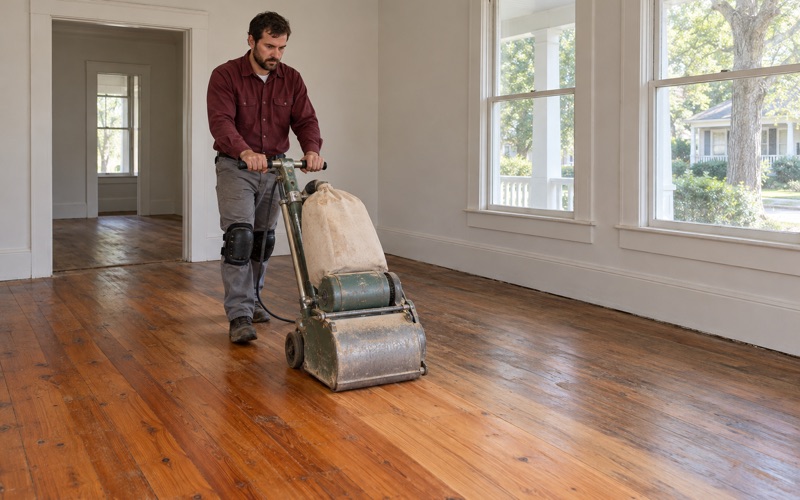
A solid hardwood floor can only be sanded so many times. We pull a vent cover or a threshold to see the board edge and measure the wood remaining above the tongue before we recommend a full sand. If there is plenty, a drum sander and a careful grit sequence take the floor back to bare wood.
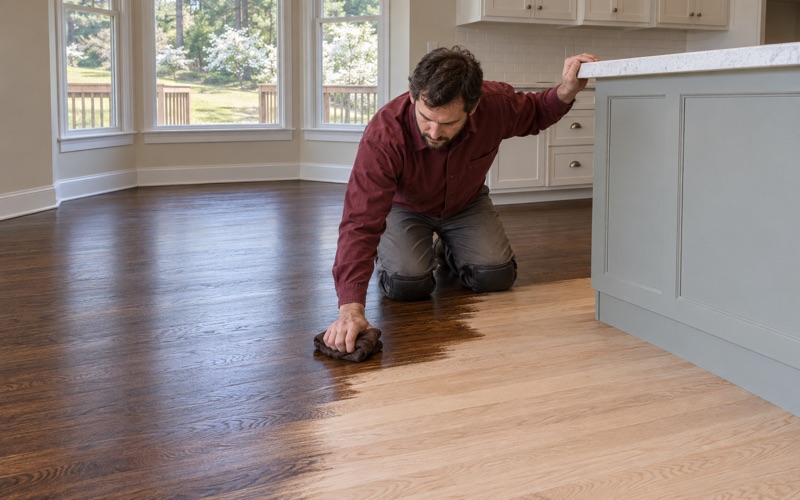
If there is little left, a screen and recoat may refresh the finish without cutting into what remains. Either way, we lay stain samples on your own floor, in your own light, so the color is chosen against the wood you actually have. We also confirm the build year and look for painted trim or walls before sanding near them.
When Replacement Is the Better Call
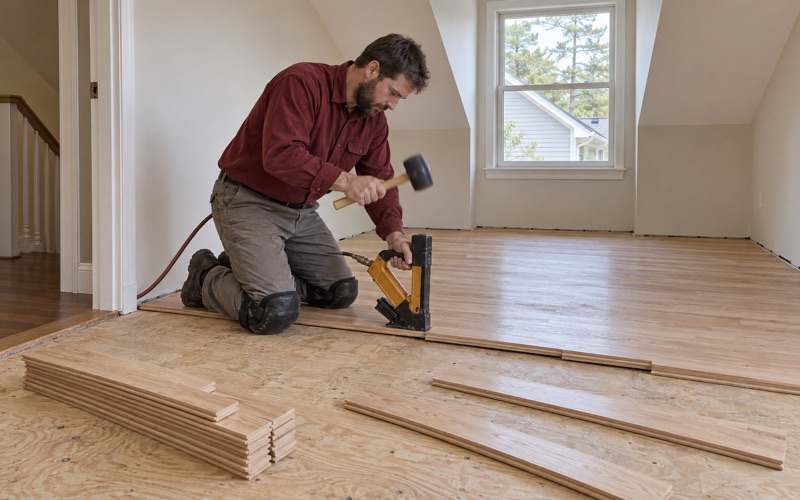
Some floors in these houses were never worth saving. Wall-to-wall carpet over plywood, a small parquet foyer that no longer matches anything, or a builder-grade floor that has worn through all make a case for new hardwood. We pull the carpet pad and tack strip, check the subfloor, and install solid or engineered boards to suit the room.
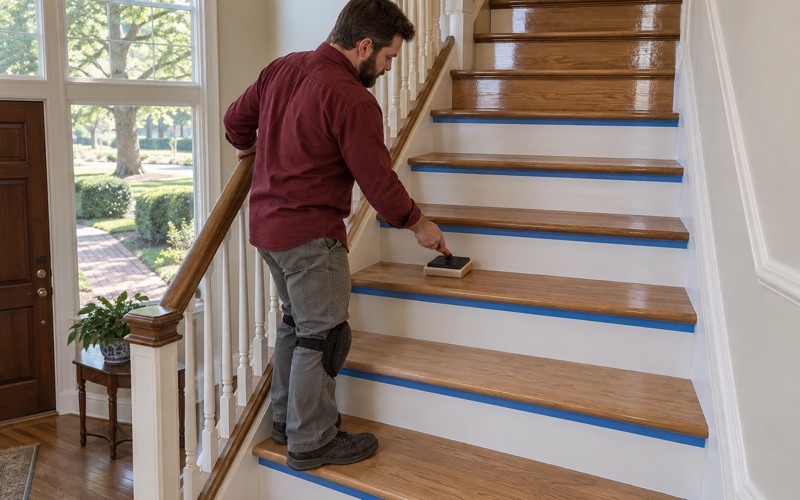
Stairs and two-story landings are part of that conversation. We price refinishing existing treads and installing new stair treads, risers and nosing as two separate jobs, so you can see what each one costs before deciding.
Problems a New Owner Finds Underfoot
Older houses sometimes reveal a soft spot, a hollow sound or a board that cups near the kitchen once the carpet is up. We open those areas and trace them to the subfloor, a joist, or moisture behind them, rather than screwing the boards down and moving on.
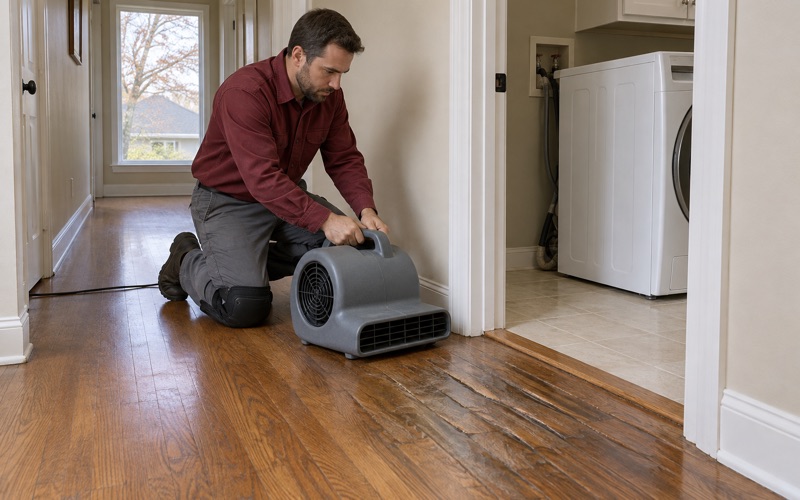
Where an old leak from a washer, dishwasher or supply line is the cause, we dry and measure before replacing anything. Where subterranean termites have damaged boards, we wait for the pest control company to treat, then cut out the damage and weave in matching stock.
Townhomes Built Since 2011 and Their First Floor Work
The housing study found a lopsided decade of construction. Between 2011 and 2020, 363 single-family homes and 1,127 townhomes were built in Sandy Springs, and no multifamily condominium units were built at all. Many of those townhomes are now reaching their first round of floor work.
Finishes Wearing Through for the First Time
A townhome floor installed in the last decade is often prefinished or engineered hardwood. Engineered boards can sometimes be sanded once or twice, depending on the thickness of the engineered wear layer, while a thin wear layer may only take a screen and recoat.
We check which one you have before recommending anything. For solid site-finished floors, a full refinish with waterborne or oil-modified polyurethane is usually on the table, and we walk through sheen level with you, since a satin finish hides traffic lanes better than gloss. If boards have cupped or opened into gaps after a humid summer, we read them with a moisture meter and find the source before sanding, because flattening a cupped floor while it is still wet leaves it crowned once it dries.
Stairs in a Vertical Plan
Townhomes stack their living space, so stairs carry more foot traffic than in a ranch house. Carpeted stairs are among the most common upgrades we quote in newer attached homes, replaced with hardwood treads, painted or stained risers, and matching nosing at each landing.
Because every tread is measured and quoted separately, you can do the main run now and the upper flight later without the two ever looking mismatched.
Getting Association Approval First
Most townhome communities have an owners’ association, and any interior flooring rule comes from your own declaration rather than from us. We ask to see the association’s written approval before work starts, which keeps a finished floor from turning into a dispute with a neighbor.
Associations also set practical terms that shape the schedule, such as working hours, where a truck can park, and how debris leaves the building. We plan dust control around shared walls and entries, and we keep the stairwell and front door clear for the people who live on either side of you.
Condo Floors in the City’s Most Affordable Ownership Stock
The study found the reverse pattern for condominiums: 93 percent of condos sold from 2017 to 2019 went for less than $400,000. With no new multifamily condo units built between 2011 and 2020, most condos changing hands here sit in buildings from before that decade, and their floors often show it.
Reading the Declaration Before Choosing a Floor
Condo owners have less freedom than a house owner, and the declaration is where the limits live. Some associations restrict hard flooring on upper levels or require a particular underlayment. We confirm the association’s written approval first and build the job around it.
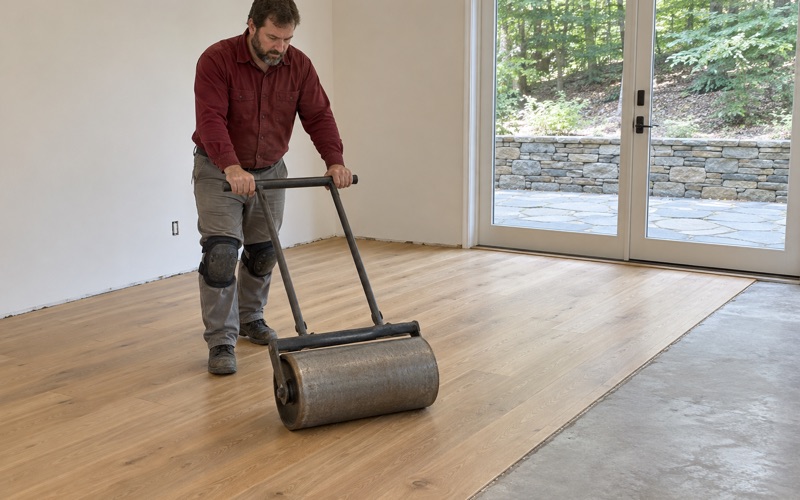
Within those rules, a glue-down engineered floor or a floating floor is often the practical choice over concrete, for the same reason we match engineered wood to basements and slabs rather than nailing solid boards there. We check the concrete with a moisture meter and use the vapor retarder the product calls for.
Worn Parquet and Water Stains in Older Units
Older condo units often carry parquet that has loosened or darkened near doors and kitchens. Where the tiles are tight and the wood is sound, a refinish can bring it back. Where they rock or lift, replacement is usually cleaner.
Water stains near a sink, a dishwasher or a window get traced before any board is replaced, and we document each room for the adjuster when an insurance claim is involved. A condo floor done that way is ready for the next owner as well as this one.
Working Around the Neighbors
A condo floor sits between other people’s homes, so the job has to fit the building. We bring engineered boards in to acclimate ahead of time, cut outdoors or in a designated area where the association allows it, and leave a proper expansion gap at every wall so the floor can move without pushing on the trim.
Where a unit only needs a fresh coat, a screen and recoat is far quieter and quicker than a full sand. Finishing with waterborne polyurethane also keeps odor in the hallway to a minimum, which neighbors notice more than anything else about a flooring job next door.
- 20+ Years on Wood Floors
- Moisture Read Before Sanding
- Stain Samples on Your Floor