
Roswell Wood Flooring offers screen and recoat service for hardwood floors in Roswell, GA, serving surrounding cities including Alpharetta, Dunwoody, Milton, Sandy Springs and Johns Creek. With more than 20 years of floor care behind us, we recommend a screen and recoat whenever a floor’s wear has not reached the wood, because it costs far less than sanding and saves the wood for when you really need it.
A screen and recoat, sometimes called a buff and coat, renews the finish without touching the wood beneath it. We abrade the existing coating so a new coat can bond, clean away every trace of dust and apply fresh finish. The floor keeps its thickness and its color, and it comes back looking bright and even. Done regularly, it can postpone a full sanding by years.
When a Screen and Recoat Works
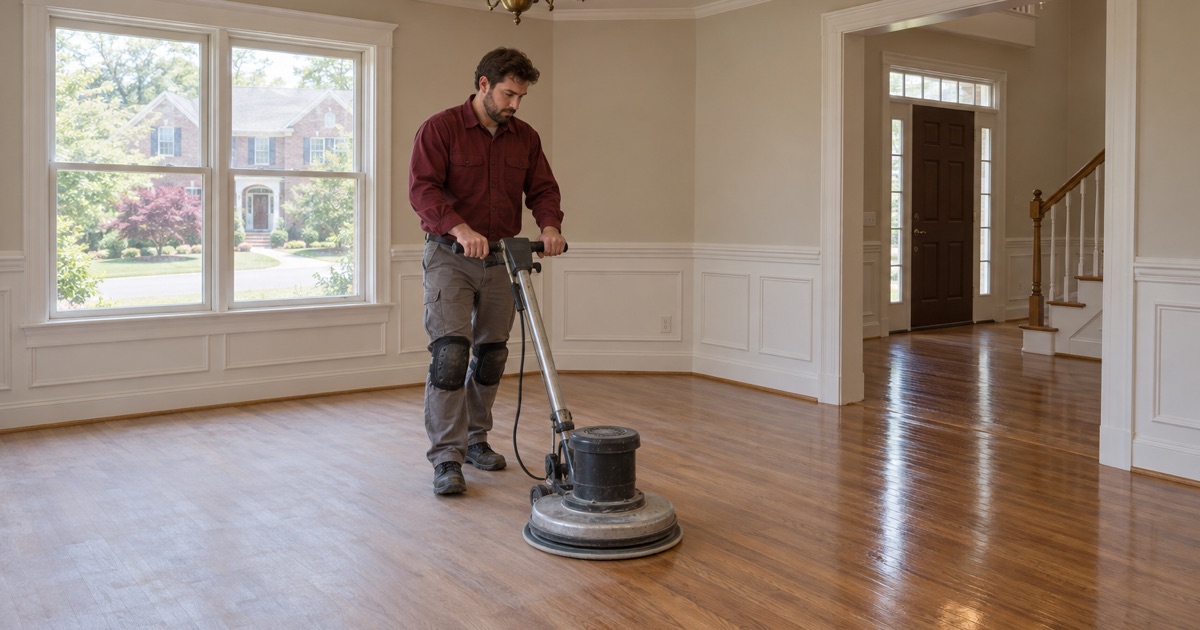
Dull Floors and Light Surface Scratches
Floors lose their shine gradually, as fine scratches from grit, pet claws and shoes build up in the finish. If those scratches sit only in the coating and the wood beneath still has its color and protection, a recoat is the right fix. A fresh coat fills and levels the surface and restores an even sheen across the room.
We look closely at the floor in good light, especially in the paths people walk every day. That tells us quickly whether the wear is only in the finish or has started to reach the wood.
Worn Traffic Lanes Before They Reach Bare Wood
Kitchens, hallways and the spaces in front of sofas and doors wear first. Caught early, while the finish is thin but still intact, those traffic lanes can be restored with a recoat. Once they turn gray, the finish is gone and the wood itself is exposed to dirt and moisture.
At that point a recoat will not match the rest of the floor, because the exposed wood has darkened or discolored. That is why timing matters, and why we recommend recoating before lanes go gray rather than after.
Maintenance on a Newer Floor
A recently refinished or installed floor benefits from a recoat every few years, depending on traffic, pets and the finish. Think of it as adding protection before the original layers wear through. It is the least expensive way to keep a floor looking new and to extend the time before it needs sanding.
For prefinished floors, we check the manufacturer’s guidance and the factory finish type, since some need special preparation before a new coat will bond properly.
When a Recoat Is Not Enough
Deep Scratches, Dents and Stains
Scratches that go through the finish into the wood, dents from dropped objects, and stains from pets or water cannot be fixed by adding finish on top. A new coat simply seals them in. Those floors need a full sanding, or board replacement where stains have soaked through.
It is common for a floor to be mostly sound with a few damaged boards. In those cases we may replace the damaged boards and then recoat the rest, which can be a good middle ground on cost.
Changing the Color
A recoat keeps the existing color because no wood or stain is removed. If you want to move from an orange or honey-toned oak to a brown, gray or natural color, the floor must be sanded to bare wood and restained. We explain that difference clearly before you choose a service.
Floors With Wax or Polish Residue
Floors cleaned for years with wax, oil soap or polish products often carry residues that prevent new finish from bonding. The new coat can peel or flake, sometimes weeks later. We ask about your cleaning products and test adhesion on a small area when we are unsure of the floor’s history.
Where residue is present, special cleaning and preparation may solve it. If they cannot, a full sanding is the only reliable way to get a finish that stays put.
How We Recoat a Floor
Preparing and Abrading
We clear the room, clean the floor thoroughly and remove any grime that would be ground into the finish. Then we abrade the entire floor with a buffer fitted with a fine screen or abrasive pad, plus hand work along the edges and corners. The goal is a uniformly dulled surface that the new coat can grip, without cutting into the wood.
Cleaning and Applying the New Coat
Dust is the enemy of a smooth finish, so we vacuum and tack the floor carefully before coating. We apply one coat of finish compatible with the existing coating, often waterborne polyurethane for its fast drying time and low odor, and we match the sheen of the original finish unless you want a change.
Drying and Returning to the Room
Because there is only one coat, the floor is back in use much sooner than after a full refinish. Light foot traffic is often possible the same day or next morning with a waterborne finish. We give you clear timing for furniture and rugs, since the finish continues to cure after it feels dry.
Keeping the Finish Healthy
Cleaning Between Recoats
The right cleaning routine makes each recoat last longer. We recommend a dry microfiber mop for grit and a cleaner designed for your finish type, and we suggest avoiding wax, oil soaps and steam mops, which damage finishes or block future recoats. Felt pads under furniture prevent many of the scratches that dull a floor.
Planning the Next Service
We can suggest a rough schedule for future recoats based on how the floor has worn. Recoating on time, before the finish wears through, is what lets a hardwood floor go many years between full sandings.
- 20+ Years on Wood Floors
- Moisture Read Before Sanding
- Stain Samples on Your Floor