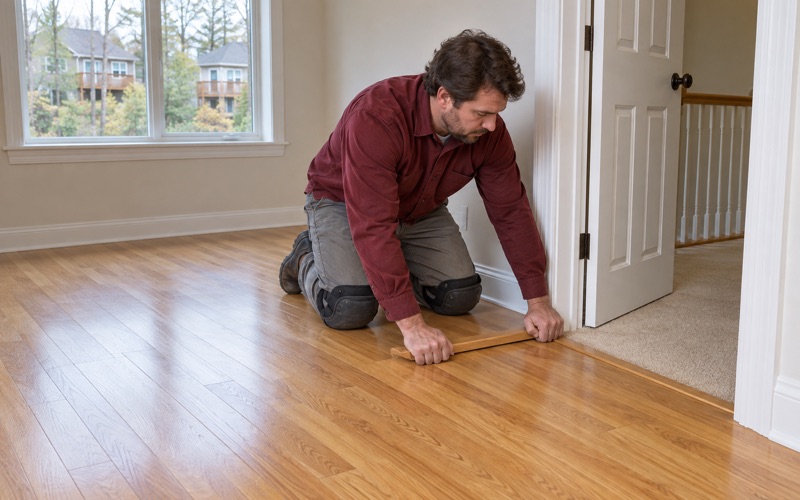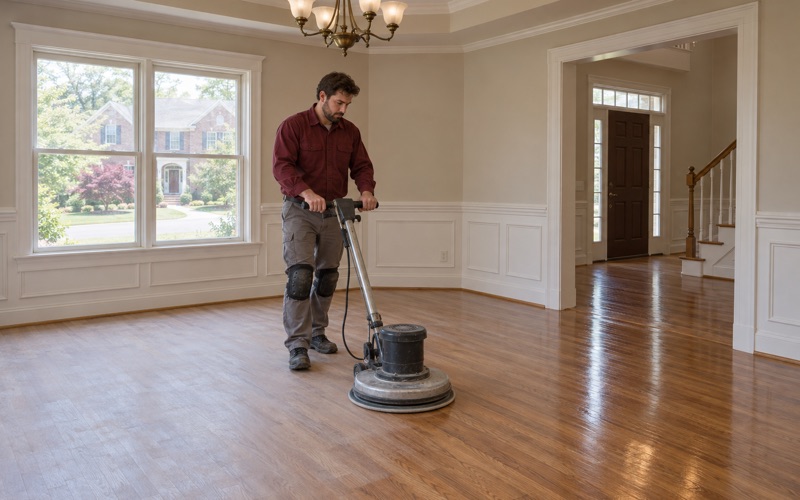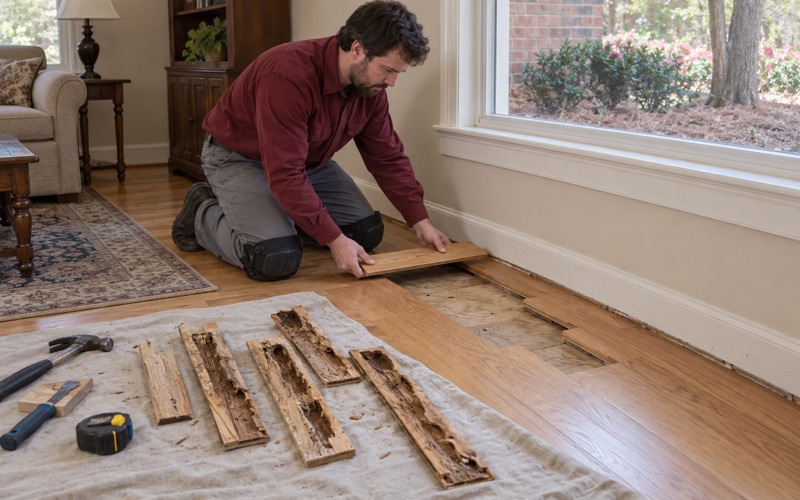
Roswell Wood Flooring brings more than 20 years of work to wood-flooring in Smyrna, and most of the calls we take there come from owners, not landlords. They want a floor refinished, repaired or replaced in a home they plan to keep, and they want the job read correctly before a sander is rolled in the door. That is the kind of customer this page is written for.
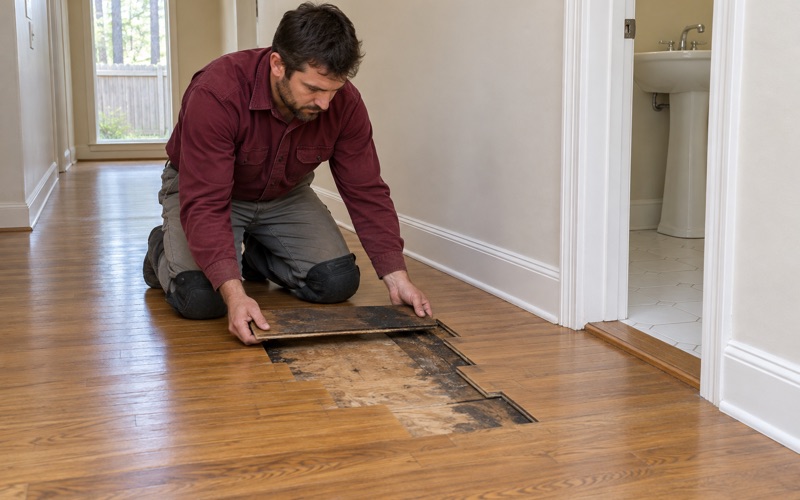
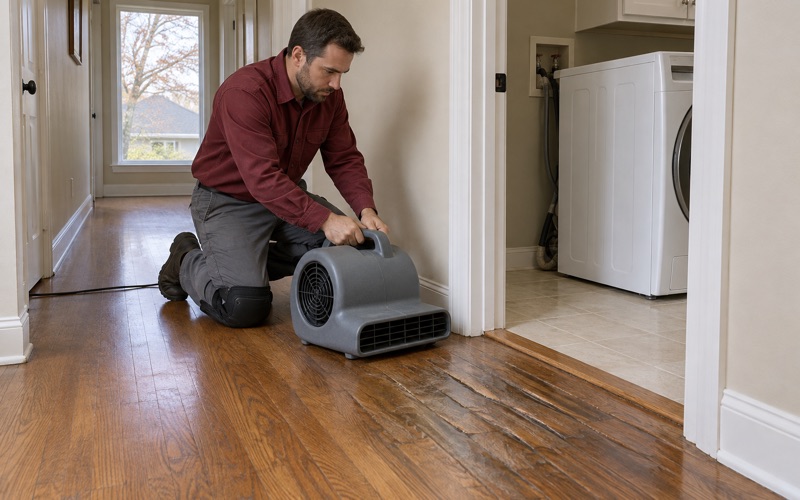
Our first visit is a measurement, not a sales pitch. We read cupped or clammy boards with a moisture meter and find where the water is coming from before anyone flattens a crown, and we open soft or spongy spots to trace them to the subfloor rather than screwing them down and hiding the cause.
Sanding, board replacement, stair treads and full replacement are each priced as the separate jobs they are. Below, we explain how Smyrna’s mixed-use zoning shaped the homes we work in, and what that means for the floors inside them.
How Smyrna Zones Its Mixed-Use Neighborhoods
Ordinance 2018-15 and the MU District
Smyrna is a Cobb County city in the inner ring of metro Atlanta, northwest of Atlanta itself. On October 1, 2018, the Mayor and Council approved Ordinance 2018-15, which amended Section 720 of the zoning ordinance, the MU mixed-use district. The district exists to provide locations for planned developments that combine commercial, office and residential uses.
Those locations sit within or at the edge of the central business district, mixed-use areas and activity centers shown on the city’s Comprehensive Plan. We work from the 2018 ordinance text as approved; later amendments may have changed parts of Section 720, so the current code is the final word on any specific rule.
The Comprehensive Plan itself was updated: the city adopted its 2040 Comprehensive Plan update on February 6, 2023. We mention it because the MU district is tied to areas shown on that plan, so which parcels qualify is a planning question, not a flooring one.
What the District Allows
The 2018 text allows detached, attached, multifamily, townhouse and condominium dwellings in the same district. Residential density is capped at 25 units per acre, rising to 30 when at least 15 percent of the for-sale units are affordable. A detached lot needs at least 6,250 square feet, with 50 feet of frontage and 20-foot front and 30-foot rear setbacks.
For a flooring crew, that mix means one district can hold a detached house with a two-story foyer and a stacked condominium with a shared corridor. The access, the association rules and the approvals differ between them, and so does the floor. We look at the building type first, then the boards.
Cobb County Weather and Wood
Smyrna falls in the National Weather Service forecast zone GAZ032, named ‘Cobb’. What matters for floors is less the zone than the humid Georgia summer, which swells boards that were installed or finished dry. We time sanding and finishing for stable indoor conditions and run a dehumidifier when readings call for it.
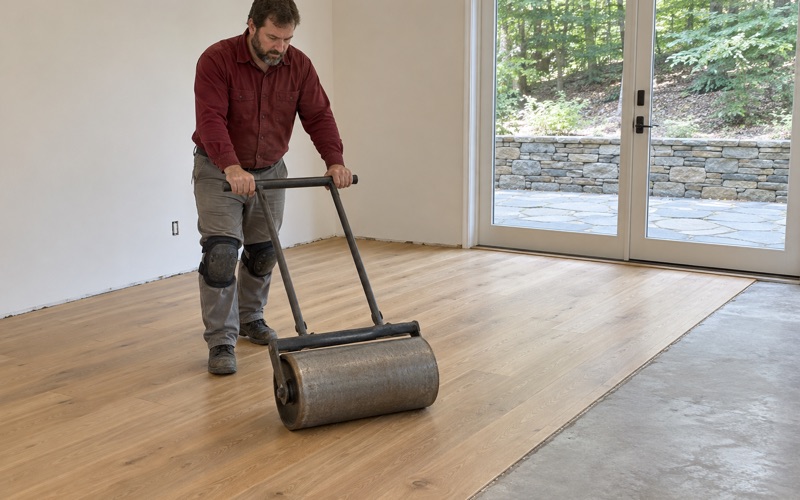
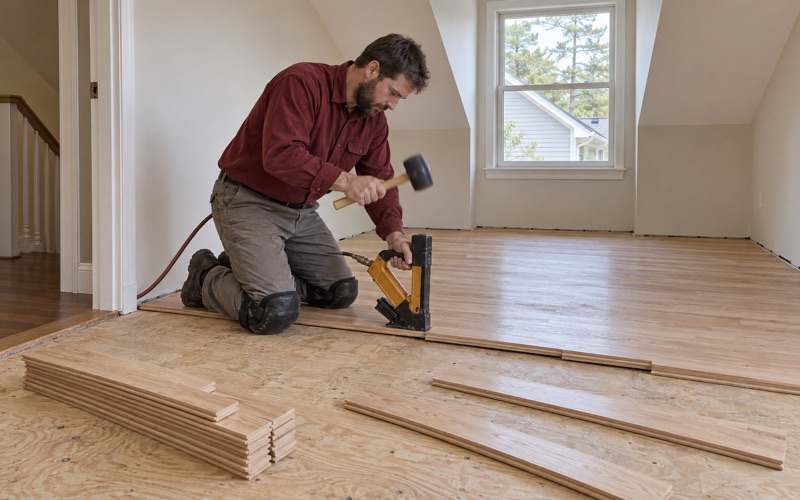
New boards get the same treatment. We let replacement flooring acclimate in the home with the air conditioning running, and check its moisture content against the subfloor’s before installation, leaving the expansion gap at walls that the NWFA Installation Guidelines call for.
Looking for wood-flooring closer to Tucker? See Tucker Wood-Flooring.
Homes Built for Owners, Not Renters
The Fifteen Percent Rental Limit
The clearest sign of intent in the 2018 text is its rental cap. Only 15 percent of the total proposed residential units may be rentals, and only when they are connected and integrated with the development’s non-residential uses. At least 85 percent, then, are homes meant to be bought.
The district also sets floor-area minimums for detached houses and for attached and condominium units, which we cover in the sections that follow. Taken with the rental cap, they describe homes sized for owners who stay long enough to refinish them.
One New Rental for Every Two Removed
New rental units in the district are not simply added. Under Section 720.9(13), each must replace existing rental units in an approved, code-compliant apartment building within a half mile of the project, at a rate of one new rental for every two removed. Each replacement swaps two existing rental units for one new one.
What that means for us is a customer base of owners making long-term decisions. An owner weighs a full sand against a screen and recoat, asks how long a finish will last, and wants a repair that blends. A landlord turning a unit between tenants usually asks a different question.
Smyrna’s Owner Numbers
Census data shows how much of Smyrna already lives this way. The 2024 American Community Survey five-year estimates count 24,809 occupied homes in Smyrna, 14,725 of them owner-occupied, or 59.4 percent. Of those owner households, 24.2 percent live in one-unit attached homes, the townhouse form, which is roughly one owner household in four.
In the same estimates, 81.5 percent of occupied attached homes in the city are owner-occupied. In practice that makes a townhouse floor in Smyrna far more likely to belong to the person living on it, and we plan the work as a long-term floor rather than a rental turnover.
Floors in Mixed-Use Townhomes and Condominiums
Units Averaging 900 Square Feet
In the MU district, attached dwellings, condominium units and other multifamily units may not fall below an average of 900 square feet. Because it is an average, one development can pair smaller flats with larger townhouses, so the square footage we quote against can vary widely within one project.
In a unit of that size, a condominium’s wood often runs as one continuous field through the living room, hall and bedrooms. That continuity is the reason we avoid patching one room with a mismatched finish; a repaired board or a recoated room has to blend into floor that keeps going past the doorway.
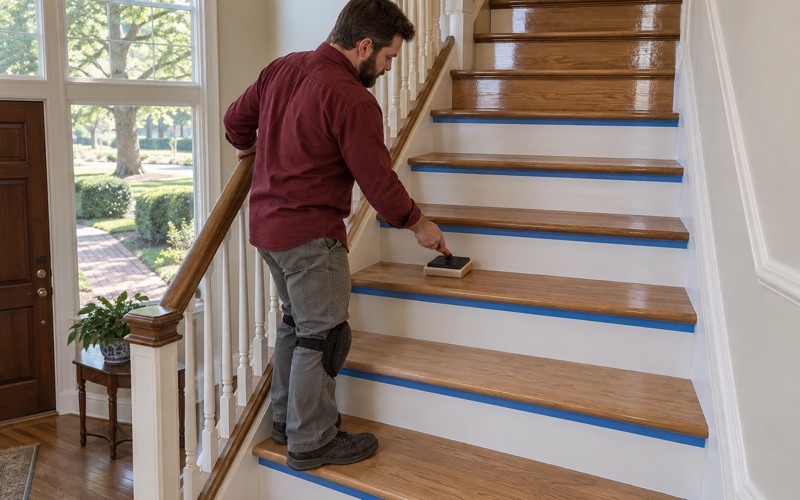
Attached townhouses often stack their space over two or more levels, which adds stairs to a floor plan. Treads, risers and nosing on a townhouse staircase can show wear before any room does, and matching them to the floors at the top and bottom is part of the quote.
Attached Walls, Shared Floors
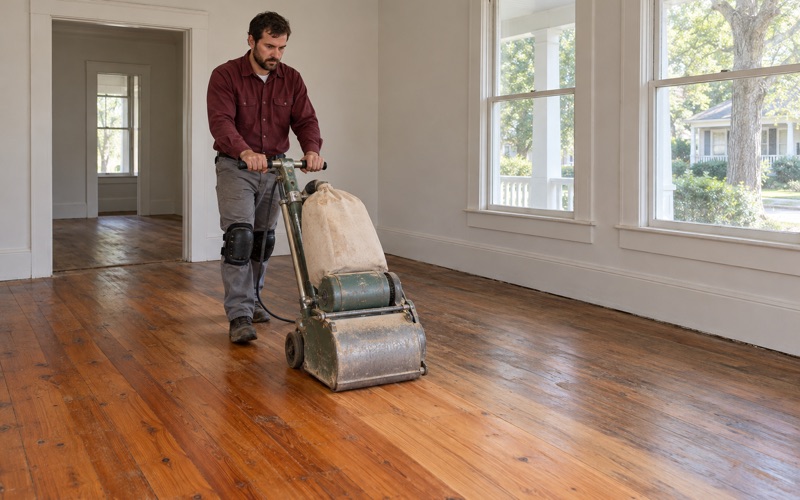
Townhouses and condominiums share walls, and condominiums often share floor-ceiling assemblies with the unit below. That changes how we sand and finish: we use dustless sanding with vacuum containment, schedule drum sander work within the building’s allowed hours, and favor a low-odor waterborne polyurethane where neighbors share a corridor.
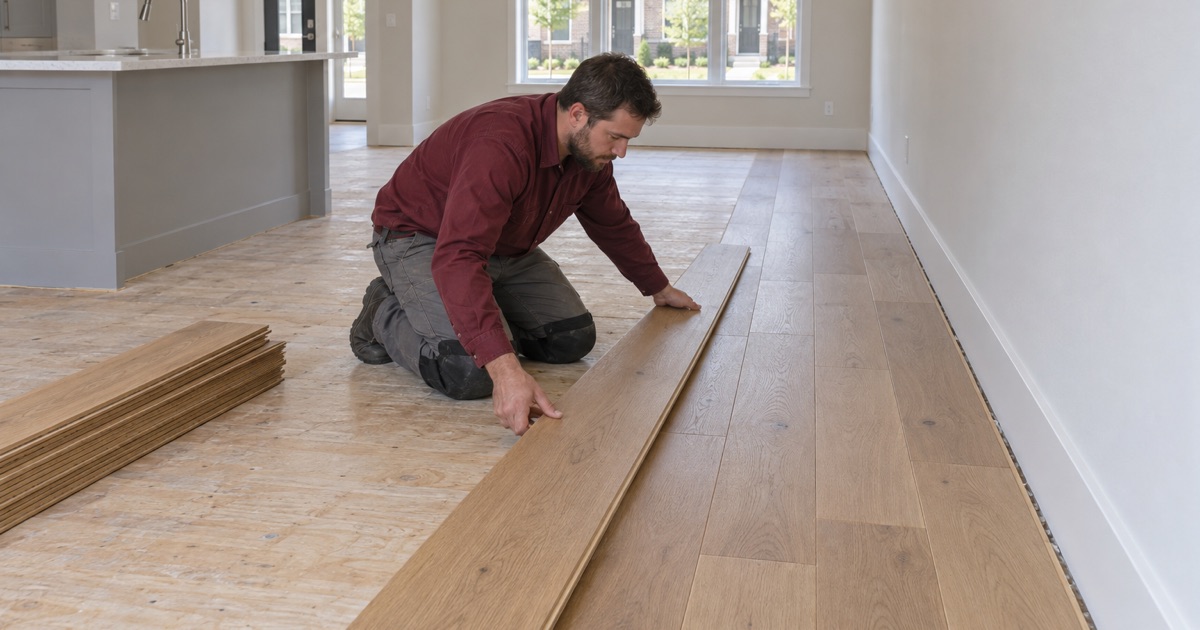
Replacement in a stacked unit brings its own choices. An engineered floor, glued down or floating, may suit a condominium better than nailed solid hardwood, and any underlayment requirement comes from the association’s documents rather than from us. We read those documents before recommending a product.
Association Approval Comes First
Owners in a mixed-use development often answer to a condominium or property owners’ association. Georgia’s Condominium Act and Property Owners’ Association Act govern those associations, but any interior flooring rule comes from your own declaration and the rules adopted under it, not from state law or the zoning ordinance.
So we confirm your association’s written approval before work begins. That means knowing the approved product, the working hours, where the dumpster or trailer may park and whether the elevator needs pads. A job stopped halfway by a violation notice costs an owner far more than the day spent getting sign-off.
Houses of 1,800 Square Feet and the First Refinish
What an 1,800-Square-Foot Minimum Means
Detached houses in the MU district may not have less than 1,800 square feet of floor area. At that size, hardwood often covers the main level, the stairs and an upstairs landing, and a refinish becomes a multi-day project that has to be staged around a household still living in the house.
We quote those houses room by room and stair tread by stair tread. Refinishing existing treads and installing new ones are priced as two different jobs, and where carpet still covers the stairs or a builder-grade floor sits in the foyer, we can replace it with hardwood, nosing and risers included.
Where a house has a finished room below grade, solid wood does not belong there. We match an engineered floor with the right vapor retarder to that level, and the main floor can stay solid hardwood.
Screen and Recoat or Full Sand
A good share of Smyrna’s housing is recent: the ACS 2024 estimates put 36.1 percent of the city’s homes as built in 2000 or later. A floor that age may only need a screen and recoat, lightly abrading the existing finish and adding a fresh coat, if the wear is in the finish rather than the wood.
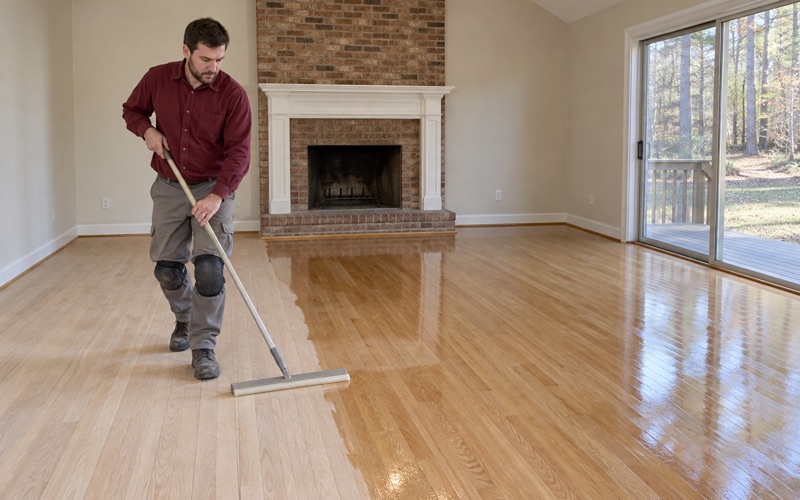
Once traffic lanes cut through to bare wood, or pet urine stains and water stains have gone gray in the grain, a full sand is the honest answer. On site-finished floors we check how much wood remains above the tongue before sanding, and on engineered boards we confirm the wear layer can take it.
Choosing Finish and Color
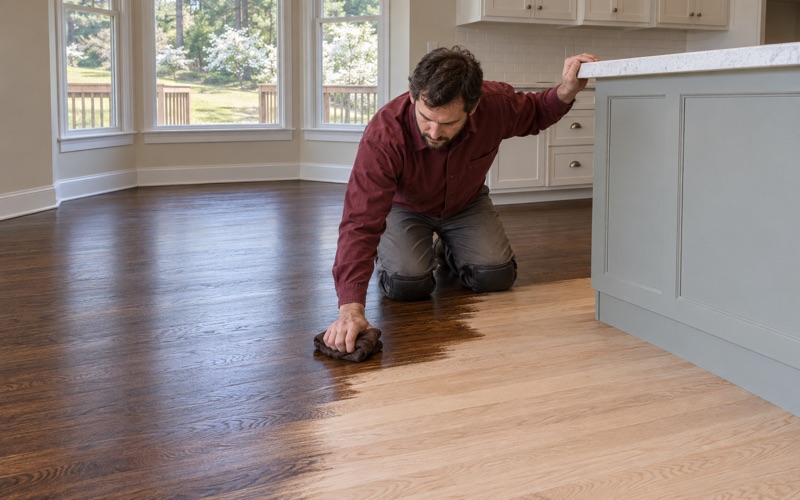
Owners making a first color decision often want to move away from the orange oak cast that older oil-modified finishes give red oak over time. We lay stain samples on your own floor, in your own light, and let you see them at different times of day before anything is committed.
Finish choice follows how the home is used. A waterborne polyurethane stays clearer; an oil-modified finish deepens the color; a hardwax oil is easier to spot-repair. Sheen level is chosen last, and lower sheens like matte hide the daily scratches that a semi-gloss or gloss would show.
Moisture, Soft Spots and Termites
A first refinish is also when hidden problems surface. Cupped boards from a leaking supply line, dishwasher or storm get a moisture meter reading and a dried, documented subfloor before any board is replaced, with photos and readings room by room for your insurance adjuster.
Signs worth reporting to your pest control company before calling us include termite swarmers indoors in spring, mud tubes along a baseboard and boards that sound hollow or blister under the finish. Once they have treated and issued their paperwork, we can open the floor, measure the damage and price the board replacement.
When boards are damaged by subterranean termites, we cut out the damage and weave in matching stock; nothing is filled or covered over. If you are selling and a termite letter turns up damaged flooring, we work against your closing date.
- 20+ Years on Wood Floors
- Moisture Read Before Sanding
- Stain Samples on Your Floor