
Roswell Wood Flooring handles termite damage hardwood floor repair in Roswell, GA, serving surrounding cities including Alpharetta, Dunwoody, Milton, Sandy Springs and Johns Creek. In more than 20 years of repairing Georgia floors, we have replaced a great many boards hollowed out by subterranean termites, and our approach never changes: the pest control company treats first, then we cut out the damaged wood and weave in matching stock. We never fill termite damage or cover it over.
Termite damage to a floor is often hidden until it is advanced. Subterranean termites eat wood from the inside, leaving a thin shell of surface wood and finish that looks almost normal. By the time boards feel soft, blister or crack, the damage may extend into the subfloor or joists below. A proper repair has to find the full extent of it, not just replace the boards that show.
Recognizing Termite Damage in a Floor
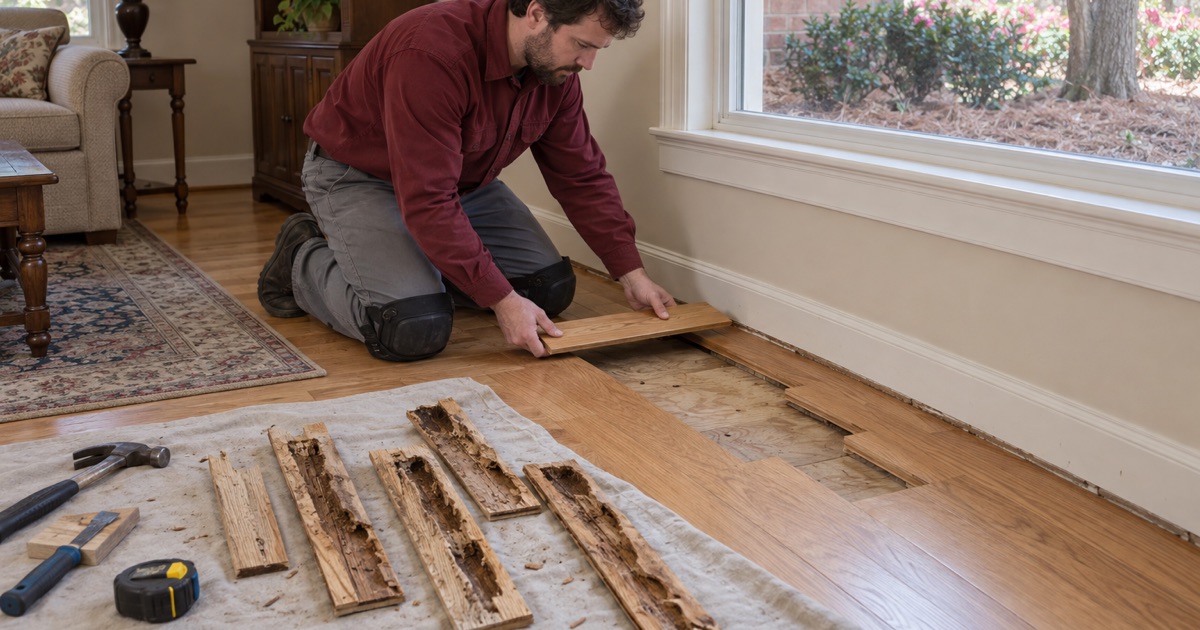
Signs on the Surface
The first signs are often subtle. Finish that blisters or bubbles, boards that sound hollow when tapped, small soft spots, and wood that crumbles at the edges can all point to termites beneath. Floors may also sag slightly or feel spongy in one area. These symptoms can resemble water damage, so the cause has to be confirmed.
When we see these signs, we probe the boards and, where appropriate, pull one up to look at the underside and the subfloor. That tells us whether the damage is limited to the flooring or has reached the structure.
Mud Tubes, Swarmers and Other Clues
Subterranean termites travel through mud tubes, pencil-width tunnels built along foundation walls, piers and plumbing in crawl spaces and basements. In spring, winged termite swarmers may emerge indoors, often near windows and doors, leaving shed wings behind. Either one is a strong sign of an active colony nearby.
If you see these signs, call a pest control company first. A floor contractor can assess damage, but only a licensed pest control operator should treat termites.
Other Wood-Destroying Insects
Termites are not the only insects that damage floors. Powderpost beetles leave tiny round exit holes and fine powder, while carpenter ants excavate galleries in damp wood and leave coarse shavings. Wood-decaying fungi can also soften boards and subfloors where moisture persists.
Each has a different treatment, and some point to a moisture problem that must be fixed. We identify what we see in the wood and recommend the right specialist before we repair.
How We Repair Termite-Damaged Floors
Treatment First, Then Repair
Replacing boards over an active infestation wastes the repair. We coordinate with your pest control company so treatment is completed before we begin. In a crawl space or basement, we also plan the work so treatment areas remain accessible, which matters if follow-up treatment is ever needed.
Once treatment is confirmed, we open the floor and remove damaged boards, tracing the damage until we reach sound wood in every direction.
Subfloor and Joist Repair
Termites often damage more than the finished boards. We inspect the subfloor and, wherever we can reach them, the joists beneath. Damaged subfloor sections are cut out and replaced, and weakened joists are reinforced or sistered with new lumber so the floor has solid support again.
Skipping this step is how a repaired floor develops soft spots and squeaks within months. The new flooring is only as good as the structure it is fastened to.
Weaving In Matching Boards
We remove damaged boards in staggered lengths and weave in new ones that interlock with the existing floor, so the repair follows the floor’s pattern instead of forming a square patch. The new boards match the species, width and thickness of the original, whether that is red oak, white oak or heart pine.
Finally, we sand and finish the repair to blend with the surrounding floor. For larger repairs, refinishing the whole room gives the most consistent color.
Termite Damage and Selling a Home
The Termite Letter at Closing
In Georgia, home sales commonly involve a termite letter, the Official Georgia Wood Infestation Inspection Report. It reports evidence of termites, powderpost beetles, other wood-boring beetles and wood-decaying fungi, along with visible damage. It does not estimate repair costs or give a structural opinion, so when it notes floor damage, a contractor needs to assess it.
That often happens with a closing date already set. We help sellers by assessing the floor quickly, providing a written scope and price, and scheduling the repair to fit the closing timeline.
Retreatment Bonds and Repair Bonds
A termite bond is a contract with a pest control company, and the type matters. A retreatment-only bond covers treating termites again but not repairing damaged wood. A repair bond may pay for new damage, but many exclude damage that existed before the bond began or was concealed.
Before assuming a floor repair is covered, read your bond and ask the pest company in writing. We provide documentation of the damage if you need it for a bond claim.
Damage Found After Closing
Sometimes termite damage is found only after moving in, when carpet comes up or a board gives way. We assess and document the damage with photos and measurements, which is useful whether you pursue a bond claim, a question with the seller or simply the repair itself.
Before we repair a floor found damaged after a move, we also confirm the house is under current treatment, since a colony that damaged the floor may still be active. Repairing on top of an untreated problem only sets up the same damage again, which is the one outcome every repair should prevent.
- 20+ Years on Wood Floors
- Moisture Read Before Sanding
- Stain Samples on Your Floor