Roswell Wood Flooring has spent more than 20 years on wood flooring in Tucker and around metro Atlanta, and many of the calls we take come from owners who have no plans to move. They want the floors they already walk on every day to stay smooth, level and easy underfoot for the next decade or two, not a showroom makeover.
That changes how we plan a job. We look first at what can be repaired, sanded or re-laid rather than torn out, we pay attention to every threshold and height change between rooms, and we sequence the work so the people who live in the house can keep living there while it happens.
Before anyone quotes a color or a species, we read the floor: moisture meter readings, soft spots, hollow spots, the wear layer left on older boards, and the build year of the house. What that reading finds decides the job, and we walk you through it room by room before a single board moves.
Tucker’s Age-Friendly Commitment and the Owners Behind It
A City That Planned for Staying
Tucker joined the AARP Network of Age-Friendly States and Communities on December 31, 2018, with the Tucker Lifelong Community Committee leading the effort. The city was only about two years old at the time, having incorporated after a November 2015 referendum passed with 73.94 percent of the vote, so planning for residents to grow older at home arrived early in its short history.
AARP’s summary of the city’s 2024 progress notes that local nonprofits expanded home repair and modification services, letting residents safely age in place. We read that as a plain statement of what keeps people in their houses: the physical fabric of the home, floors included, holding up as the owners get older. We are a private flooring company, not part of that program, but the goal is the same one we plan toward.
Who Owns the Houses
The census numbers explain why the effort matters here. Of Tucker’s 9,259 owner householders, 3,452 are 65 or older, which is 37.3 percent, according to the 2024 American Community Survey five-year estimates. Within that group, 1,739 are 75 or older and 500 are 85 or older.
Tenure runs long, too. In all, 1,356 owner households moved into their homes in 1989 or earlier, which means a real number of Tucker kitchens and hallways have carried the same family for 35 years or more. Those are floors with a history we can read, and owners who usually remember when each room was last touched.
What That Means for a Flooring Job
Owners who expect to stay into their 70s and 80s ask practical questions about a floor. What we hear most is a wish for surfaces with no lips or ridges to catch a slipper, fewer height changes at doorways, a finish that holds up without constant upkeep, and a job that does not push anyone out of the house for a week.
We plan around those priorities from the first visit. That means walking the whole route a person actually uses each day, from bedroom to kitchen to the door they come and go by, and treating that path as the part of the house that has to be right first.
Looking for wood-flooring closer to Lilburn? See Wood-Flooring in Lilburn.
Smooth, Level Floors With Fewer Transitions
Reducers, Thresholds and Height Changes
Many houses end up with a patchwork of surfaces over the decades: hardwood in the living room, carpet over pad and tack strip in the bedrooms, vinyl in the kitchen, tile in the bath. Every change of material brings a reducer or threshold, and each one is a small rise or dip that a walker, a cane or a tired foot has to cross.
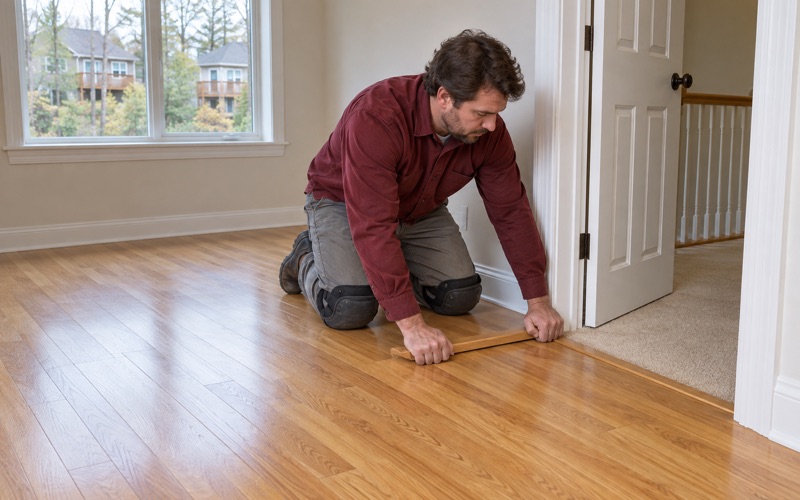
Where it makes sense, we run hardwood continuously through connected rooms so the doorway transitions disappear. Where two surfaces have to meet, we work out the heights before installation, shimming or choosing thicknesses so the reducer is as low and gradual as the materials allow. We will tell you plainly where a transition cannot be removed and why.
Flattening Humps, Dips and Soft Spots
A floor can be smooth to the eye and still move underfoot. Soft, spongy spots and hollow spots usually trace back to something below the boards, whether a loose subfloor, a failing fastener pattern, or moisture working up from underneath. We open the area and find the cause rather than driving screws through the surface and hiding the problem until it comes back.
Cupped or crowned boards get the same treatment. We take moisture meter readings, find the source, and let the floor settle before sanding, because sanding the crown off a board that is still wet leaves it cupped the other way later. A level floor that stays level is the whole point for an owner who plans to walk on it for twenty more years.
Finishes That Stay Easy to Live With
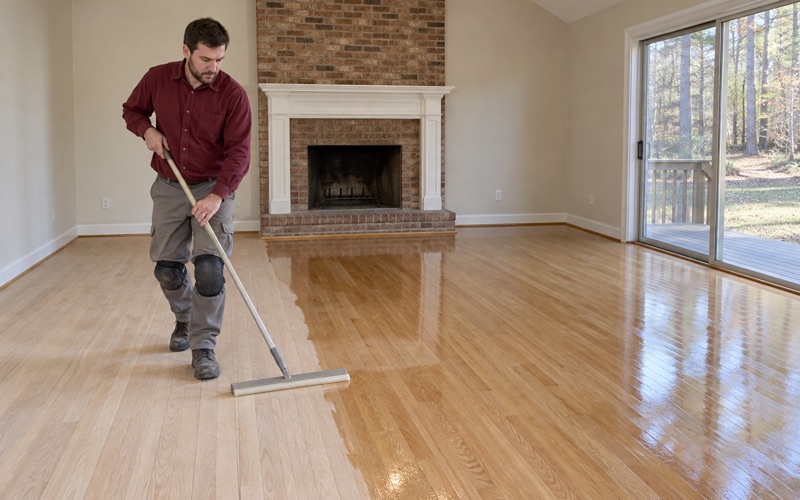
Sheen level matters more than most people expect. A high-gloss finish shows every scuff and can throw glare across a hallway, so we usually suggest a satin or matte waterborne polyurethane that reads calmly in daylight and cleans easily. Waterborne finishes also dry faster and carry less odor than oil-modified polyurethane, which counts when someone is living in the next room.
Traffic lanes are the other long-term question. A hallway that sees the same steps thousands of times a year will show wear first, and a screen and recoat every few years keeps the finish ahead of it without another full sanding. We will tell you what interval makes sense for how you actually use the house.
Repairing Instead of Replacing
Board Replacement Woven Into the Floor
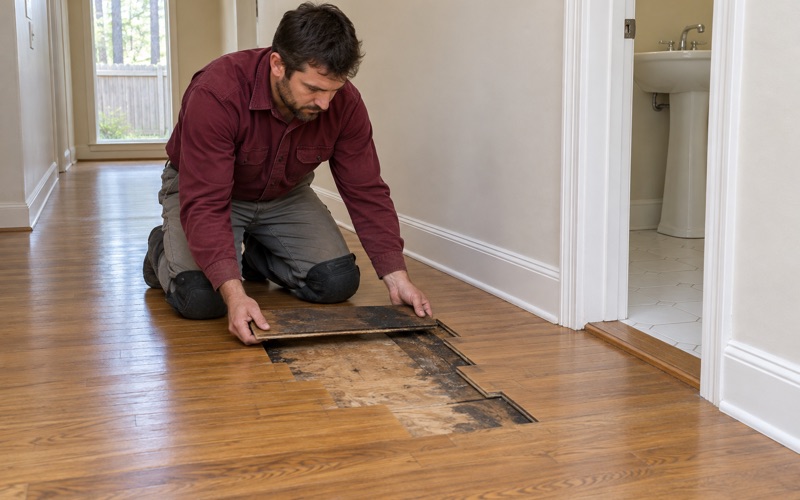
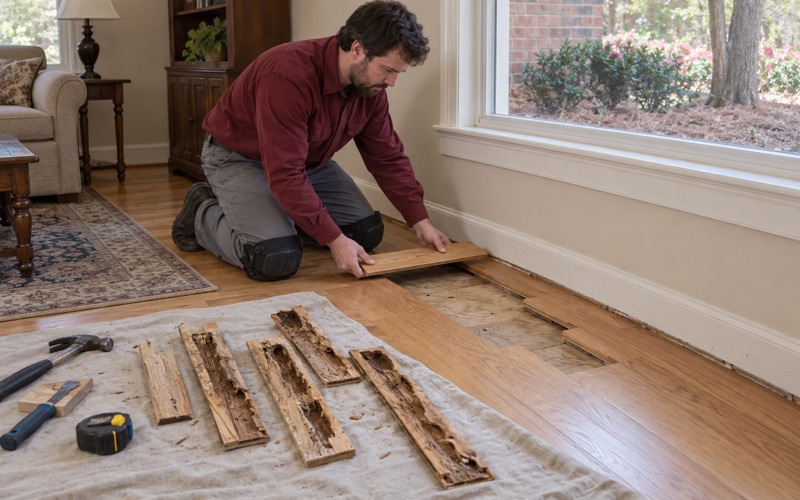
A few damaged boards rarely justify a new floor. When water stains, pet urine stains or termite damage are confined to one area, we cut out the affected boards and weave in matching stock, staggering the joints so the repair blends into the field. For termite damage, the pest control company treats first, and then we replace wood rather than filling or covering it.
For an owner who plans to stay, this is often the best use of money. The rest of the floor keeps its patina and its years of wear, and the disruption is limited to one room for a short stretch instead of the whole house for a week or more.
Leaks Caught and Dried First
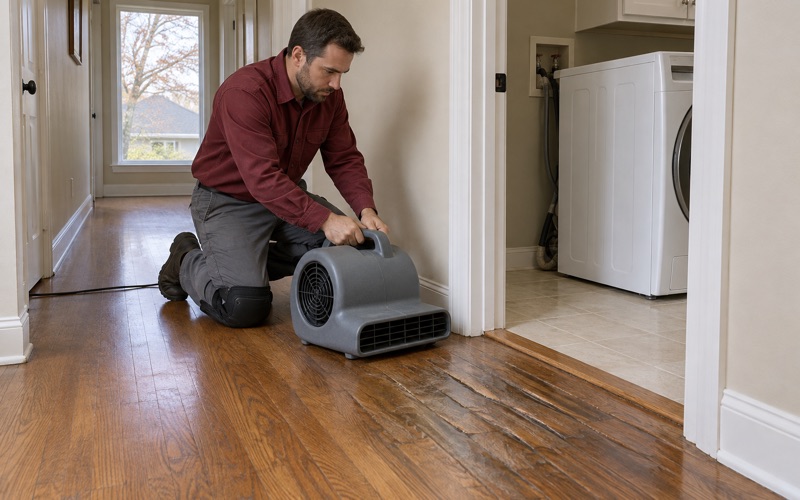
A slow leak from a dishwasher, washer or supply line can sit under a floor for months before anyone notices a musty smell or a cupped board, especially in a house where the same people have walked past it for years. When that happens, we trace the water, dry the area, and measure before replacing anything. We also document the damage room by room for the adjuster, so an insurance claim does not stall the repair while you are living around it.
Sanding and Refinishing Older Oak
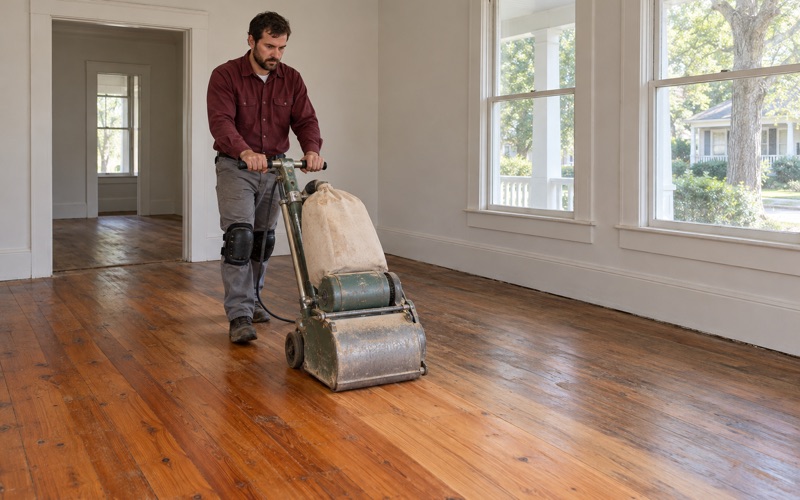
Site-finished oak from the 1980s and 1990s usually has another refinish in it. Before we sand, we pull a floor register or check an edge to see how much wood remains above the tongue, because that number decides whether a full sanding is safe or whether a screen and recoat is the better call. Owners who moved in decades ago are often surprised how much life is left.
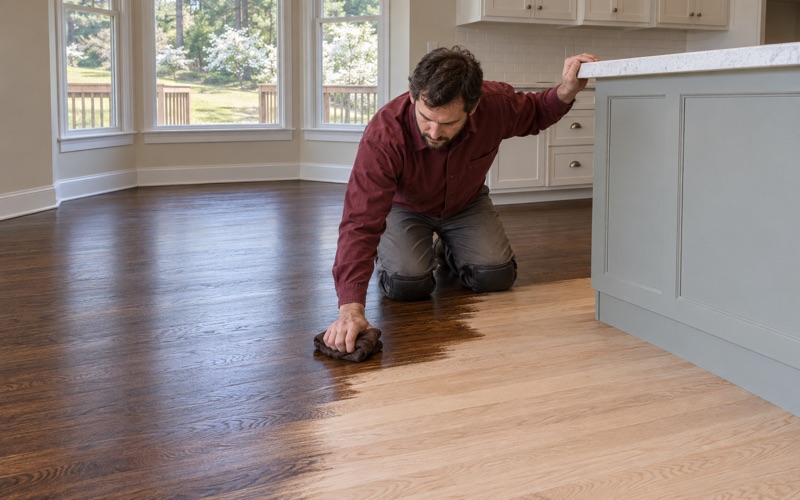
Color is settled on the floor itself. We lay stain samples on your own boards, in your own light, so you can see how red oak or white oak takes each one before a whole room is committed. Some long-time owners decide the orange oak tone they have lived with is exactly what they want to keep, just fresh.
Checking the Build Year Before Sanding
The 2024 census estimates date 48.4 percent of Tucker’s housing units to before 1980, and painted baseboards, shoe molding and trim in houses of that age can carry lead-based paint. We check the build year and any painted surfaces before sanding, and we follow the EPA RRP Rule wherever it applies. For owners living in the house through the job, that check comes first, every time.
Keeping the House Livable While We Work
Room by Room, Not All at Once
Owners who stay put are usually home through the job, and many have nowhere else they want to go. So we phase the work. We finish one area, let it cure enough to walk on, move furniture back, and then start the next, keeping a clear path to the bedroom, the bathroom and the kitchen at every stage.
We talk through furniture well before the start date. We ask ahead about anything that cannot easily leave a room, such as a lift chair, a hospital bed or a piano, and plan the sequence around it rather than discovering it on the morning we arrive.
Dust, Odor and Drying Time
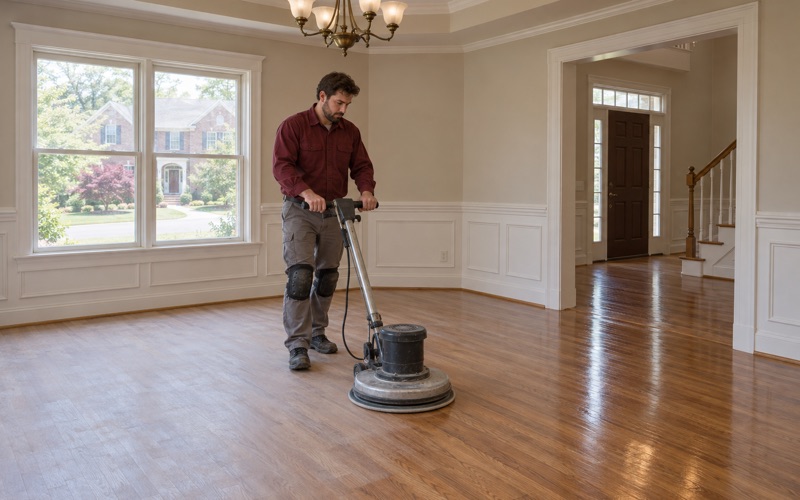
We use dustless sanding with vacuum-connected drum and orbital sanders, which captures most of the fine dust at the machine instead of letting it drift through the house. Waterborne finishes keep the odor down and let a room return to light use sooner, and we give you honest drying and cure times so nobody steps onto a soft finish too early.
Weather plays a part as well. Tucker sits in the National Weather Service’s DeKalb forecast zone, and on humid summer days we run a dehumidifier and watch moisture meter readings before any new boards go down, giving them time for acclimation so they are less likely to gap or cup after installation.
Replacing Carpet and Stair Treads for the Long Run
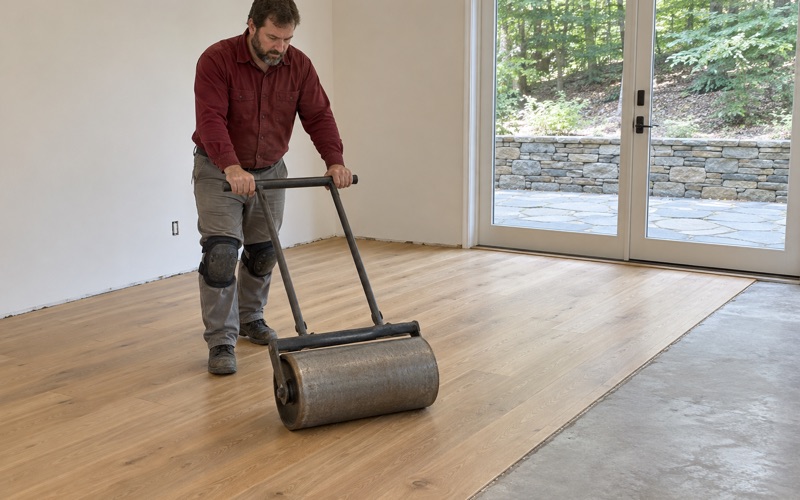
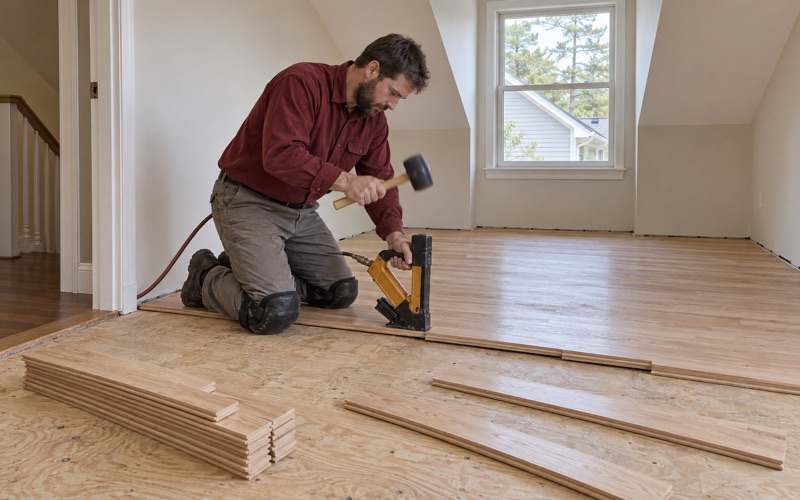
Owners who have lived with wall-to-wall carpet for decades often ask about hardwood when the carpet wears through. We pull the carpet, pad and tack strip, check the subfloor, and install solid hardwood or glue-down engineered flooring depending on what sits below, with the heights planned so the new floor meets the rooms around it cleanly.
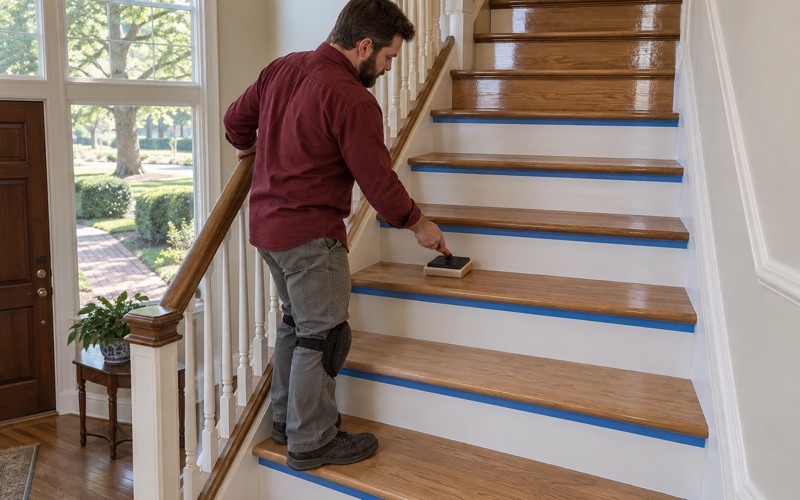
Stairs get their own quote, tread by tread. Refinishing worn stair treads and nosing is one job, and replacing treads and risers is another, so we price them separately and let you choose. For an owner who climbs the same staircase several times a day, a sound, even tread matters more than any stain color.
- 20+ Years on Wood Floors
- Moisture Read Before Sanding
- Stain Samples on Your Floor